
back to top

Beheading

Beheading is a definitive vulnerability in mythological beings, marking a critical point of destruction across various traditions.

Relevant Beasts
Europe
Water Dwelling Creature
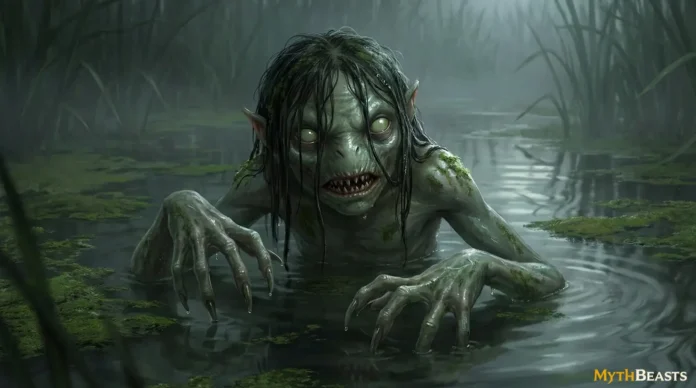
Grindylow - water spirit from 18th-century English folklore
United Kingdom

Grindylow

Grindylow, a sinister water spirit from 18th-century English folklore, haunted marshes and ponds, snatching children who strayed too close...
  • Skills
CamouflageFog Generation
  • Weaknesses
BeheadingFire Vulnerable
Achaemenid Empire
Hybrid Creature
Manticore - Persian Mythology
Achaemenid Empire

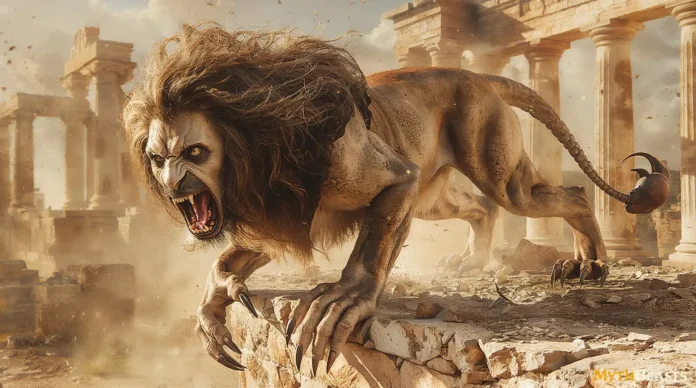
Manticore

Hybrid Persian man-eater with human face, lion body and barbed tail, famed in Greek and later bestiaries as a...

  • Skills
Nature ManipulationPhysical Strength
  • Weaknesses
BeheadingBlessed Weapon
Asia
Giant Bird
Roc - Achaemenid empire
Ghaznavid Empire

Roc

Colossal bird from Persian & Arabian tales, famous in Sinbad’s voyages for lifting elephants & wrecking ships with its...
  • Skills
Physical StrengthStrength
  • Weaknesses
BeheadingElement Sensitivities
Europe
Canine Shifter
Werewolf (Lycan) Medieval Europe - Mythology & Folklore Stories
Slavic

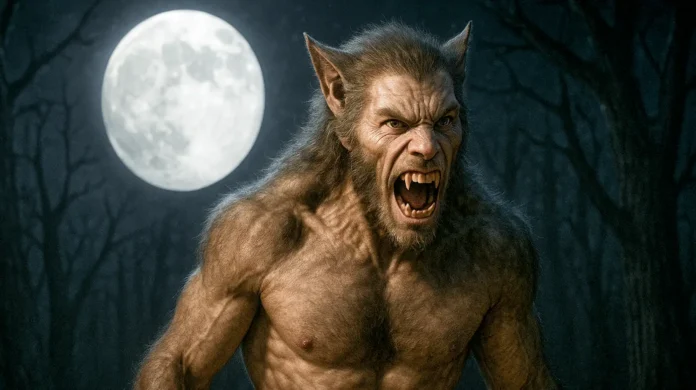
Werewolf

A cursed shape-shifter from Medieval Europe, the Werewolf transforms during the full moon. Feared for uncontrollable rage, it embodies...

  • Skills
Frenzy InducementHealing & Life
  • Weaknesses
BeheadingFull Moon Bound
Native American
Serpentine Shifter
Joint Snake
Native American

Joint Snake

A mysterious serpent from North American folklore, the Joint Snake is known for its ability to reassemble itself after...
  • Skills
Enhanced AgilityHealing & Life
  • Weaknesses
BeheadingElement Sensitivities
Africa
Hybrid Creature
Grootslang - African folklore
South Africa

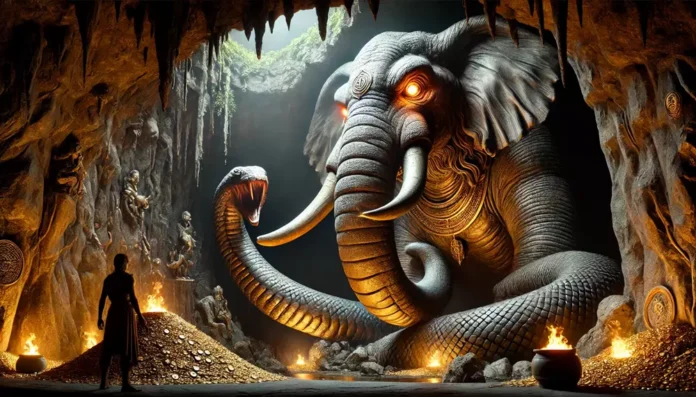
Grootslang

Grootslang is a primordial serpent-elephant hybrid from South African legend, guarding caves of diamonds and gold.

  • Skills
Physical StrengthStone Skin
  • Weaknesses
BeheadingElement Sensitivities

Beheading – Overview

Beheading, as a mythological weakness, indicates a profound structural limitation within many cultural narratives. It serves not just as a narrative device but as a conceptual boundary defining vulnerability. Mythological systems incorporate Beheading as a structurally significant constraint to explore themes of mortality and moral consequence. Unlike incidental failures, Beheading suggests an unavoidable termination. This conceptualization of Beheading often signifies a clear delineation between power and its potential downfall, a theme resonant within mythological frameworks.

Defining Characteristics of the Weakness

Nature of the Limitation

The fundamental nature of Beheading as a weakness resides in its dual role as a physical vulnerability and a metaphysical boundary. This conceptualization frequently intersects with the idea of inevitable mortality. Beheading symbolizes an existential constraint, representing the finality of a being’s life or influence. Patterns recur across cultural myths, emphasizing Beheading as a termination of existence. This makes it distinct from other forms of vulnerabilities, like physical injuries, which do not carry the same finality.

Conditions of Exposure

Beheading becomes relevant within mythological systems through symbolic and moral conditions. It often activates when beings overstep divine or cosmological boundaries, embodying moral transgression. Symbolically, it can represent a breach of sacred law or ethical code, compelling the narrative to restore cosmic balance. Environmental conditions, such as specific places of judgment or sacrificial sites, may also play a role, although they are not universal across all mythologies.

Mythological Role and Function

Function Within Mythological Systems

Beheading operates as a regulatory mechanism within broader mythological worldviews, preserving cosmic order by enforcing boundaries and limitations. It prevents any being from achieving absolute dominance, ensuring that power remains balanced. Beheading also enables downfall, acting as a check on hubris and unchecked ambition. This systemic function is vital, as it underscores the importance of moral and cosmological balance, reinforcing the idea that no entity is beyond the reach of ultimate justice.

Symbolic and Cultural Meaning

Symbolically, Beheading across cultures often represents inevitability, moral consequence, and the enforcement of sacred law. It serves as a reminder of mortality and the limitation of hubris, encapsulating the boundary between life and death. Cultures utilize this symbolism to express themes of justice, retribution, and the moral imperative to respect divine or natural laws. Beheading thus functions as a powerful symbol of cosmic order and the inviolability of moral and cosmological rules.

Distinction from Related Mythological Weaknesses

Conceptual Boundaries

Beheading differs from general mortality and physical injury through its finality and symbolic weight. While mortality denotes life’s end, Beheading encompasses a complete severance of existence, often accompanied by moral or cosmological significance. It is distinct from divine punishment, which might allow redemption or continuation. Unlike taboo violation, which may not always result in termination, Beheading acts as a narrative endpoint, reinforcing its unique role within mythological classification.

Common Sources of Misclassification

Beheading is often misunderstood or conflated with other vulnerabilities due to its dramatic nature. It is sometimes oversimplified as a mere narrative device or physical injury. Comparative mythology and scholarship distinguish Beheading by emphasizing its role in maintaining cosmic order and moral balance. Scholars highlight its symbolic significance, differentiating it from mere situational defeat or divine punishment. Clarifying these distinctions helps to preserve the taxonomy’s integrity.

Canonical Beings Defined by Beheading

Medusa

Originating in Greek mythology, Medusa’s narrative ends with her beheading by Perseus. Her power, including her deadly gaze, is neutralized through this act, emphasizing the vulnerability. Beheading is central to her mythological identity.

Hydra

The Hydra, a multi-headed serpent in Greek mythology, is notable for its regenerative abilities. Heracles’ eventual success in slaying it through beheading highlights a unique vulnerability, marking its defeat. Without this weakness, the Hydra’s invulnerability would be overstated.

Dullahan

The Dullahan, a headless rider from Irish folklore, embodies Beheading. This being is defined by its missing head, a source of its mythological power and fear. It is incomplete without this feature, emphasizing its narrative role.

Historical Distribution and Cultural Context

Beheading appears across various cultures and historical periods, often serving as a decisive act in mythological narratives. It frequently manifests in societies where decapitation was a culturally significant form of execution or sacrifice. These contexts are primarily found in Ancient Greek and Celtic traditions, where Beheading held symbolic and ritual importance. The widespread presence of this weakness underscores its thematic resonance, reflecting shared human concerns about power, morality, and the limits of life.

Scholarly Interpretation and Uncertainty

Variation in Interpretation

Interpretations of Beheading vary significantly across cultures and scholarly frameworks. Some view it as a literal manifestation of mortality, while others interpret it symbolically as a narrative device enforcing moral order. Cultural contexts influence these interpretations, with historical periods shaping the emphasis on symbolic meaning versus literal application. Scholarly debate often focuses on its role as an existential boundary, questioning whether it represents an inevitable end or a culturally constructed limitation.

Limits of the Evidence

The evidence for Beheading as a mythological weakness is not uniformly clear, with gaps and ambiguities in the comparative record. Established interpretations focus on its recurring themes in various traditions. However, some aspects remain uncertain or contested, particularly concerning its symbolic significance versus literal application. No verified sources describe this for every cultural context, and scholarly consensus is not always reached on its broader implications.

Mythological Function Across Cultures

This type of weakness recurs across different mythological traditions due to shared human concerns about mortality and power limits. It symbolizes the consequences of hubris, serving as a narrative tool to explore moral and cosmological themes. Recognizing Beheading enhances comparative mythological interpretation, offering insights into how cultures conceptualize ultimate boundaries and moral constraints. This understanding emphasizes its role in preserving cosmic balance, highlighting its importance as a mythological concept.