back to top

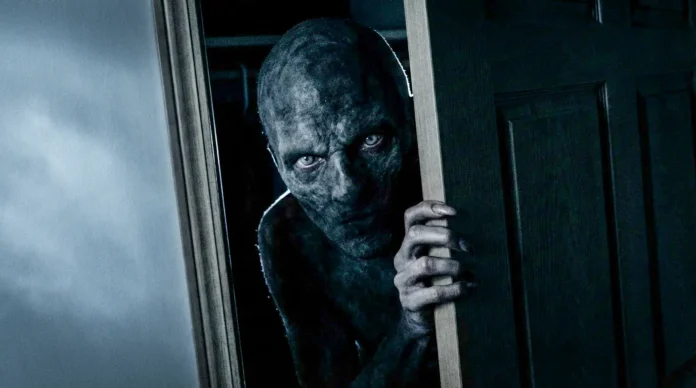
Dark Spirit

Relevant Beasts

Hebrews
Dark Spirit
Asmodeus - the king of Shedim - Hebrew folklore
Hebrews

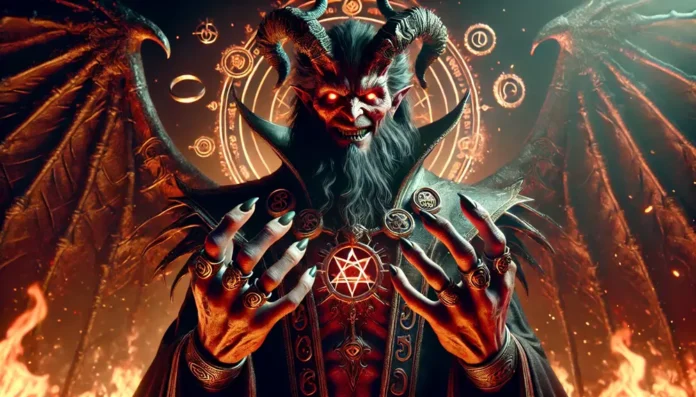
Asmodeus

Asmodeus, rooted in Hebrew demonology, is a king of demons known for lust and chaos, feared in Jewish lore...
  • Skills
Magic & DivinityShapeshifting Mastery
  • Weaknesses
Divine RestrictionsHoly Water
Hebrews
Dark Spirit
Lilith - Mythbeasts.com
Hebrews

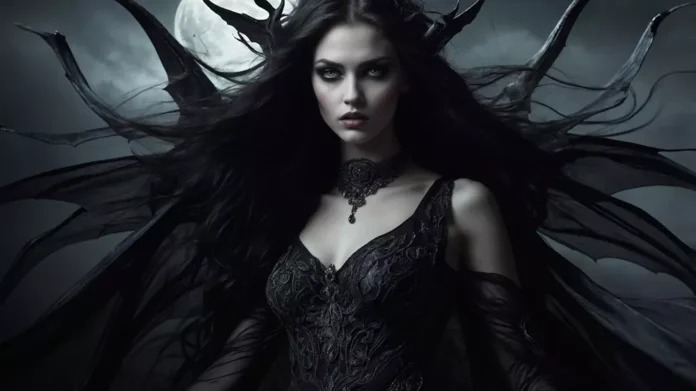
Lilith

Lilith, a symbol of feminine defiance, evolves from a demoness in ancient mythology to a modern icon of independence...

  • Skills
Mental PowersMind Control
  • Weaknesses
Divine RestrictionsHoly Water

Dark Spirit – Overview

Dark Spirits in mythology represent a category of beings characterized by an association with , the unknown, and the boundaries between life and death. These entities are found across various mythologies, often serving to explain inexplicable events or emotions. Their role often brings balance or chaos to the cosmological structures they inhabit. Universally, Dark Spirits challenge the known world, highlighting the limitations of human understanding and control over darker forces. They frequently occupy liminal spaces, bridging worlds and enforcing supernatural moralities within their contextual mythologies.

Defining Characteristics

Physical Form and Morphology

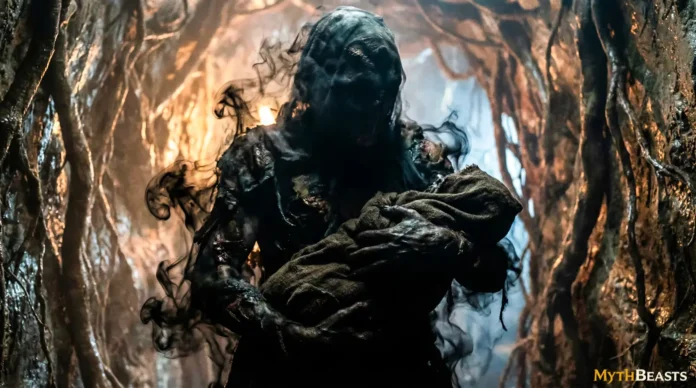
Dark Spirits usually lack a consistent physical form, often depicted as shadows, mists, or vaguely humanoid shapes. Their forms are typically fluid, allowing them to move undetected or penetrate barriers that confine physical entities. This lack of physical substance underscores their role as intangible and elusive forces, highlighting their separation from the corporeal world. These spirits capitalize on the fear of the unseen, their amorphous nature serving as a visual metaphor for ungraspable and pervasive threats within their myths.

Ontological Nature

Dark Spirits are often understood as supernatural entities inhabiting the borders of the known world. They are liminal beings, standing between life and death, matter, and spirit. Their existence often challenges the natural order, embodying chaos or enforcing divine retribution. As manifestations of darker emotions or unresolved energies, they play critical roles in enforcing morality or reflecting societal fears. Their presence suggests a metaphysical world shaped by unseen forces, acting as guardians or punishers based on their cultural context.

Mythological Role and Function

Place in Mythological Systems

Dark Spirits occupy a multifaceted role within mythological systems, often acting as intermediaries between gods and humans or as enforcers of divine will. They represent chaos, law, or the moral landscape, exerting influence over human affairs. By embodying the consequences of human actions, they reinforce cultural norms and ethical boundaries. Their interactions with gods or humans are dictated by the moral or cosmological order, reflecting the dualities between light and dark, order and chaos, life and death in their mythological narratives.

Perception and Meaning

Cultural perceptions of Dark Spirits vary widely, typically seen as threats or malevolent forces. However, some traditions view them as necessary agents of balance or mediators of spiritual transitions. They often symbolize fear of the unknown, mortality, and moral ambiguity. These spirits might warn, punish, or guide those who encounter them, their roles shifting according to cultural needs. Their ambiguity serves a dual purpose: inciting terror while offering explanations for unexplained phenomena or emotions, creating a rich tapestry of symbolic interpretation across cultures.

Distinction from Related Beast Types

Conceptual Boundaries

Dark Spirits differ from other supernatural entities such as elementals or undead due to their emphasis on intangibility and moral ambiguity. Unlike elementals, they do not represent natural forces but rather abstract fears and ethical dilemmas. They are distinct from undead monsters, which typically have corporeal forms and personal histories. Dark Spirits' roles are more conceptual, focusing on the metaphysical and psychological aspects of human experience. Their existence underscores moral and existential questions, differentiating them from creatures with more defined, task-oriented roles in mythology.

Common Sources of Confusion

Dark Spirits are often conflated with other supernatural entities due to their mutable forms and overlapping roles with shadowy creatures or malevolent spirits. Scholarly efforts to distinguish them focus on their metaphorical roles rather than physical manifestations. While they share traits with certain phantoms or apparitions, Dark Spirits' primary function is to embody existential uncertainty and moral complexity. This distinction aids in separating them from spirits with specific, culturally bound narratives or those functioning solely as messengers or protectors.

Canonical Beasts Associated with This Beast Type

Wendigo

The Wendigo, from Algonquian folklore, exemplifies Dark Spirits by embodying insatiable hunger and moral corruption. This creature highlights the consequences of greed and excess, serving as a cautionary figure in narrative traditions.

Banshee

The Banshee, from Irish folklore, represents a Dark Spirit acting as a harbinger of death. Her mournful wails warn of impending doom, underscoring themes of fate and the inevitability of death in Celtic traditions.

Yokai

Yokai in Japanese folklore encompass a variety of spirits, some of which fall under the Dark Spirit category due to their association with unsettling phenomena and moral lessons. These spirits challenge human perceptions of reality.

Historical Distribution and Cultural Context

Dark Spirits appear globally, from ancient civilizations to contemporary indigenous cultures. Their presence is often noted in transitional societies or places facing significant upheaval, where they reflect societal fears and moral uncertainties. Historical records show them prevalent in European, Asian, and Native American traditions, each adapting their roles to local belief systems. These spirits frequently emerge in periods of social change, infectious disease, or conflict, their narratives adapting to the cultural psyche. The distribution illustrates their universality as symbols of fear, morality, and the unknown.

Scholarly Interpretation and Uncertainty

Variation in Definitions

Definitions of Dark Spirits vary between cultures, with some viewing them as malevolent entities, while others interpret them as necessary cosmic agents. Scholars debate their roles based on cultural context and historical evolution. Traditional interpretations often clash with modern perspectives emphasizing psychological symbolism. Academic discourse reflects these variances, occasionally leading to differing frameworks for understanding their ontological significance. Such variation underscores the complexity of defining Dark Spirits, emphasizing the need for careful cultural analysis and historical context consideration.

Limits of Available Evidence

No verified sources describe this for this context. Evidence gaps exist in the historical record for many Dark Spirits, complicating efforts to establish a definitive taxonomy. Folkloric traditions often rely on oral transmission, leading to variations and embellishments over time. Scholars emphasize cautious interpretation, recognizing the subjective nature of mythological evidence. This ambiguity necessitates an interdisciplinary approach, integrating anthropology, history, and religious studies to build a cohesive understanding while acknowledging the limitations inherent in this mythological category.

Mythological Role Across Cultures

Dark Spirits recur in diverse mythologies, reflecting universal human fears and ethical dilemmas. They embody challenges to moral boundaries, existential fears, and societal order, addressing shared cultural concerns about death, morality, and the unknown. Analyzing their mythological roles across cultures reveals the common human need to personify abstract fears and uncertainties, providing narrative frameworks for understanding complex emotions and moral questions. Recognizing this helps scholars interpret the commonalities and differences in global mythological systems, enriching comparative mythology and cultural studies.