Germany – an Overview
Germany is used here as a historical cultural region, not as a timeless nation or a unified mythology. Its traditions reflect changing populations, languages, and political boundaries.
The relevant source context includes Germanic-speaking communities and later German-speaking societies in central Europe. Their beliefs cannot be reduced to a single, continuous religious system.
Evidence spans ancient descriptions of peoples called Germani, medieval Christian records, and folklore collected in later centuries. These materials document different periods, genres, and cultural settings.
Germany matters taxonomically because surviving German-language folklore and historical records are rooted in particular central European communities. Without that context, regional traditions risk being misclassified as universal Germanic beliefs.
Historical and Environmental Context
Time Frame and Location
Ancient Roman authors used Germania for territories beyond imperial frontiers, not for a state matching present-day Germany. The term’s geographic boundaries varied across historical usage.
Germanic languages developed across a broader area than modern Germany. Their early distribution and chronology remain subjects of linguistic reconstruction rather than directly mapped cultural borders.
Medieval German-speaking territories included kingdoms, principalities, and towns with shifting jurisdictions. Their political fragmentation shaped distinct local institutions and preserved no single national religious framework.
The modern German state dates from the nineteenth century. Earlier mythology associated with its territory therefore belongs to diverse communities, not to a unified German nation.
Central European environments included forests, rivers, uplands, and cultivated land. Such settings provide historical context for local life, but do not independently establish particular beliefs.
Contact and Cultural Exchange
Roman writers described communities across imperial borders through external categories. Their accounts preserve valuable observations, but also reflect Roman political interests and literary conventions.
Roman expansion brought sustained contact between provincial populations and communities beyond the frontier. Trade, warfare, migration, and diplomacy connected regions without producing a uniform religious culture.
Christianization transformed religious institutions across medieval German-speaking lands. Written Christian accounts often reframed older practices, making it difficult to recover pre-Christian meanings independently.
Contacts with neighboring Slavic, Celtic, Scandinavian, and Romance-speaking communities varied by place and period. Shared motifs alone cannot prove direct borrowing or common origin.
Mythological Framework
Worldview and Cosmological Concepts
Roman accounts of Germanic religion are selective and externally framed. They do not provide a comprehensive cosmology applicable to all communities later associated with Germany.
Medieval Christian sources describe older beliefs through hostile or corrective perspectives. Their testimony requires contextual reading rather than straightforward treatment as transparent records of pagan doctrine.
Comparative scholarship reconstructs elements of early Germanic religion using linguistic, archaeological, and textual evidence. These methods support cautious proposals, not a complete German national worldview.
Spiritual or Supernatural Categories
Roman sources identify deities associated with Germanic peoples, sometimes equating them with Roman gods. Such equivalences reflect interpretation and do not establish identical divine identities.
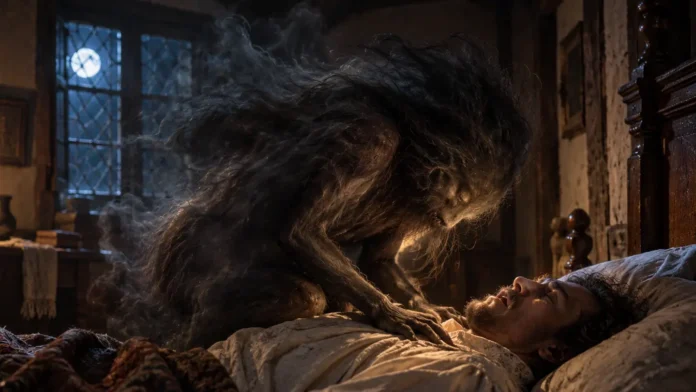
Later German folklore records varied beings, including household spirits and water-associated figures. Their names, traits, and regional distributions differ, so they do not form one pantheon.
Christian records also refer to practices condemned as superstition. These descriptions establish clerical concern, but frequently leave the associated beliefs and practices unclear.
Folklore and Narrative Tradition
Recurring Mythological Themes
German-language folklore includes narratives about encounters with supernatural beings in domestic and local settings. Their meanings depend on specific regional collections, rather than a single national canon.
Legends attached to named landscapes often explain local features or histories. Their geographic anchoring distinguishes them from broader religious claims about Germanic cosmology.
Medieval heroic materials circulated in German-language forms, including stories with older Germanic connections. Their surviving literary versions reflect later composition and transmission, not unchanged ancient testimony.
Transmission and Preservation
Oral transmission shaped many folktales before collectors recorded them. Written versions preserve particular performances and editorial choices, not a complete record of prior oral variation.
Christian manuscripts preserve information about earlier beliefs mainly through authors writing within Christian institutions. Their descriptions must be distinguished from direct testimony by practitioners.
Archaeological objects illuminate past practices through context, material, and deposition. They rarely identify a specific myth or explain the meanings assigned by their makers.
Nineteenth-century folklore collection helped establish a German-language documentary archive. Collectors’ selection and editorial methods influenced which regional narratives became prominent in later accounts.
Internal Variation and Temporal Change
Ancient communities described as Germanic were politically and culturally diverse. Roman terminology grouped populations whose local identities and practices cannot be presumed identical.
Medieval territories differed in language varieties, legal arrangements, and ecclesiastical development. These differences affected the settings in which local religious memories and folklore persisted.
Recorded folklore varies among regions and collection periods. Such variation demonstrates changing narrative forms, although incomplete documentation prevents comprehensive mapping of every local tradition.
Christianization introduced major institutional and interpretive change. Older elements sometimes persisted in altered contexts, but continuity must be demonstrated individually rather than assumed.
Related Cultural Origins and Myth Sources
Roman accounts provide an important comparison because they describe Germanic peoples from an imperial perspective. Their categories differ from later German-language folklore collected within local communities.
Scandinavian sources preserve related Germanic-language traditions, but their surviving mythological texts have distinct regional and medieval histories. Similar names do not erase those differences.
Slavic-speaking neighbors shared central European contact zones with German-speaking populations. Cultural interaction is historically plausible in particular contexts, yet each proposed borrowing requires specific evidence.
Evidence Limits and Scholarly Uncertainty
No single body of evidence documents a unified mythology for Germany across antiquity and later history. The category is necessarily historical and regionally differentiated.
Ancient literary testimony is limited by external authorship and Roman terminology. Archaeological evidence supplies material context, but usually cannot independently identify beliefs or narratives.
Folklore records are unevenly distributed by region and period. Collection practices shaped surviving archives, while oral variants may have disappeared before documentation.
Scholars differ over how confidently comparative evidence can reconstruct early Germanic religion. Linguistic parallels, archaeological interpretation, and later textual accounts do not always align.
No verified sources describe this for this context when a claim requires a single, nationally uniform German cosmology. Such a system cannot be responsibly inferred from surviving evidence.