Introduction
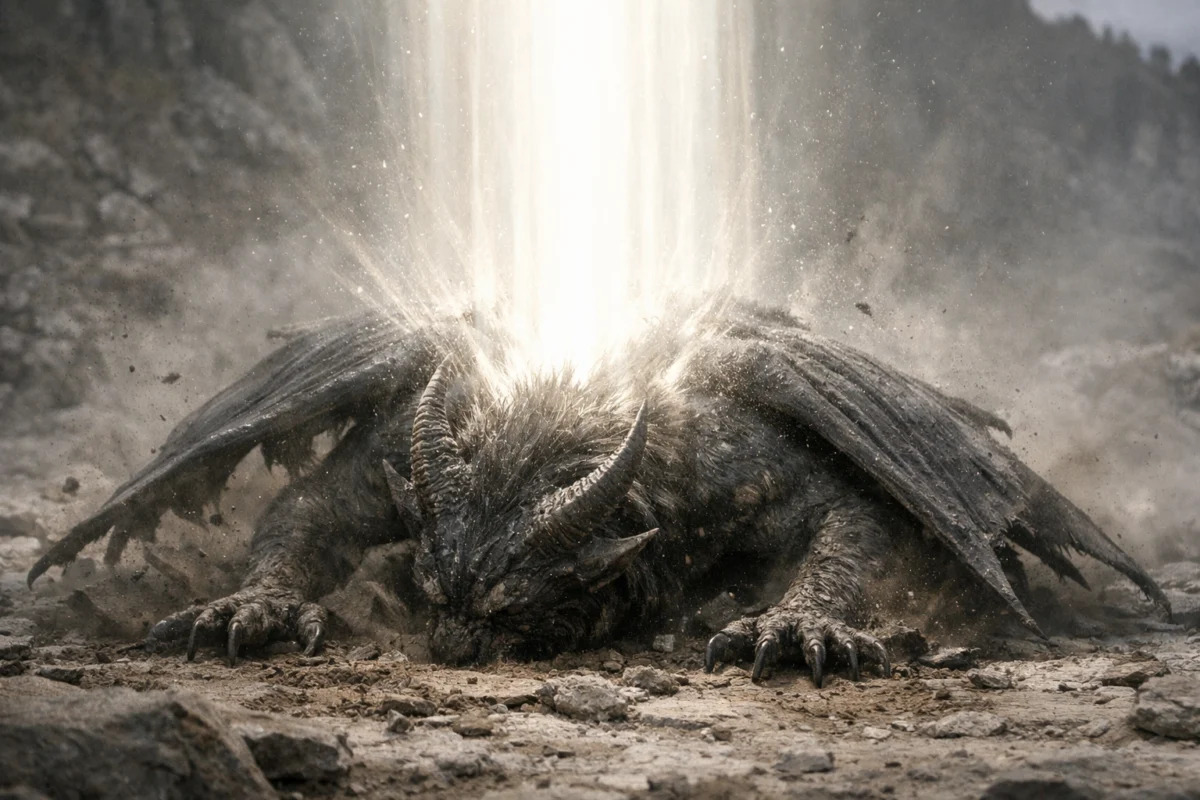
Lilith is a female demon of Jewish and wider Near Eastern tradition whose identity changed dramatically across more than two millennia. Biblical, rabbinic, magical, medieval, and modern sources do not describe one completely stable being, but a sequence of related supernatural figures.
The Hebrew Bible mentions Lilith only once, in Isaiah’s vision of devastated Edom. Later Jewish texts give her more specific characteristics, including long hair, wings, nocturnal danger, sexual threat, and hostility toward infants, while medieval literature eventually makes her Adam’s first wife.
That famous first-wife story is not found in Genesis. It appears much later in the medieval Alphabet of Ben Sira, where Lilith and Adam are created from the same earth, quarrel over equality, and separate after she refuses to submit.
Modern culture often begins with that medieval episode and treats it as Lilith’s original myth. Historically, however, her development is more complicated.
Earlier evidence connects the Hebrew Lilith with ancient Near Eastern demon traditions, while later sources continuously reinterpret her character and meaning.
History/Origin
The oldest background to Lilith lies in Mesopotamian demonology, where Akkadian texts mention beings called lilû, lilītu, and ardat-lilî. Scholars generally treat these figures as important linguistic and conceptual relatives of the Hebrew Lilith, rather than automatically identifying every one as the same individual.
Older scholarship sometimes claimed that Lilith appears directly in the Sumerian story of the huluppu tree within the Gilgamesh tradition. That identification depends on translating the expression ki-sikil-lil-la-ke as Lilith, an interpretation that modern scholarship treats as disputed rather than certain.
The clearest early Hebrew appearance comes in Isaiah 34:14. The prophet describes ruined Edom becoming a wilderness inhabited by dangerous animals and supernatural beings, and places Lilith among them as a creature that finds somewhere to settle in the desolated landscape.
“There too Lilith shall rest, and there she shall find a resting place.” (Isaiah 34:14, translated from Hebrew.)
By late antiquity, Jewish sources describe Lilith more personally. The Babylonian Talmud associates her with long hair, wings, and danger to people sleeping alone, while Jewish Babylonian Aramaic incantation bowls invoke protective formulas against liliths and other household demons.
“One must not sleep alone in a house, for whoever sleeps alone may be seized by Lilith.” (Babylonian Talmud, Shabbat 151b, translated from Aramaic.)
These bowls, produced mainly in late antique Mesopotamia, show that fear of liliths belonged to practical domestic magic. Families commissioned written protections against demons, illness, infertility, childbirth dangers, and other threats, sometimes naming Lilith or multiple liliths among the hostile powers.
Between the eighth and tenth centuries, the Alphabet of Ben Sira transformed the tradition by giving Lilith a narrative relationship with Adam. This text supplied the story that later became her best-known biography, although its tone and genre remain subjects of scholarly discussion.
Name Meaning
The name Lilith appears in Hebrew as Līlīṯ, written לִילִית. Its closest linguistic relatives lie in Akkadian terms such as lilītu, which describe female supernatural beings within older Mesopotamian magical and demonological traditions known centuries before medieval Jewish stories developed.
A popular explanation connects Lilith directly with the Hebrew word layla, meaning night. The resemblance influenced later interpretations of her as a night demon, but historical linguistics generally treats the Hebrew name as related to the older Mesopotamian demon terminology instead.
Because several similar terms existed in Mesopotamian sources, the name did not originally identify one fully developed character with a fixed biography. Over time, Jewish literature increasingly individualized Lilith until the name referred to a specific female demon in many later traditions.
Her name therefore carries several historical layers at once. It preserves an ancient Near Eastern linguistic background, acquired new meaning within Hebrew scripture and rabbinic literature, and eventually became attached to a highly detailed medieval story about Adam, childbirth, sexuality, and rebellion.
Appearance
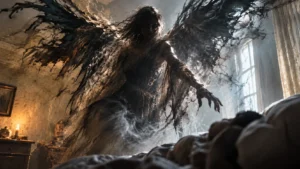
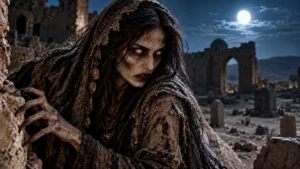
No single ancient portrait defines Lilith’s appearance. Isaiah gives no physical description, so the earliest biblical Lilith cannot securely be pictured as the winged, beautiful demon familiar from later art.
Her visual identity developed from later rabbinic, magical, and artistic traditions.
The Babylonian Talmud supplies two influential details. One passage compares long female hair with Lilith’s hair, while another discusses an infant shaped like Lilith and specifically mentions wings.
Together, these references helped establish the later image of a winged, long-haired female demon.
Late antique incantation bowls sometimes contain bound female figures whose hair, nudity, chains, or surrounding inscriptions have been interpreted in connection with lilith demons. These images vary considerably, so no single bowl should automatically be treated as a definitive portrait of Lilith herself.
Modern images frequently add horns, serpent tails, black wings, red skin, or seductive gothic clothing. Those features may suit later occult or fantasy interpretations, but the strongest historical visual clues remain female form, long hair, wings in rabbinic tradition, and demonic or threatening associations.
Background Story
Lilith has no single background story that spans every historical period. In the earliest Jewish evidence she functions primarily as a dangerous supernatural being, while late antique traditions increasingly connect liliths with nighttime danger, sexuality, reproductive fears, and threats to mothers or infants.

The medieval Alphabet of Ben Sira gives her the most famous narrative beginning. God creates Lilith from earth as he created Adam, but the pair immediately quarrel over sexual position and authority.
Lilith argues that equal creation means neither should dominate the other.
“We are equal to one another, because both of us were created from the earth.” (Alphabet of Ben Sira, medieval period, translated from Hebrew.)
After Adam refuses her claim, Lilith speaks the divine name and flies away. Three angels pursue her, but she refuses to return.
The story then connects her with danger to newborn children and explains protective amulets bearing the angels’ names.
This episode created the enduring image of Lilith as Adam’s first wife, but it should not be projected backward into Genesis, Isaiah, or ancient Mesopotamian texts. Later Kabbalistic literature develops still other traditions, including relationships with Samael and increasingly elaborate demonological hierarchies.
Famous Folklore Stories
Ben Sira and the Amulet for the King’s Son
In the Alphabet of Ben Sira, King Nebuchadnezzar’s young son becomes dangerously ill. The king orders Ben Sira to heal him or face death.
Instead of preparing medicine, Ben Sira creates an amulet bearing the Divine Name and three healing angels.
Nebuchadnezzar asks who the strange figures represent. Ben Sira names Sanoy, Sansanoy, and Semangelof, then explains why their images protect children.
His answer leads to the angels pursuing Lilith after she leaves Adam and eventually finding her beside the sea.
“Whenever I see you or your names or your forms in an amulet, I will have no power over that infant.” (Alphabet of Ben Sira, Fifth Response to Nebuchadnezzar, approximately ninth to tenth century, translated from Hebrew.)
Lilith refuses to return but accepts a bargain. One hundred of her demonic offspring will perish each day, while she must leave protected infants unharmed whenever she sees the three angels, their names, or their representations displayed nearby.
The story therefore works as more than a tale about Lilith’s rebellion. It provides a mythical explanation for an existing protective practice, making the amulet itself part of the narrative and connecting the legendary demon directly with childbirth and infant protection.
Elijah Meets Lilith on the Road
A later protective tradition tells how the prophet Elijah encounters Lilith while traveling. She does not wander alone but moves with an unclean company of spirits.
Elijah stops her and demands to know where she and her supernatural host intend to go.
Lilith answers that they are heading toward the home of a woman who has recently given birth. Her purpose is explicitly violent: she intends to kill or incapacitate the mother, seize the newborn child, drink its blood, and consume its vital substance.
“I am going to that woman who has given birth to a child, to give her the sleep of death.” (Sod ha-Shem, David Lida, second edition, 1710, Lilith amulet tradition, translated from Hebrew.)
Elijah responds by placing Lilith under a powerful ban and threatening to turn her into an unmoving stone. Unable to continue, she asks him to remove the curse and offers a bargain based on revealing the many secret names by which she is known.
Lilith promises that whenever those names appear in a house containing a newborn child or woman in childbirth, she and her companions will flee. Printed amulets later preserved the encounter, transforming the story itself into a protective object placed around birthing rooms.
Lilith and the Three Holy Spirits
The Zohar develops another tradition in which Lilith becomes part of an elaborate supernatural world populated by demons, spirits, angels, and human souls. Here she raises demonic offspring generated through contact between supernatural beings and sleeping human men.
Lilith eventually goes out seeking her own young, but encounters human children instead. The text describes her attaching herself to them with deadly intent, attempting both to kill them and to draw their spirits into her own supernatural domain.
“When she sees little children she cleaves to them in order to kill them and to insinuate herself into their spirits.” (Zohar, Achrei Mot 59, medieval Spain, translated from Aramaic.)
Her attack does not always succeed. Three holy spirits appear before her, take the endangered spirit away, and carry it before the Holy One.
The passage therefore places Lilith’s threat inside a larger cosmic struggle rather than presenting an ordinary household encounter.
This version differs sharply from the rebellious first-wife story. The Zohar treats Lilith as an established demonic power operating within a complex mystical universe, while divine forces actively oppose her attempts to claim human children and their souls.
Research verification used the Alphabet of Ben Sira, historical Lilith amulet traditions, and the Zohar passages preserved in academic and primary-text collections.
Cultural Impact
Lilith became one of the most adaptable female figures in Jewish and Western imagination because different periods emphasized different traits. Ancient demonology highlighted danger, medieval legend emphasized rebellion and sexuality, while modern interpreters increasingly used her as a symbol of independence.
That transformation accelerated during twentieth-century feminism. Writers and theologians re-read the medieval conflict with Adam as a story about equality rather than disobedience, shifting attention from Lilith’s demonic punishment toward the social meaning of a woman refusing imposed authority.
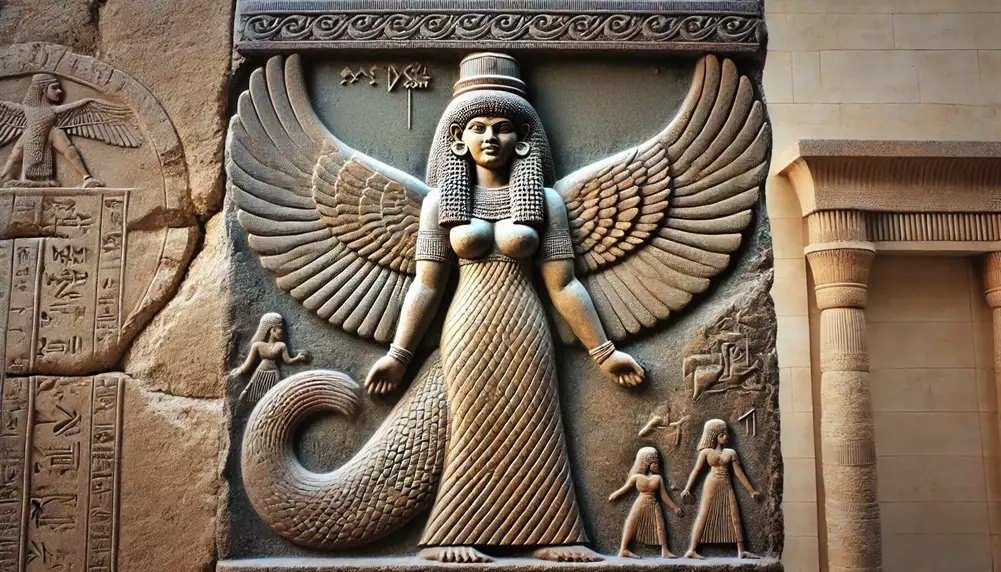
Her modern cultural reach now extends far beyond Jewish folklore. Artists, musicians, novelists, television writers, game designers, occult communities, and feminist organizations repeatedly reshape Lilith, sometimes preserving her demonic qualities and sometimes turning her into an emblem of autonomy or resistance.
Similar Beasts
Lamashtu

Lamashtu is a Mesopotamian female demon associated with pregnancy, childbirth, and infant danger. Her attacks on mothers and newborns, together with protective amulets used against her, make her one of Lilith’s closest ancient parallels, though they remain distinct beings.
Lamia
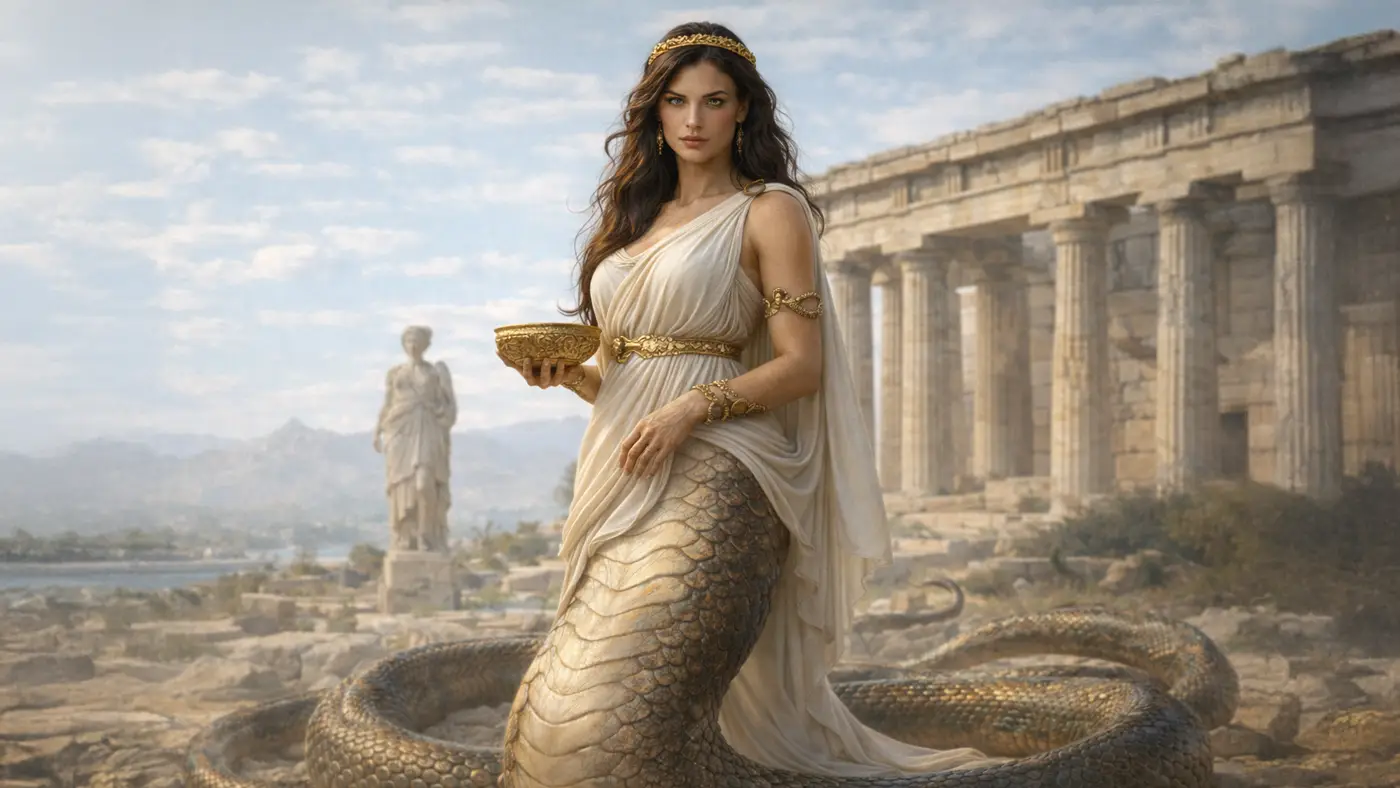
Lamia is a Greek child-devouring female monster who later developed associations with seduction and blood-drinking. Like Lilith, she combines danger to children with threatening female sexuality, although her mythology grew independently within Greek and Roman tradition.
Succubus
The medieval European succubus is a female demon believed to visit sleeping men for sexual encounters and drain their vitality. Later writers frequently compared Lilith with succubi because both became connected with nocturnal sexuality, dreams, and dangerous supernatural relationships.
Agrat bat Mahlat
Agrat bat Mahlat is another female demon of Jewish tradition, described as roaming at night with a vast company of destructive spirits. Although some writers associated her with Lilith, early Jewish sources treat them as separate supernatural figures. Jewish Encyclopedia
Naamah
Later Jewish demonology sometimes places Naamah among powerful female demons associated with seduction and demonic offspring. Kabbalistic traditions connect her with Samael and other demonic figures, creating parallels with Lilith without making the two characters interchangeable.
Religion/Ritual
Lilith belonged primarily to protective and demonological practice rather than formal Jewish worship. Late antique Jewish communities used incantation bowls, written formulas, divine names, angels, and binding imagery to protect households against supernatural threats that could include liliths and related demons.
Childbirth traditions gave Lilith a particularly important ritual role. Protective amulets bearing angelic names circulated around mothers and infants, especially in later Jewish communities, reflecting the belief that supernatural protection could defend vulnerable families during birth and early infancy.
Kabbalistic literature later placed Lilith within more elaborate demonological systems involving Samael, sexuality, impurity, and cosmic opposition. These traditions expanded her theological importance, but they still did not make Lilith an object of legitimate worship within mainstream Jewish religious practice.
Scientific or Rational Explanations
Many dangers traditionally attributed to Lilith overlap with historically common experiences surrounding childbirth and infancy. Miscarriage, maternal illness, sudden infant death, infection, and unexplained neonatal mortality could create powerful pressure for supernatural explanations when medical knowledge offered few reliable answers.
Her nocturnal attacks also resemble experiences now associated with sleep paralysis. During such episodes, a person may awaken unable to move, sense a threatening presence, experience pressure on the chest, or interpret vivid dream imagery as an external attacker.
Sexual dreams and nocturnal emissions may likewise have contributed to traditions involving seductive female demons. These explanations cannot determine why Lilith specifically developed her historical identity, but they help explain why night demons appeared convincing across many unrelated cultures and periods.
Modern Cultural References
The Coming of Lilith – Judith Plaskow, 1972 / collected 2005 – Feminist Theology and Literature
Judith Plaskow reimagined Lilith as a figure of female equality and solidarity, helping transform the medieval demon into an important symbol within Jewish feminist thought.
The later collection The Coming of Lilith gathers this influential work with Plaskow’s broader writing.
The Coming of Lilith, Beacon Press
Lilith Magazine – Founded 1976 – Jewish Feminist Magazine
The independent Jewish feminist magazine deliberately chose Lilith as its namesake.
Its founders emphasized the legendary woman who considered herself Adam’s equal, transforming a traditionally dangerous figure into a symbol of independence, gender justice, and Jewish feminist identity.
Lilith Magazine official site
Lilith Fair – Sarah McLachlan and collaborators, 1997 – Music Festival
Sarah McLachlan co-founded Lilith Fair as a touring festival centered on female performers and women-led bands.
The festival borrowed Lilith’s name as a symbol of female independence and became an influential challenge to music-industry assumptions about women sharing major concert bills.
History: Lilith Fair
Supernatural – Eric Kripke, 2005-2020 – TV Series
Supernatural transforms Lilith into a powerful demon central to its apocalyptic mythology.
During the fourth season, Sam Winchester hunts her believing her death will prevent catastrophe, only to discover that killing Lilith actually breaks the final seal releasing Lucifer.
IMDb: “Lucifer Rising”
Lucifer – Tom Kapinos, 2016-2021 – TV Series
The television series Lucifer presents Lilith as the mother of Mazikeen and other demons.
The episode “It Never Ends Well for the Chicken” gives her a major role, depicting her choosing mortality after centuries of supernatural existence.
IMDb: “It Never Ends Well for the Chicken”
Diablo IV – Blizzard Entertainment, 2023 – Video Game
Diablo IV places Lilith at the center of its dark fantasy narrative.
Blizzard identifies her as Mephisto’s daughter and a progenitor of humanity within the game’s mythology, turning the ancient demonic name into a major contemporary fantasy antagonist.
Blizzard: Diablo IV Unveiled
Conclusion
Lilith’s history cannot be reduced to one story. She began as part of an ancient Near Eastern demonological world, entered Hebrew scripture briefly, expanded through rabbinic and magical traditions, and eventually gained a detailed medieval biography connecting her with Adam.

Her continuing power comes from that accumulated history. Different communities have imagined her as night demon, sexual threat, child-snatcher, cosmic adversary, rebellious first woman, feminist symbol, fantasy villain, and cultural icon without any one interpretation completely replacing the others.
Understanding Lilith therefore requires separating historical layers rather than blending them together. Isaiah’s Lilith, the Talmudic demon, the amulet tradition, the Alphabet of Ben Sira, Kabbalistic Lilith, and modern feminist reinterpretations belong to related but distinct stages.
Further Reading
“Lilith” by Raphael Patai, The Journal of American Folklore, 1964.
A foundational scholarly study tracing Lilith across Mesopotamian, Jewish, magical, and folkloric traditions.
JSTOR
Ancient Jewish Magic: A History by Gideon Bohak, Cambridge University Press, 2008.
Essential historical context for Jewish amulets, incantations, demons, and late antique magical practice.
Tel Aviv University
“Lilith’s Hair and Ashmedai’s Horns” by Naama Vilozny, Brill, 2015.
Examines incantation-bowl imagery alongside Talmudic descriptions of Lilith and other demons.
Brill
Aramaic Incantation Bowls in Their Late Antique Jewish Contexts, edited by Alexander Marcus and Jason Mokhtarian, 2025.
Current scholarship on magical bowls, household protection, demons, childbirth, and Jewish life in late antiquity.
JSTOR
The Encyclopedia of Jewish Myth, Magic & Mysticism by Geoffrey W. Dennis, 2016.
A broad reference work covering Lilith, Jewish demonology, magical traditions, angels, and mystical literature.
Google Books