back to top

Giant Bird

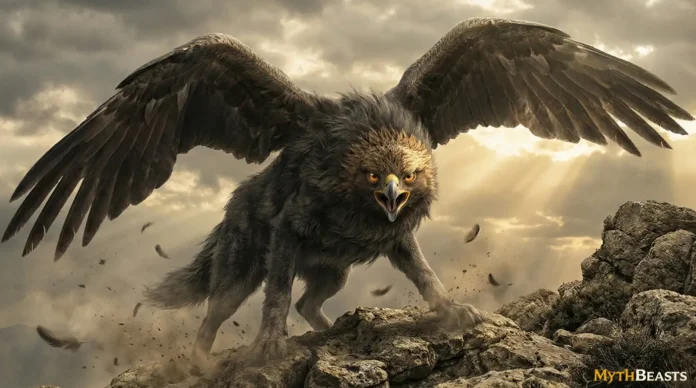
Giant Bird encompasses mythological avian beings known for their immense size and symbolic significance in cultural narratives.

Relevant Beasts
Asia
Giant Bird
Roc - Achaemenid empire
Ghaznavid Empire

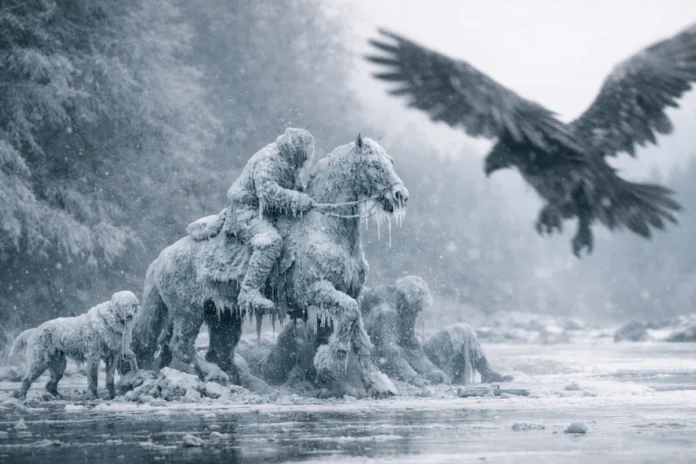
Roc

Colossal bird from Persian & Arabian tales, famous in Sinbad’s voyages for lifting elephants & wrecking ships with its...

  • Skills
Physical StrengthStrength
  • Weaknesses
BeheadingElement Sensitivities
Egypt
Giant Bird
Phoenix – Ancient Egypt mythology
Egypt

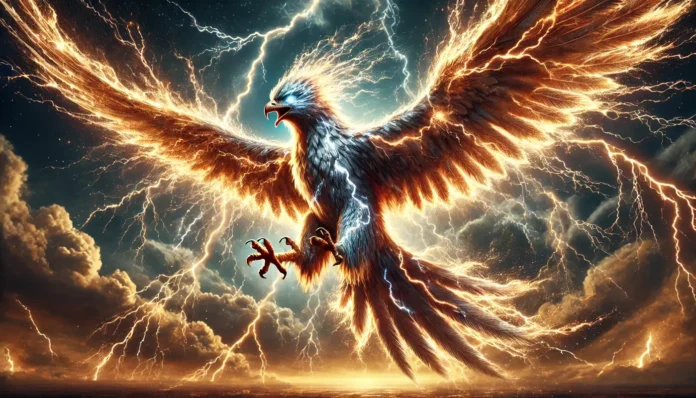
Phoenix

A sacred firebird of Ancient Egypt and Classical myth, the Phoenix embodies immortality through cycles of death and rebirth,...

  • Skills
Fire ImmunityHealing & Life
  • Weaknesses
Element SensitivitiesSpell Fatigue
Asia
Celestial Being
Fenghuang - Chinese folklore
China

Fenghuang

The Fenghuang, or Chinese Phoenix, embodies harmony and virtue, often associated with the Empress and cosmic balance.
  • Skills
Divine LightFire Absorption
  • Weaknesses
Anti-MagicCurse Bound
Native American
Giant Bird
Thunderbird - Native American Folklore
Native American

Thunderbird

The Thunderbird, a powerful symbol of storms and divine wrath, is a legendary bird from North American Indigenous cultures....
  • Skills
Lightning SummoningPhysical Strength
  • Weaknesses
Lightning DamageWind Impact
Middle East
Giant Bird
Anzu
Sumerians

Anzu

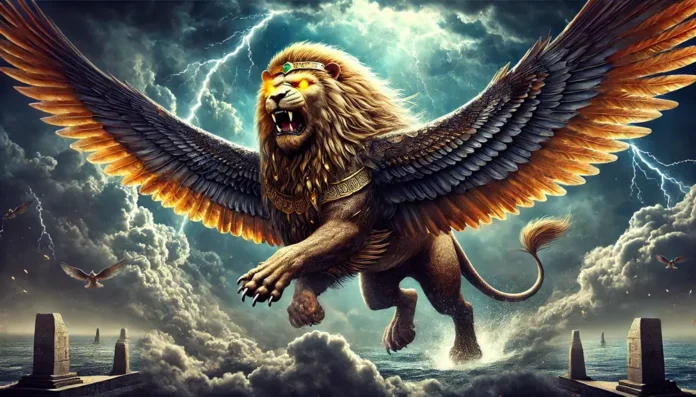
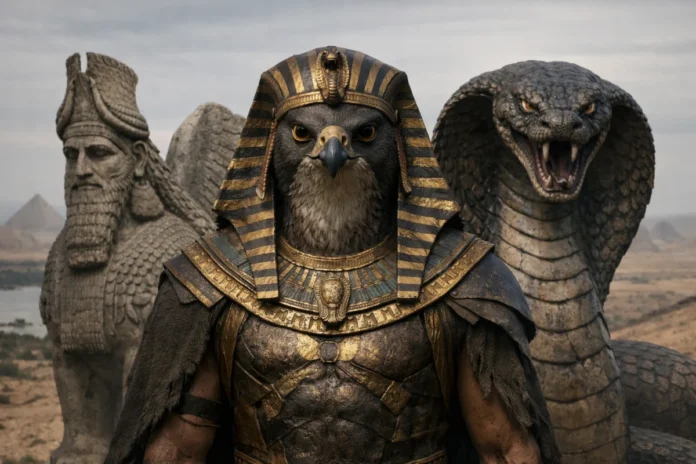
Anzu is a lion-headed eagle from Mesopotamian mythology, symbolizing chaos and power. Famous for stealing the Tablet of Destinies...

  • Skills
Control WeatherFlight
  • Weaknesses
BeheadingEasily Deceived
Hebrews
Giant Bird
Ziz- jewish - folklore
Hebrews

Ziz

The Ziz is a colossal bird from Jewish mythology, believed to rule the skies alongside the Behemoth and Leviathan....

  • Skills
Control WeatherElement Control
  • Weaknesses
Element SensitivitiesLightning Damage

Giant Bird – Overview

The Giant Bird is a mythological beast type characterized by immense size, avian form, and significant cultural symbolism. These creatures often embody powers beyond natural birds, serving as transcendental entities within various mythological traditions. Defined by their imposing presence, Giant Birds often symbolize cosmic forces, bridging the natural and supernatural realms. In many cultures, these entities play roles that range from transformative agents to divine messengers, embodying themes central to human understanding of the world and its metaphysical aspects.

Defining Characteristics

Physical Form and Morphology

Giant Birds are typically depicted with exaggerated avian features, such as vast wingspans, formidable talons, and a majestic head crest. These traits distinguish them from ordinary birds, emphasizing their larger-than-life presence and mythological significance. Often portrayed in vibrant colors or striking patterns, these creatures’ physical forms are both intimidating and awe-inspiring, underscoring their roles as powerful entities within their respective cultural narratives. Their morphology often reflects their supernatural abilities, such as the power to control the weather or traverse cosmic distances.

Ontological Nature

In mythological contexts, Giant Birds are frequently perceived as supernatural or semi-divine entities. They may exist as intermediaries between gods and humans or as manifestations of cosmic principles. Their presence often signifies a disruption or reinforcement of natural and metaphysical orders, emphasizing their role as liminal beings. This ontological nature allows them to traverse boundaries that separate the known world from the unknown, making them central to mythological narratives that explore themes of creation, destruction, and transformation.

Mythological Role and Function

Place in Mythological Systems

Giant Birds often occupy critical positions within mythological systems, serving as symbols of divine intervention or natural phenomena. They may act as divine messengers, bridging the gap between celestial and terrestrial realms, or embody cosmic principles themselves. Within various cosmologies, they can influence natural events, such as storms or harvests, reflecting their integral role within both the physical and spiritual worlds. These roles often highlight the interconnectedness of life, emphasizing the balance between human actions and divine will.

Perception and Meaning

Cultural interpretations of Giant Birds vary, but they are generally perceived as both protectors and harbingers. They might serve as guardians of sacred spaces or as omens predicting significant changes or events. Symbolically, these creatures can embody abstract forces such as fate, wisdom, or chaos, reflecting the dual nature of their mythological roles. Their presence in myths often represents a connection to the divine, instilling both fear and reverence. Their symbolic meanings frequently mirror the cultural values and concerns of the societies in which they appear.

Distinction from Related Beast Types

Conceptual Boundaries

Giant Birds are distinguished from other beast types, such as elemental beings or humanoid monsters, by their avian characteristics and their roles within mythological frameworks. Unlike elemental entities, which embody natural forces directly, Giant Birds often act as intermediaries or manifestations of such forces. They differ from humanoid monsters, which typically represent human fears or moral transgressions, by embodying larger cosmic principles or conveying divine messages. Their distinct avian nature and symbolic roles mark them apart in mythological taxonomy.

Common Sources of Confusion

Giant Birds are sometimes conflated with other avian deities or celestial creatures, leading to confusion over their classification. This confusion arises from their shared traits with other bird-like entities, such as their ability to fly or their connection to the sky. However, scholars distinguish Giant Birds by their specific cultural roles as omens or divine messengers, along with their often colossal size and unique mythological functions. Understanding these distinctions is crucial for accurately categorizing these creatures within their respective cultural contexts.

Canonical Beasts Associated with This Beast Type

Roc

Originating from Arabian folklore, the Roc is a giant bird known for its immense size and strength, capable of carrying elephants. This creature exemplifies the Giant Bird type through its symbolic role in magical narratives and its representation of overwhelming power and mystery.

Garuda

In Hindu and Buddhist traditions, Garuda is a divine bird-like being that serves as the mount of Vishnu. Its role as a protector against evil and its representation of celestial forces make it a quintessential Giant Bird, bridging the gap between mortal and divine realms.

Thunderbird

The Thunderbird is a prominent figure in Native American mythology, associated with storms and thunder. Its ability to control the weather and its symbolic representation of power and change firmly categorize it within the Giant Bird type, embodying the raw forces of nature.

Historical Distribution and Cultural Context

Giant Birds appear across diverse cultures, from the Middle East to South Asia and the Americas, during various historical periods. Their presence often correlates with societies that emphasize natural phenomena or the divine’s interaction with the terrestrial world. These creatures are typically embedded within cultures rich in oral tradition and symbolic artistry, where they serve roles that underscore cultural beliefs about the cosmos and humanity’s place within it. They are often found in mythologies where the interplay between nature and the divine is central.

Scholarly Interpretation and Uncertainty

Variation in Definitions

Scholarly definitions of Giant Birds vary due to cultural and historical differences. While some traditions highlight their destructive capabilities, others emphasize their protective roles. Academic frameworks differ in emphasizing either physical attributes or symbolic functions, reflecting broader debates about the focus of mythological studies. Interpretations can shift based on the particular cultural lens through which these creatures are examined, making comprehensive analysis complex and multifaceted.

Limits of Available Evidence

Evidence regarding Giant Birds is often incomplete or fragmented, relying heavily on oral traditions and limited textual records. This scarcity results in gaps and ambiguities within the mythological and historical record, challenging scholars to piece together coherent interpretations. While certain elements are widely recognized, others remain speculative due to the diverse cultural contexts in which these birds appear. Scholars must differentiate between well-substantiated interpretations and those that are conjectural, ensuring a balanced understanding of these mythological entities.

Mythological Role Across Cultures

The recurrence of Giant Birds across cultures reflects shared human concerns about the forces of nature and the divine. These creatures often embody the need to explain and interact with cosmic phenomena, serving as symbols that articulate cultural values and existential questions. Their presence in mythologies underscores the importance of understanding humanity’s place within a larger, often unpredictable universe. Recognizing this role enhances comparative mythology by revealing the universal themes that resonate across different traditions and historical periods, enriching our understanding of cultural narratives.