Basque – an Overview
Basque designates a people, language, and regional cultural history associated chiefly with the western Pyrenees and adjoining Atlantic coast, rather than one uniform or timeless mythology.
Basque folklore is a historically situated body of local narratives and beliefs, documented most substantially through collections made in the nineteenth and twentieth centuries.
The Basque language, Euskara, is distinct from neighboring Romance languages and is not demonstrably descended from Latin or another known language family.
Calling Basque a mythological source identifies the cultural context of recorded traditions; it does not establish a single ancient religious system shared by every community.
Historical and Environmental Context
Time Frame and Location
Basque cultural history is associated with territories on both sides of the western Pyrenees, including parts of present-day northern Spain and southwestern France.
Modern political borders do not define the full historical distribution of Basque-speaking communities, whose territories and language use changed over time.
The language’s documented history is comparatively late, while its pre-Roman ancestry remains uncertain because direct evidence for earlier linguistic stages is limited.
Roman-period inscriptions from Aquitania preserve personal and divine names considered relevant to the history of Basque, though interpretation of their linguistic relationship remains debated.
Mountain valleys, coastal settlements, and agricultural districts shaped distinct local settings; these environments do not by themselves prove particular religious beliefs or practices.
Contact and Cultural Exchange
Basque-speaking communities experienced sustained contact with Roman, Christian, and neighboring Romance-language societies, as shown by linguistic history and broader regional evidence.
Christianization altered the religious context in which older beliefs were transmitted, but the timing and local processes cannot be reduced to one uniform event.
Basque vocabulary includes substantial Romance influence, evidence of prolonged contact rather than proof that specific folklore motifs originated outside Basque-speaking communities.
Historical contact therefore provides context for cultural change, but available evidence rarely identifies the precise route by which an individual narrative or belief developed.
Mythological Framework
Spiritual or Supernatural Categories
Recorded Basque folklore includes named supernatural beings, sacred or powerful places, and personified natural phenomena, but these materials do not establish a systematic pantheon.
Collections document Mari as a prominent female supernatural figure associated with particular mountains and local traditions, although accounts vary across regions and collectors.
Other recorded categories include lamiak, beings associated with streams or springs in many accounts; their descriptions and narrative roles are not entirely consistent.
These categories are best treated as elements of regional folklore rather than as fixed ranks within a universally shared religious hierarchy.
No verified sources describe a single, comprehensive Basque cosmology for this context; surviving evidence consists largely of locally recorded accounts and later interpretation.
Folklore and Narrative Tradition
Recurring Mythological Themes
Stories about Mari repeatedly connect supernatural presence with named landscape features, especially mountains and caves, making place central to the narratives’ recorded form.
Accounts of lamiak commonly associate these beings with water settings, including rivers and springs, though details differ among regional versions.
Some Basque narratives concern weather, livestock, household fortune, or human conduct, reflecting practical concerns without demonstrating one shared symbolic explanation.
Such motifs are documented as recurring patterns, but their presence does not establish common origins or identical meanings across the Basque-speaking region.
Transmission and Preservation
Much information about Basque folklore comes from oral accounts recorded by collectors, particularly during the nineteenth and twentieth centuries.
Because collection often occurred long after Christianization, recorded accounts may combine older local material with later religious language and changing social circumstances.
Written documentation is uneven across locations and topics, so the prominence of a motif in collections may reflect collection history as well as historical prevalence.
Archaeological remains can illuminate settlement and material life, but they generally cannot identify the content of oral narratives without supporting evidence.
Mythological Beasts and Non-Human Entities
Named beings in Basque folklore are classified here through regionally documented accounts, not as members of a complete or stable supernatural taxonomy.
Mari
Mari is inseparable from Basque folklore because collected accounts identify her through local Basque place traditions; detached from that context, she is misclassified as a universal goddess.
Lamiak
Lamiak belong to Basque folklore through recorded regional narratives linking them with waterside places; without that evidence, grouping them as generic fairies erases local variation.
Basajaun
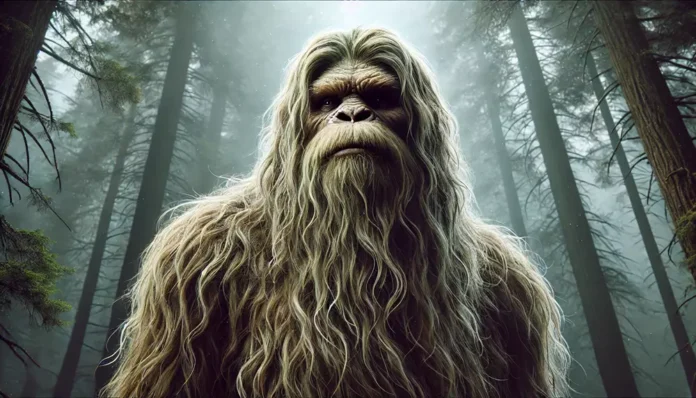
Basajaun appears in collected Basque narratives as a forest-associated being; its classification depends on those regional accounts, rather than resemblance to generalized wild-human figures.
Symbolic Roles of Creatures and Forces
Mari’s association with particular mountains gives landscape a structuring role in the folklore record, connecting supernatural narratives to identifiable local geography.
Water settings in lamiak accounts situate supernatural beings within familiar environmental features, though sources do not establish one consistent symbolic interpretation.
Basajaun’s forest association links its recorded identity to woodland settings; claims about a uniform social or religious function exceed the available evidence.
These interpretations describe patterns in collected narratives, not verified doctrines or meanings held identically by all historical Basque communities.
Internal Variation and Temporal Change
Accounts of named beings vary between localities, demonstrating that Basque folklore cannot be represented accurately by treating every collected description as a single canonical version.
Collectors recorded traditions in different periods and circumstances, so variation may reflect oral change, local practice, interviewer choices, or publication methods.
Christian religious frameworks influenced the historical setting of folklore transmission, but available records do not permit a uniform chronology of transformation across communities.
Regional variation is consequently better documented than a continuous, shared system extending unchanged from antiquity into modern collection periods.
Evidence Limits and Scholarly Uncertainty
There is no surviving pre-Christian Basque corpus that directly sets out a complete mythology, cosmology, or standardized religious system.
Roman-period names provide valuable evidence for ancient religious and linguistic history, yet their interpretation does not securely reconstruct later folklore figures.
Oral narratives were written down retrospectively, leaving uncertainty about earlier wording, performance contexts, and the extent of transmission across generations.
Scholarly interpretations differ over the antiquity and origins of particular motifs; resemblance alone cannot establish direct inheritance or shared religious meaning.
No verified sources describe a unified Basque pantheon or comprehensive cosmology for this context. Such absence limits reconstruction without disproving the historical importance of local beliefs.