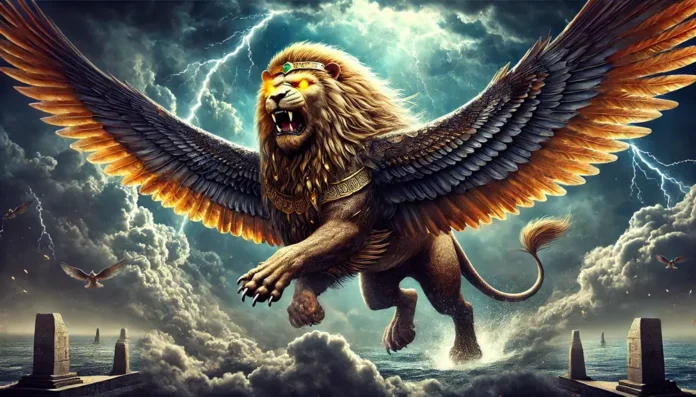
Sumerians – an Overview
The Sumerians are recognized as one of the earliest urban civilizations, based in Mesopotamia around the 4th millennium BCE. They inhabited the region between the Tigris and Euphrates rivers, which is now southern Iraq. This civilization is pivotal for understanding the early development of complex societies in the world. Known for their innovations in writing, architecture, and governance, the Sumerians laid foundational cultural and technological advancements that influenced subsequent civilizations.
Historical and Environmental Context
Time Frame and Location
The Sumerian civilization began around 4500 BCE, thriving until approximately 1900 BCE. Situated in the fertile plains of southern Mesopotamia, their territory was characterized by unpredictable flooding, which necessitated irrigation advancements. This environmental context enabled agricultural surplus, supporting urban growth and complex societal structures. The lack of natural barriers facilitated cultural exchanges but also invasions.
Contact and Cultural Exchange
The Sumerians interacted with neighboring cultures like the Akkadians, leading to cultural and technological exchanges. These interactions were often peaceful, marked by trade and shared innovations in writing and administration. However, they also faced conflicts, such as invasions that led to cultural assimilations and shifts. Such exchanges enriched the Sumerian legacy but also contributed to their eventual decline.
Mythological Framework
Worldview and Cosmological Concepts
In Sumerian belief, the cosmos comprised three primary realms: the heavens, the earth, and the underworld. They perceived the universe as a structured, hierarchical entity governed by divine laws. Deities controlled natural and social orders, reflecting the Sumerians’ perception of an interconnected world, where divine intervention was a norm in explaining natural phenomena and societal dynamics.
Spiritual or Supernatural Categories
The Sumerians acknowledged a pantheon of gods, each responsible for specific cosmic domains. These deities were anthropomorphic, embodying human traits and emotions. Important gods included Anu, the sky god, and Enlil, the god of air and storms. Ancestors and spirits also played roles, influencing daily life and requiring rituals for appeasement. This structure underpinned their understanding of divine-human interaction.
Folklore and Narrative Tradition
Recurring Mythological Themes
Recurring themes in Sumerian mythology include creation, divine retribution, and heroism. Stories like the Epic of Gilgamesh explore existential questions and human limitations. These themes reflect societal concerns, such as the continuity of life and the quest for immortality. They capture the Sumerians’ attempts to comprehend human existence and divine relationships through narrative forms.
Transmission and Preservation
Sumerian myths were preserved through cuneiform writing on clay tablets, a significant technological advancement. These texts, often housed in temple libraries, served as educational and religious resources. Oral traditions complemented these written records, ensuring mythological knowledge’s dissemination across generations. This dual transmission method enabled both continuity and adaptation of their narratives.
Mythological Beasts and Non-Human Entities
Sumerian mythology includes various mythological beings that symbolize natural and supernatural forces. These entities often serve as guardians or antagonists within mythic narratives, illustrating moral and cosmological lessons. Whether depicted as divine messengers or monstrous adversaries, their roles are integral to understanding Sumerian myths. The entities’ symbolic presence underscores the Sumerians’ complex view of the natural and divine worlds.
Kur
Kur, often described as a monstrous embodiment of the underworld, represents chaos and challenges divine order. Its presence in myths emphasizes the tension between the chaotic and ordered realms. Without understanding Kur, the Sumerian perspective on cosmic balance would be incomplete, as it highlights the civilization’s views on life, death, and cosmic struggle.
Symbolic Roles of Creatures and Forces
In Sumerian myth, creatures and forces often symbolize broader societal values or natural phenomena. For example, the storm god Enlil represents authority and natural forces, embodying the power dynamics within Sumerian cosmology. Such symbols reflect societal structures and environmental interactions, offering insight into how Sumerians understood and interpreted their world.
Internal Variation and Temporal Change
Over time, Sumerian culture experienced shifts in religious practices and deity worship. Influences from neighboring Akkadian culture led to syncretism, affecting how myths were told and understood. Variations in deity prominence and cult practices illustrate adaptability within the Sumerian belief system. Understanding these changes is crucial for studying the evolution of Mesopotamian religious traditions.
Related Cultural Origins and Myth Sources
Sumerian mythology significantly influenced subsequent Mesopotamian cultures, such as the Akkadians and Babylonians. These cultures adopted and adapted Sumerian myths, merging them with their own beliefs and practices. While the core themes remained, interpretations and deity roles evolved. This process highlights the dynamic nature of mythological transmission and cultural syncretism in the ancient Near East.
Evidence Limits and Scholarly Uncertainty
Despite extensive archaeological finds, gaps remain in understanding Sumerian mythology. Many texts are fragmentary, leaving incomplete narratives and unclear contexts. Scholarly debates continue regarding interpretations and translations of these ancient records. No verified sources describe specific aspects of Sumerian beliefs, highlighting the challenges in reconstructing their cultural and religious landscape with certainty.