back to top

Chaos Giant

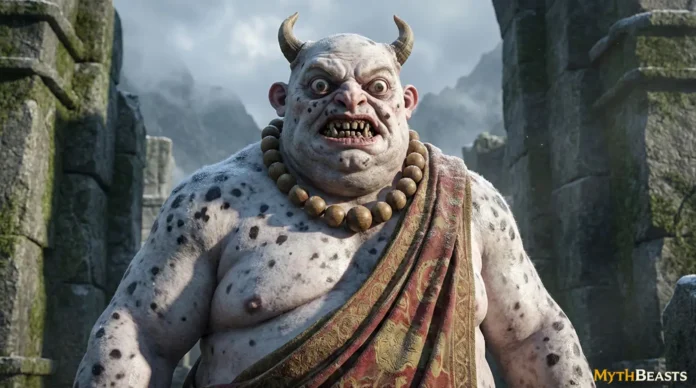
Chaos Giant embodies mythological disorder, symbolizing raw power and tumultuous change in ancient narratives.

Relevant Beasts
Europe
Chaos Giant
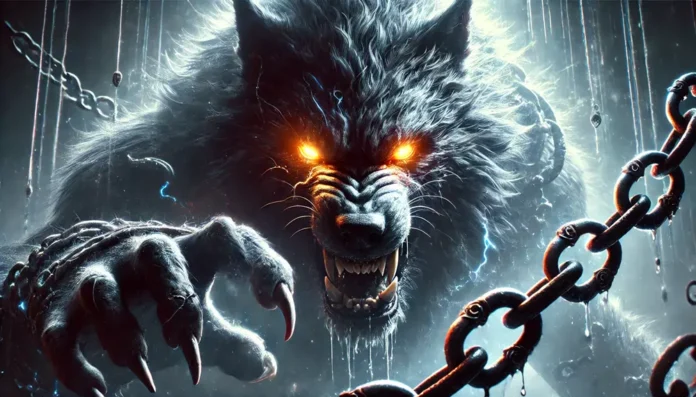
Fenrir MythBeasts.com
Norway

Fenrir

Fenrir, the giant wolf in Norse mythology, is destined to break free during Ragnarök and devour Odin, embodying chaos...

  • Skills
Physical StrengthRage Strength
  • Weaknesses
Blessed WeaponDivine Restrictions

Chaos Giant – Overview

The Chaos Giant is a mythological beast type characterized by its embodiment of disorder and primordial power. These giants often symbolize the unpredictable forces that existed prior to the establishment of cosmic order. They are typically considered agents of destruction or transformation within mythological systems. Their presence is often linked to the creation myths or apocalyptic endings, acting as catalysts for change. They recur across numerous cultures, each interpreting their role within the grand cosmic narrative differently. Despite variations, the Chaos Giant consistently challenges established order, revealing humanity’s perpetual struggle with chaos.

Defining Characteristics

Physical Form and Morphology

Chaos Giants are generally depicted with massive, towering forms, often with exaggerated limbs and grotesque features. Their bodies might be composed of elements like stone, ice, or fire, emphasizing their connection to primordial forces. Such physicality highlights their strength and their potential for destruction. Despite these commonalities, their exact appearances can vary significantly across cultures, reflecting local environmental and cultural influences. These giants may have additional limbs or heads, symbolizing their chaotic nature and their separation from regular beings.

Ontological Nature

Ontologically, Chaos Giants exist at the intersection of the natural and the supernatural realms. They embody liminal spaces and often serve as symbols of cosmic upheaval. Their existence challenges the boundaries between the human and divine, often acting as disruptors in mythological narratives. Unlike purely spiritual entities, their physicality allows them to interact directly with the material world. This dual nature reinforces their role as agents of transformation, bridging disparate elements of creation and destruction.

Mythological Role and Function

Place in Mythological Systems

Chaos Giants occupy a crucial role within mythological systems, often as adversaries to gods or heroes. Their presence signifies a return to primal chaos, necessitating divine intervention or heroism to restore order. They frequently appear in narratives where their defeat marks the establishment or reaffirmation of cosmic stability. These interactions underscore their function as necessary antagonists, whose presence facilitates the demonstration of divine power or heroic virtue. Their actions often culminate in significant cosmological or moral lessons for humanity.

Perception and Meaning

Culturally, Chaos Giants are often perceived as malevolent forces, though this is not universally the case. In some traditions, they embody necessary chaos, serving as catalysts for renewal or creation. They may also symbolize the dangers of unchecked ambition or hubris when their destructive tendencies go unchallenged. Beyond their immediate threat, they represent the potential for transformation inherent in chaos, offering a counterbalance to the orderly aspects of the universe. This duality enriches their symbolic meaning across mythologies.

Distinction from Related Beast Types

Conceptual Boundaries

Chaos Giants are distinct from other mythological beings like elemental spirits or humanoid monsters due to their specific alignment with chaos and transformation. While elemental beings connect more directly with natural forces, Chaos Giants embody the disruption of cosmic order. Unlike humanoid monsters, they often possess a grander scale and impact on mythological narratives, challenging entire pantheons or civilizations rather than individual heroes. Their role is more systemic, affecting the fundamental structures of the world.

Common Sources of Confusion

Confusion often arises when Chaos Giants are conflated with other large mythological figures, such as titans or ogres. Scholars distinguish them by emphasizing their association with primordial chaos rather than sheer physical might or malice. Giants associated with specific natural phenomena or geographical features are distinguished by their elemental ties rather than their chaotic nature. Comparative mythology highlights these nuances, enabling clearer distinctions and avoiding oversimplification of their roles across different cultures.

Canonical Beasts Associated with This Beast Type

Ymir

In Norse mythology, Ymir is a prime example of a Chaos Giant. Born from elemental ice and fire, his body became the foundation of the world. Ymir’s existence and subsequent death underscore the transformative power of chaos.

Fomorians

The Fomorians of Irish mythology are often depicted as chaotic beings opposing the Tuatha Dé Danann. Their monstrous forms and disruptive influence illustrate their role in challenging and reshaping order within Celtic legends.

Rangda

The Balinese Rangda represents chaos through her antagonism with noble figures. As a destructive force, she embodies disruption and transformation within Balinese mythology, highlighting the balance between chaos and order.

Historical Distribution and Cultural Context

Chaos Giants appear across various cultures, including Norse, Celtic, and Southeast Asian traditions, each interpreting them distinctively. They are predominantly found in regions with rich oral traditions. Historically, their narratives often coincide with periods of social upheaval or environmental change. This correlation suggests an enduring human fascination with chaos as a necessary counterbalance to order. Their presence in mythologies reflects societies’ attempts to understand and articulate the complexities of their worlds.

Scholarly Interpretation and Uncertainty

Variation in Definitions

Scholars note that definitions of Chaos Giants vary significantly across cultures, influenced by local cosmologies and cultural priorities. In some frameworks, they are viewed as embodiments of cosmic disorder, while others see them as more benign or neutral forces. Academic debates continue regarding their precise role within different mythological systems. This diversity reflects broader questions about the nature of chaos and order in human thought, offering rich material for comparative analysis.

Limits of Available Evidence

Many aspects of Chaos Giants remain speculative due to limited archaeological and textual evidence. Oral traditions, often their primary source, provide fragmented and evolving narratives. Consequently, interpretations rely heavily on comparative mythology and cultural anthropology to reconstruct their roles. While some myths offer detailed depictions, others are more ambiguous, leading to varying scholarly opinions. Researchers emphasize the importance of acknowledging these limitations, avoiding definitive conclusions where evidence is scarce.

Mythological Role Across Cultures

Chaos Giants endure across cultures due to their embodiment of universal themes like the struggle between order and chaos. They address shared human concerns about control, transformation, and the unknown, making them resonant figures in mythology. Their recurrence highlights a fundamental narrative tool, illustrating the necessity of chaos in enabling growth, change, and renewal. By examining their role, one gains insight into the cultural psyche, understanding underlying themes that shape myths globally.