back to top

Holy Water

Holy Water acts as a fixed vulnerability against certain mythological beings, often neutralizing or repelling them due to its sacred properties.

Relevant Beasts
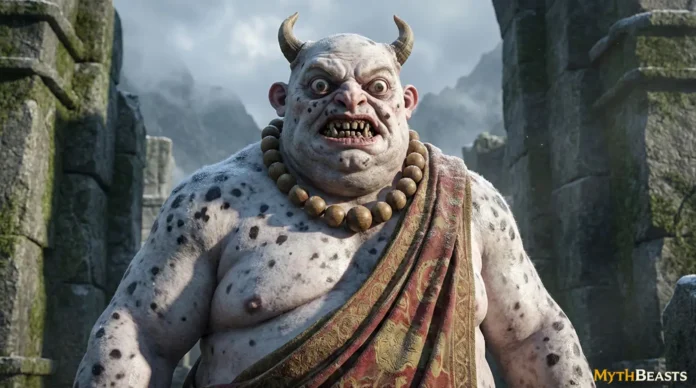
Achaemenid Empire
Demonic Form
Aeshma - the Zoroastrian demon
Achaemenid Empire

Aeshma

Aeshma - a Zoroastrian demon of wrath and violence who disrupts ritual, drives humans to rage and bloodshed, and...

  • Skills
Disease ManipulationFear Inducement
  • Weaknesses
Blessed WeaponDivine Restrictions
Celtic
Ghostly Apparition
Banshee - Celtic folklore
Celtic

Banshee

The Banshee is a legendary figure rooted deeply in Irish mythology, recognized primarily for her mournful wail that is...

  • Skills
Death & NecromancyDeath Sense
  • Weaknesses
Divine RestrictionsHoly Ground
Europe
Vampire
Vampire - Slavic Folklore
Slavic

Vampire

A fearsome undead being from Eastern European folklore, the Vampire feeds on life essence. It is tied to dark...

  • Skills
Healing & LifeHypnosis
  • Weaknesses
Divine RestrictionsElement Sensitivities
Celtic
Vampire
Baobhan Sith - Celtic folklore
Celtic

Baobhan Sith

Baobhan Sith are vampiric fae from Scottish folklore who prey on travelers at night, seducing them before feeding. Active...

  • Skills
Healing & LifeLife Drain
  • Weaknesses
Blessed WeaponDivine Restrictions
Celtic
Hybrid Creature
Celtic

Nuckelavee

The Nuckelavee is a terrifying horse-like demon from Orcadian folklore. It spreads disease and despair, representing one of the...

  • Skills
Element ControlWater Walking
  • Weaknesses
Divine RestrictionsHoly Water
Mississippian
Flesh-Eating Undead
Wendigo - North American folklore
Mississippian

Wendigo

The Wendigo, rooted in Algonquian folklore, embodies insatiable greed and cannibalism. Depicted as a gaunt, emaciated figure with...

  • Skills
Cold ResistanceEnhanced Stamina
  • Weaknesses
Blessed WeaponFire Vulnerable

Holy Water – Overview

Holy Water is a mythological weakness characterized by its ability to limit or counteract supernatural entities. It represents a metaphysical boundary with intrinsic sacredness, affecting beings with inherent vulnerabilities to divine purity. Mythological systems often treat Holy Water as a significant vulnerability due to its symbolic association with divine authority, moral cleansing, and cosmological order. Its effectiveness is not situational but rather grounded in the broader structures of belief, where it embodies divine intervention against malevolent forces.

Defining Characteristics of the Weakness

Nature of the Limitation

Holy Water represents a metaphysical restriction that impacts entities associated with evil or impurity. Its essence as a sacred purifier means it inherently conflicts with beings opposed to divine purity. This limitation does not merely restrict physical actions; it embodies a deeper moral and cosmological constraint. The concept is deeply rooted in the belief that divine purity can counteract malevolent forces, establishing a boundary that these entities cannot cross without suffering consequences.

Conditions of Exposure

Holy Water becomes relevant within mythological systems under conditions that emphasize moral or symbolic purity. Its activation is often linked to sacred rites or religious environments, where its cleansing properties are most potent. These conditions highlight the dichotomy between purity and corruption, underscoring the water’s role as a divine agent. The weakness is not activated through procedural means but through inherent symbolic opposition to evil, manifesting within religious or sacred contexts naturally.

Mythological Role and Function

Function Within Mythological Systems

Holy Water operates within mythological systems as a regulator of power and preserver of cosmic balance. It serves as a check against supernatural entities that threaten divine order, ensuring these beings cannot dominate unchecked. By embodying divine authority, Holy Water enforces limitations on malevolent forces, preventing them from achieving absolute power. Its presence within mythological narratives emphasizes the necessity of balance and the role of divine intervention in maintaining cosmic harmony.

Symbolic and Cultural Meaning

Symbolically, Holy Water represents inevitability, moral consequence, and sacred law within mythologies. Its use signifies the divine right to cleanse and purify, reinforcing the limitations of hubris and the boundary between mortal and divine. Culturally, it is a reminder of mortality and the limitations imposed by divine forces. This sacred element underscores the moral framework within which mythological beings operate, emphasizing the consequences of transgressing divine boundaries.

Distinction from Related Mythological Weaknesses

Conceptual Boundaries

Holy Water differs from related weaknesses such as general mortality or divine punishment through its inherent sacred nature. Unlike physical injury or situational defeat, it represents a constant metaphysical boundary. While divine punishment may be situational, Holy Water is a perpetual symbol of divine authority over malevolent entities. This distinction is crucial for understanding its role within mythological classification, ensuring it is not conflated with other vulnerabilities.

Common Sources of Misclassification

Holy Water is often misunderstood or conflated with other vulnerabilities due to its symbolic nature. Scholars distinguish it from physical injuries or situational weaknesses by emphasizing its cultural and symbolic significance. Misclassification arises when its sacred properties are overlooked, leading to an oversimplified view of its mythological function. Comparative mythology clarifies these differences by focusing on the inherent sacredness of Holy Water and its role in divine intervention.

Canonical Beings Defined by Holy Water

Vampires

In European folklore, vampires are defined by their vulnerability to Holy Water, symbolizing their opposition to divine purity. Holy Water’s cleansing nature emphasizes the vampire’s metaphysical impurity. Without Holy Water, the vampire’s narrative and mythological role as a corrupted being would be diminished, lacking the divine constraint pivotal to its characterization.

Demons

Demons, within Abrahamic traditions, are entities fundamentally constrained by Holy Water. Its consecrated nature embodies divine authority, which demons inherently resist. Holy Water reinforces their narrative as beings in opposition to sacred order, highlighting the divine limitation imposed on them, thus preserving the integrity of their mythological function.

Historical Distribution and Cultural Context

Holy Water appears across various cultures and historical periods, notably within religious traditions that emphasize divine purity. Its presence is prominent in Abrahamic religions, where it serves as a symbol of cleansing and divine intervention. This weakness is not isolated to specific myths but is embedded within broader belief systems that prioritize divine authority and moral order, illustrating its widespread cultural significance.

Scholarly Interpretation and Uncertainty

Variation in Interpretation

Scholarly interpretations of Holy Water vary between cultures and historical periods, reflecting differing symbolic emphases. Some view it as a literal cleansing agent, while others emphasize its metaphysical significance. These variations illustrate the complexity of its symbolic role and the diversity of its cultural interpretations, highlighting the need for context-specific analysis when examining its mythological function.

Limits of the Evidence

The historical record of Holy Water’s mythological role contains gaps and ambiguities, particularly regarding its origins and evolution. Some interpretations remain contested, with limited evidence to support definitive conclusions. Scholars acknowledge these uncertainties and rely on established interpretations, avoiding speculation to maintain scholarly integrity in understanding Holy Water’s mythological significance.

Mythological Function Across Cultures

Holy Water’s recurrence across mythological traditions underscores shared human concerns about purity, divine authority, and moral order. Its symbolic function addresses the need to limit malevolent forces, maintaining cosmic balance. Understanding this weakness enhances comparative mythology by highlighting universal themes of purification and divine intervention, providing insights into the cultural values underpinning mythological systems.