
back to top

Holy Symbol

Holy Symbol represents a fixed constraint that renders certain mythological entities vulnerable or powerless when confronted.

Relevant Beasts

Akkadian Empire
Storm Entity
Akkadian Empire

Umu Dabrutu

The Umu Dabrutu are storm entities from Mesopotamian mythology, known for their ability to control the weather and unleash...
  • Skills
FlightNature Manipulation
  • Weaknesses
Fire VulnerableHoly Symbol
Akkadian Empire
Demonic Form
Lamashtu - Mesopotamian Mythology
Akkadian Empire

Lamashtu

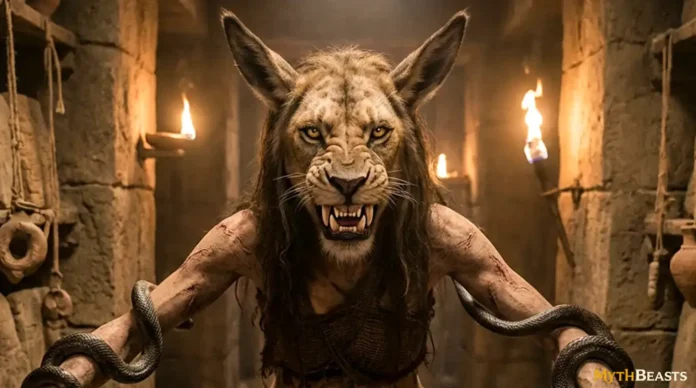
Lamashtu is a terrifying demoness from Mesopotamian mythology, known for preying on mothers and infants. She has a lioness-like...

  • Skills
Disease ManipulationShape Shifting
  • Weaknesses
Amulet BlockHoly Symbol

Holy Symbol – Overview

The concept of Holy Symbol in mythology represents a unique category of weakness. This refers to vulnerabilities or limitations that are integral to the structural framework of mythological beings and narratives. Unlike incidental failures, Holy Symbol embodies essential constraints within mythical systems, reflecting core cosmological principles. It is a recurring trope that signifies deeper metaphysical and moral boundaries, ensuring no entity achieves unchecked power. By embedding these limitations, mythologies create a balance between forces, maintaining cosmic order and preventing chaos.

Defining Characteristics of the Weakness

Nature of the Limitation

Holy Symbol primarily represents a metaphysical restriction within mythologies. It often delineates boundaries that entities cannot cross without incurring significant consequences. These limitations are not merely physical but are rooted in the cosmological fabric. They may define what is sacred or forbidden, emphasizing the interplay between power and moral law. This classification highlights patterns where mythical beings encounter insurmountable limits that protect the integrity of the universe they inhabit.

Conditions of Exposure

The conditions under which Holy Symbol becomes relevant are often deeply symbolic. They relate to moral transgressions, breaches of sacred law, or disruptions to the natural order. It is not activated by procedural triggers but through significant acts that challenge the established cosmic balance. Environmental factors may also play a role, where the presence of certain elements symbolizes the unfolding of this constraint. These conditions emphasize the culturally embedded values and the cosmological roles entities fulfill.

Mythological Role and Function

Function Within Mythological Systems

Holy Symbol operates as a regulatory mechanism within mythological systems. It ensures that no single entity can dominate or disrupt the cosmic balance. By defining limits, it enforces moral and metaphysical order, preventing the abuse of power. This framework allows mythologies to explore themes of downfall and redemption, where overstepping these boundaries leads to inevitable consequences. The weakness serves as a narrative tool that maintains equilibrium among conflicting forces, illustrating a sophisticated interplay of mythic elements.

Symbolic and Cultural Meaning

Holy Symbol symbolizes inevitability and the moral consequences of hubris across cultures. It represents sacred laws that even divine beings must respect, embodying a necessary humility before the universe’s grand design. This weakness underscores the idea that all power comes with inherent limitations. It serves as a reminder of mortality and the boundaries that define existence. By framing these constraints as sacred, mythologies reinforce the idea that balance and respect for cosmic order are paramount.

Distinction from Related Mythological Weaknesses

Conceptual Boundaries

Holy Symbol differs from general mortality or physical injury by being a metaphysical or moral limitation, not a situational defeat. Whereas physical injury is a tangible vulnerability, Holy Symbol reflects deeper cosmological boundaries. It operates beyond divine punishment or taboo violations, which are often situational. Instead, it represents an enduring constraint essential to maintaining cosmic order. This distinction is crucial in mythological classification, highlighting its integral role in defining narrative coherence.

Common Sources of Misclassification

Holy Symbol is often misunderstood as a physical vulnerability or oversimplified as a narrative device. Its metaphysical nature distinguishes it from merely situational weaknesses. Comparative mythology and scholarship clarify these nuances, emphasizing its role in regulating power and preserving balance within mythological systems. Misclassification arises when symbolic and moral dimensions are overlooked, leading to conflation with other vulnerabilities. Scholarly work continues to explore and articulate these differences, reinforcing its distinct identity in mythological taxonomy.

Canonical Beings Defined by Holy Symbol

Achilles

In Greek mythology, Achilles is defined by his vulnerability at the heel. This represents a symbolic weakness that holds profound narrative and cultural significance. Without this limitation, Achilles becomes narratively invulnerable, disrupting balance.

Tantalus

Tantalus, from Greek mythology, embodies Holy Symbol through his eternal punishment. This metaphysical constraint reflects moral consequence and cosmic justice. Tantalus’s narrative would lack coherence without this limitation, emphasizing the significance of moral transgressions.

Sisyphus

Sisyphus’s perpetual struggle with the boulder symbolizes an existential constraint. His punishment reflects themes of futility and inevitability within mythologies. Without this Holy Symbol, Sisyphus’s story loses its moral and philosophical depth.

Historical Distribution and Cultural Context

Holy Symbol appears across diverse cultures and historical periods, reflecting universal human concerns with power and limitation. Its presence is found in ancient Greek, Norse, and Egyptian mythologies, among others. Each culture adapts the concept to its cosmological and moral frameworks. Despite varying expressions, the underlying principle of maintaining cosmic order remains consistent. This reflects a shared cultural understanding of the balance between power and moral law, transcending individual mythological systems.

Scholarly Interpretation and Uncertainty

Variation in Interpretation

Interpretations of Holy Symbol vary across cultures and historical periods. Scholarly frameworks differ in understanding symbolic versus literal readings. Some view it as a narrative device, while others emphasize its metaphysical role. The diversity in interpretation highlights the complexity of mythological systems, where cultural contexts influence perceptions. Scholars continue to explore these variations, acknowledging the multifaceted nature of Holy Symbol and its enduring significance.

Limits of the Evidence

The evidence for Holy Symbol is sometimes ambiguous, leading to debates about its interpretation. While some aspects are well-established, others remain uncertain or contested. Scholars acknowledge gaps in the historical record, emphasizing the need for cautious interpretation. This reflects broader issues in comparative mythology, where differing sources and cultural contexts can obscure understanding. Despite these challenges, Holy Symbol remains a critical concept, fostering ongoing scholarly inquiry.

Mythological Function Across Cultures

Holy Symbol recurs across mythological traditions due to shared human concerns with power, morality, and cosmic balance. It addresses symbolic needs by emphasizing limitations essential to maintaining order. Recognizing this type of weakness enhances comparative interpretation, revealing common themes in human storytelling. By examining how different cultures integrate Holy Symbol into their myths, we gain insights into universal values and the enduring nature of these narratives. This understanding enriches our appreciation of mythological systems as reflections of human experience.