
Renaissance
Renaissance, c. 14th–early 17th centuries: Christian belief prevailed across much of Europe, alongside classical gods and legendary beings in art.
Relevant Beasts
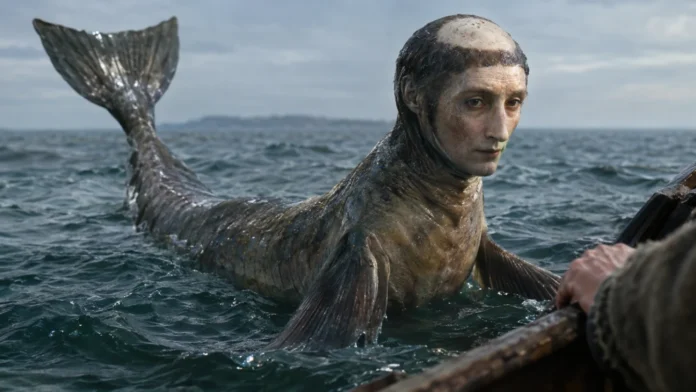
Sea Monk was a 16th-century marine wonder reported in northern Europe, with a monk-like head and fishlike body. An...

Baobhan Sith are vampiric fae from Scottish folklore who prey on travelers at night, seducing them before feeding. Active...

The Nuckelavee is a terrifying horse-like demon from Orcadian folklore. It spreads disease and despair, representing one of the...

The Ghillie Dhu is a solitary forest spirit in Scottish folklore, kind to children and clothed in moss. A...
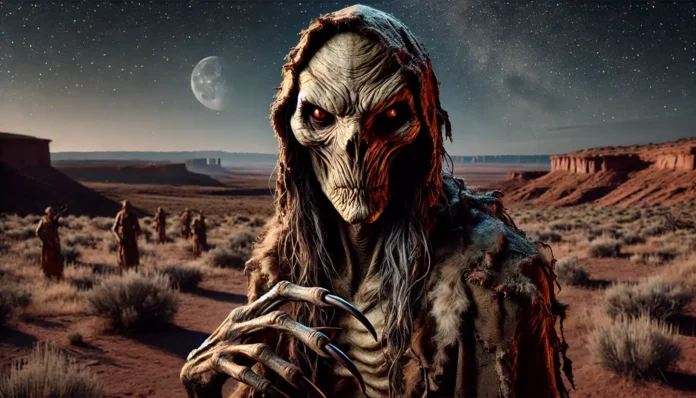
Skinwalkers are terrifying figures from Navajo folklore, described as malevolent witches who possess the power to shape-shift into animals....
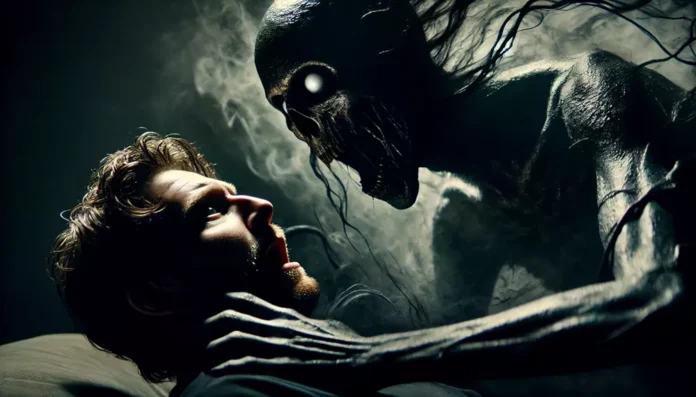
A malevolent spirit that possesses the living, causing distress and sickness in Eastern European Jewish folklore.
Sub Categories
Age of Exploration
1400 CE - 1600 CE. The Age of Exploration was a period when European powers expanded their knowledge of the world, driven by maritime exploration. Figures like Columbus and Vasco da Gama explored new lands, leading to global trade networks.
Ashanti Empire
1670 CE - 1902 CE. The Ashanti Empire in West Africa was a powerful kingdom known for its wealth, military strength, and sophisticated governance. The Ashanti people excelled in goldwork and maintained a complex system of laws and traditions.
Azuchi-Momoyama Period
Azuchi-Momoyama Period denotes a late-sixteenth-century historical era marked by political reunification and changing military authority, not a mythological age defined by supernatural events in historical taxonomy.
In mythological classification, its significance is contextual: the period can situate stories about authority, instability, and social change, without implying a shared symbolic code or uniform belief system.
Benin Empire
1180 CE - 1897 CE. The Benin Empire in West Africa is celebrated for its sophisticated art, especially bronze and ivory carvings. This kingdom was a major political and military power, controlling trade and creating a rich cultural legacy.
Early Renaissance
1300 CE - 1500 CE. The Early Renaissance marked the resurgence of interest in classical antiquity, with a focus on art, science, and philosophy. This period, primarily centered in Italy, laid the groundwork for the cultural advancements of the later Renaissance. Major cities like Florence became hubs of innovation, where artists and scholars sought to merge ancient wisdom with contemporary thought.
The mythology of the Early Renaissance was heavily influenced by Greco-Roman deities and legends. Figures such as Apollo and Venus re-emerged in art, representing beauty and enlightenment. Symbolism from ancient mythology intertwined with Christian themes, producing rich, multi-layered narratives.
Great Zimbabwe
1100 CE - 1450 CE. Great Zimbabwe was a powerful state in Southern Africa, known for its impressive stone structures and extensive trade network. This civilization was a center of commerce, connected to the wider Indian Ocean trade.
High Renaissance
1500 CE - 1527 CE. The High Renaissance, epitomized by figures like Leonardo da Vinci and Michelangelo, represented the peak of artistic achievement in Europe. The period was marked by masterworks that fused humanist philosophy with religious and mythological imagery, setting the standard for Western art for centuries.
Mythological themes from Greco-Roman traditions remained prevalent, with gods, goddesses, and allegorical creatures frequently depicted in art. This era solidified the cultural importance of myth as a tool for understanding human nature, morality, and the divine.
Inca Empire
1438 CE - 1533 CE. The Inca Empire, spanning much of South America, was the largest empire in the Americas. Known for its advanced agricultural techniques, road networks, and impressive architecture, such as Machu Picchu, it fell to Spanish conquest.
Italian Renaissance
1400 CE - 1600 CE. The Italian Renaissance was a broader cultural movement that encompassed advances in literature, science, and philosophy, in addition to the arts. Artists like Raphael and Botticelli flourished during this time, producing works that blended Christian and mythological imagery in new and innovative ways.
Classical mythology, particularly stories of the gods, heroes, and monsters of ancient Greece and Rome, was a significant source of inspiration for Renaissance artists. These themes allowed them to explore human emotions, beauty, and the power of the divine.
Late Renaissance
The Late Renaissance, spanning the 16th to early 17th centuries, marked a transition from medieval to modern thinking. It was characterized by a renewed interest in classical knowledge and humanism.
In mythology, this era emphasized human potential and reason, influencing belief systems to explore the natural world. Mythological thinking during the Late Renaissance often integrated scientific inquiry and artistic expression.
Ming Dynasty
1368 CE - 1644 CE. The Ming Dynasty in China was marked by economic prosperity, maritime exploration, and cultural achievements. The construction of the Great Wall was completed, and the Forbidden City was built during this period.
Northern Renaissance
The Northern Renaissance was a historical period marked by a revival of learning and art in Northern Europe. It emphasized humanism, leading to renewed interest in classical texts and ideas.
Symbolically, the Northern Renaissance represented a shift in mythological thinking towards human-centered narratives. This era framed belief systems by blending traditional myth with emerging scientific and philosophical insights.
Nubian Kingdom
1400 CE - 1900 CE. The Nubian Kingdom, located along the Nile River, maintained a unique cultural identity influenced by both African and Egyptian traditions. This kingdom was known for its strong fortifications and strategic trading routes.
Safavid Empire
1501 CE - 1736 CE. The Safavid Empire established Shia Islam as the state religion of Persia, marking a major turning point in Islamic history. It was known for its art, architecture, and contributions to the Persian cultural renaissance.
Tudor England
1485 CE - 1603 CE. Tudor England was a period of significant political and cultural change, with monarchs like Henry VIII and Elizabeth I. This era saw the English Reformation, the establishment of the Church of England, and the flourishing of the arts.