back to top

Fae & Spirit

Relevant Beasts
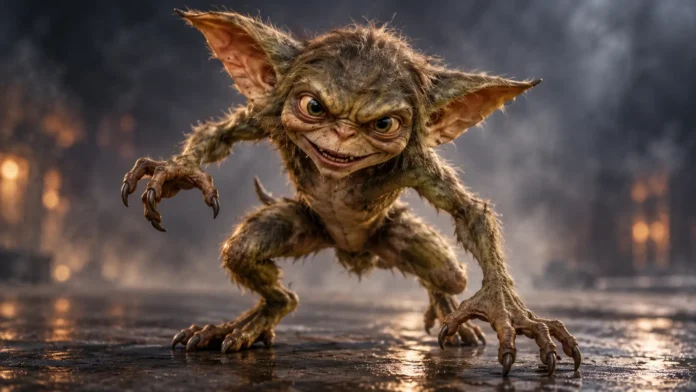
Celtic
Forest Spirit
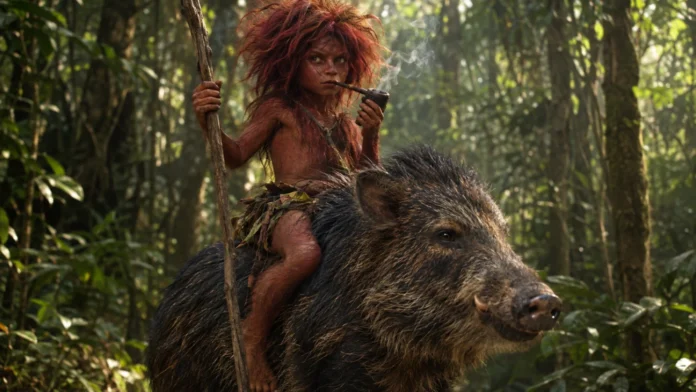
Ghillie Dhu - Scottish folklore
Celtic

Ghillie Dhu

The Ghillie Dhu is a solitary forest spirit in Scottish folklore, kind to children and clothed in moss. A...

  • Skills
CamouflageHealing & Life
  • Weaknesses
Element SensitivitiesIron Cut
American West
Dark Fae
Jackalope north american-folklore
American West

Jackalope

The Jackalope, a legendary North American creature, is described as a rabbit with antelope-like horns. Known for its cunning...

  • Skills
CamouflageEnhanced Agility
  • Weaknesses
High Altitude WeakPiercing Kill
Asia
Trickster Shifter
Tanuki - Japanese Folklore
Japan

Tanuki

The Tanuki is a mischievous shapeshifter from Japanese folklore, known for its magical abilities and playful trickery. It often...

  • Skills
DisguiseIllusions
  • Weaknesses
Charm ReversalCold Sensitive
Cantabrian
Forest Spirit
Anjana - Cantabrian folklore
Cantabrian

Anjana

Anjanas are kind, fairy-like beings from Cantabrian myth, symbolizing compassion and protection.

  • Skills
Healing & LifeHealing Touch
  • Weaknesses
Element SensitivitiesFire Vulnerable
Africa
Spider
Ghana

Anansi

Anansi is a cunning spider figure in African and Caribbean folklore, known for his wit and trickery, often embodying...

  • Skills
Animal CommunicationDisguising Illusion
  • Weaknesses
Impulsive ReactionOverconfidence
Alaska Native
Trickster Spirit
Azeban - the trickster racoon
Alaska Native

Azeban

Azeban is a trickster raccoon spirit from Abenaki folklore, known for creating confusion and mischief without harm.

  • Skills
StealthTrickery
  • Weaknesses
Silver WeakWater Dependent

Fae & Spirit - an Overview

The category of Fae & Spirit encompasses a diverse range of mythological beings defined by their ethereal or otherworldly nature. These entities often occupy liminal spaces in cultural belief systems. Unlike physical creatures, they are often seen as intermediaries between the natural and supernatural realms. Their classification is based on their elusive characteristics and their ability to interact with both the physical and spiritual worlds. This beast type often serves as a bridge in mythology, connecting realms and influencing events in various cultural narratives. They are sometimes seen as manifestations of natural forces or emotions.

Defining Characteristics

Physical Form and Morphology

Beings classified as Fae & Spirit typically lack a consistent physical form, often described as elusive or shape-shifting. Their appearance can range from humanoid to completely formless, highlighting their ethereal essence. They are often depicted with an ephemeral beauty, embodying elements of nature like wind, light, or shadow. Their morphology is not bound by physical laws, allowing them to traverse realms and dimensions freely. This variability in form emphasizes their role as intermediaries.

Ontological Nature

Fae & Spirit entities are generally considered supernatural or spiritual, existing beyond typical natural orders. While some traditions perceive them as cosmic forces, others view them as hybrid beings with spiritual and natural aspects. Their origin is often traced to ancient cosmologies where they represent elements such as air or emotion. Despite their elusive nature, they are integral to explanations of natural phenomena and human experiences. Their ontological status often blurs boundaries, adding complexity to mythological narratives.

Mythological Role and Function

Place in Mythological Systems

Within mythological systems, Fae & Spirit entities often hold positions of influence, mediating between gods and humans. They are sometimes depicted as messengers or guardians, facilitating communication across realms. Their presence in cosmology often signifies balance, maintaining harmony between natural forces and human endeavors. By embodying elements of change and transition, they contribute to the fluidity of mythological narratives. Their role may vary, but their influence is consistently profound in shaping mythological landscapes.

Perception and Meaning

Fae & Spirit entities are perceived variably across cultures, often seen as both benevolent and malevolent. They may act as protectors of nature, warding off threats to ecological balance. In some traditions, they are omens, heralding change or impending events. Their ambivalence in cultural perception reflects their complex roles, making them both revered and feared. As liminal entities, they challenge human understanding, often serving as reminders of the unseen forces in the world.

Distinction from Related Beast Types

Classification Boundaries

Fae & Spirit differ significantly from elemental or undead classifications due to their inherent liminality. Unlike animals or humanoid creatures, their existence transcends physical limitations. They are not bound by life and death cycles, unlike undead entities. In contrast to elemental beings, which are tied to specific natural forces, Fae & Spirit are more fluid, embodying broader cosmological concepts. This distinction underscores their unique role in mythologies.

Common Sources of Confusion

Fae & Spirit are often conflated with other supernatural entities due to their ambiguous nature. Scholars distinguish them through their lack of fixed form and their intermediary roles. Misclassification often arises from their shared characteristics with spirits or deities in various traditions. Their multifaceted roles further obscure clear boundaries, requiring careful analysis of cultural contexts. Scholarly investigation helps clarify their unique attributes and differentiates them from similar mythological entities.

Canonical Beasts Associated with This Beast Type

Banshee

Originating from Irish folklore, the Banshee is a spirit known for its mournful wail, signaling death. Its spectral nature exemplifies the Fae & Spirit category, acting as a bridge between life and the afterlife.

Will-o'-the-Wisp

Found in European folklore, the Will-o'-the-Wisp is a ghostly light that lures travelers astray. Its elusive form and association with natural landscapes align with the defining traits of Fae & Spirit beings.

Kami

In Shinto belief, Kami are spirits embodying natural elements and phenomena. Their spiritual essence and role as intermediaries between humans and the divine exemplify the Fae & Spirit classification.

Historical Distribution and Cultural Context

The Fae & Spirit type appears across global cultures, reflecting diverse interpretations of spiritual phenomena. In Celtic regions, fairies embody these traits, while in Japan, spirits like Kami illustrate similar roles. Their distribution highlights shared human concerns with the supernatural, despite regional differences. These beings often appear in societies with strong nature-connected beliefs, emphasizing their role in explaining natural and supernatural interactions. They serve as cultural symbols bridging worlds.

Scholarly Interpretation and Uncertainty

Variation in Definitions

Academic definitions of Fae & Spirit vary due to their complex roles across cultures. Some scholars emphasize their spiritual aspects, while others focus on their intermediary functions. Interpretations often depend on regional mythologies. This variability challenges uniform classification, as cultural narratives imbue these entities with diverse attributes. Consequently, scholarly discourse continues to evolve, reflecting the dynamic nature of mythological studies. Variations reveal differing priorities in understanding supernatural influences.

Limits of Available Evidence

The historical record for Fae & Spirit is often fragmentary, with limited textual or archaeological evidence surviving. This lack of concrete sources contributes to ongoing debates and uncertainties. Many traditions rely on oral transmission, complicating direct scholarly verification. Consequently, interpretations often require cautious reconstruction based on available cultural contexts. These limitations necessitate careful analysis to avoid speculative conclusions. Scholarly discussions continue to address these gaps, seeking a balanced understanding.

Taxonomic Relevance

The Fae & Spirit category serves as a vital classification within mythological taxonomies, organizing diverse entities across cultures. By highlighting their intermediary nature, this category aids in understanding complex mythological systems. It provides a framework for analyzing supernatural interactions and relationships within and between traditions. This classification helps in identifying universal themes and variations, contributing to comprehensive cross-cultural mythological studies. It emphasizes the significance of supernatural mediation in human belief systems.