
back to top

Sacred Relic

Sacred Relic represents a fixed point of vulnerability in mythological contexts, often signifying an inherent weakness or constraint.

Relevant Beasts

Asia
Guardian Animal
Qilin - Chinese Folklore
China

Qilin

The Qilin, a revered creature in East Asian mythology, symbolizes prosperity and serenity. Often depicted with a dragon-like head,...

  • Skills
Aura of ProtectionHealing & Life
  • Weaknesses
Curse BoundEasily Deceived
Asia
Celestial Being
Fenghuang - Chinese folklore
China

Fenghuang

The Fenghuang, or Chinese Phoenix, embodies harmony and virtue, often associated with the Empress and cosmic balance.
  • Skills
Divine LightFire Absorption
  • Weaknesses
Anti-MagicCurse Bound
Navajo
Human-Animal Shifter
Skinwalker - Native American Folklore
Navajo

Skinwalker

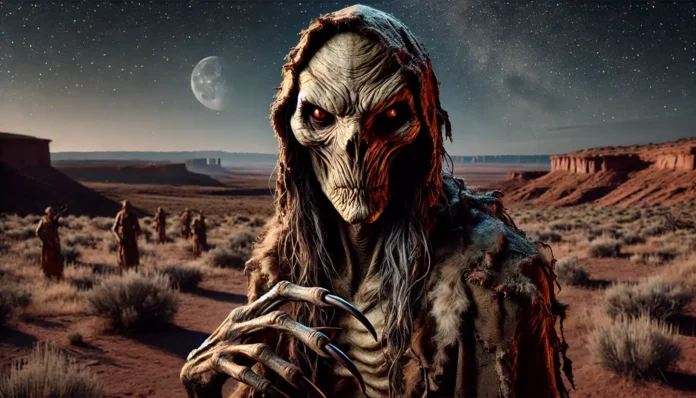
Skinwalkers are terrifying figures from Navajo folklore, described as malevolent witches who possess the power to shape-shift into animals....

  • Skills
Animal MorphingPhysical Strength
  • Weaknesses
Holy GroundRitual Weak
Asia
Human-Animal Shifter
Jorogumo - Japanese Folklore
Japan

Jorogumo

The Jorogumo is a captivating yet terrifying creature from Japanese folklore. Known for her ability to shapeshift into a...

  • Skills
HypnosisMental Powers
  • Weaknesses
Fire VulnerablePiercing Kill
Africa
Human-Animal Shifter
The Kishi - Angola Folklore
Angola

Kishi

The Kishi is a two-faced demon from Angolan folklore, presenting a handsome human front and a hyena visage on...

  • Skills
DisguiseShapeshifting
  • Weaknesses
Divine RestrictionsHoly Water
Africa
Tidal Guardian
Naymi Naymi - The water god, Zimbabwe folklore
Tonga

Nyami Nyami

Nyami Nyami, the revered Zambezi River God in Tonga mythology, is said to have the body of a snake...

  • Skills
Control WeatherElement Control
  • Weaknesses
Divine RestrictionsDrought Sensitive

Sacred Relic – Overview

Sacred Relic represents a mythological weakness characterized by a core limitation in the essence of a being or force. It embodies structural significance within mythological thought, marking a boundary that prevents unrestrained power. Unlike incidental failures, Sacred Relic’s role is foundational, ensuring balance and maintaining cosmic order in various mythological narratives.

Defining Characteristics of the Weakness

Nature of the Limitation

Sacred Relic typically manifests as a metaphysical restriction, where entities encounter inherent limitations. These constraints often encompass cosmological boundaries, preventing entities from exceeding certain limits, thereby preserving the mythological structure. Such patterns recur across different cultures, emphasizing relational constraints over individual exceptions.

Conditions of Exposure

Sacred Relic becomes relevant under specific symbolic and cosmological conditions. These conditions may be linked to cosmic cycles or sacred times when vulnerabilities align with moral or environmental elements. This exposure reinforces the cyclical nature inherent in mythological systems without relying on tactical triggers.

Mythological Role and Function

Function Within Mythological Systems

Within mythological frameworks, Sacred Relic regulates power dynamics, ensuring no entity achieves absolute dominance. It enforces balance by establishing inherent limitations, thus preserving cosmic order. This systemic function highlights its necessity for the orderly progression of mythological narratives.

Symbolic and Cultural Meaning

Symbolically, Sacred Relic represents inevitability and moral consequence. Across cultures, it is seen as a boundary enforcement tool, reminding beings of mortality and the limitations of hubris. This interpretation underscores the role of sacred law within mythological contexts without dramatizing the narrative.

Distinction from Related Mythological Weaknesses

Conceptual Boundaries

Sacred Relic differs from general mortality or divine punishment by focusing on inherent limitations rather than external impositions. It is distinct from taboo violations and situational defeats, which are context-dependent. Sacred Relic’s role is foundational in mythological classification.

Common Sources of Misclassification

Misunderstanding arises from conflating Sacred Relic with situational vulnerabilities like divine punishment. Comparative mythology clarifies these distinctions by emphasizing the inherent nature of Sacred Relic as opposed to transactional weaknesses. Scholarly frameworks help differentiate these concepts through detailed analysis.

Canonical Beings Defined by Sacred Relic

Fafnir

Fafnir, from Norse mythology, embodies the Sacred Relic as his transformation into a dragon signifies greed’s metaphysical constraints. His narrative would be incomplete without this limiting factor, marking his symbolic role in myth.

Sisyphus

In Greek mythology, Sisyphus’s eternal punishment represents the Sacred Relic. The inherent futility of his task mirrors existential constraints, illustrating the boundaries of hubris within his mythological narrative.

Ravana

Ravana, from Hindu epics, is defined by sacred relic constraints when his power is limited by his hubris. His ultimate downfall signifies the cosmic balance preserved through these limitations, illustrating his mythological role.

Historical Distribution and Cultural Context

Sacred Relic appears across diverse cultures and historical periods, emphasizing shared cosmological concerns. From Norse to Hindu traditions, this concept reflects universal themes of power regulation and cosmic balance, transcending specific mythological narratives.

Scholarly Interpretation and Uncertainty

Variation in Interpretation

Interpretations of Sacred Relic vary among cultures and historical periods. Some view it as a literal constraint, while others see it symbolically. Scholarly frameworks often debate these readings, reflecting diverse cultural understandings.

Limits of the Evidence

The historical record reveals gaps and ambiguities in understanding Sacred Relic. Established interpretations highlight its role in myth, yet debates persist. Comparative studies aim to align uncertain readings with established frameworks when evidence is ambiguous.

Mythological Function Across Cultures

Sacred Relic recurs across mythological traditions due to shared human concerns. It meets symbolic needs by reinforcing moral and cosmological functions, enhancing comparative interpretations. Recognizing this weakness aids in understanding the universal structures within mythological systems.