Intro/Summary
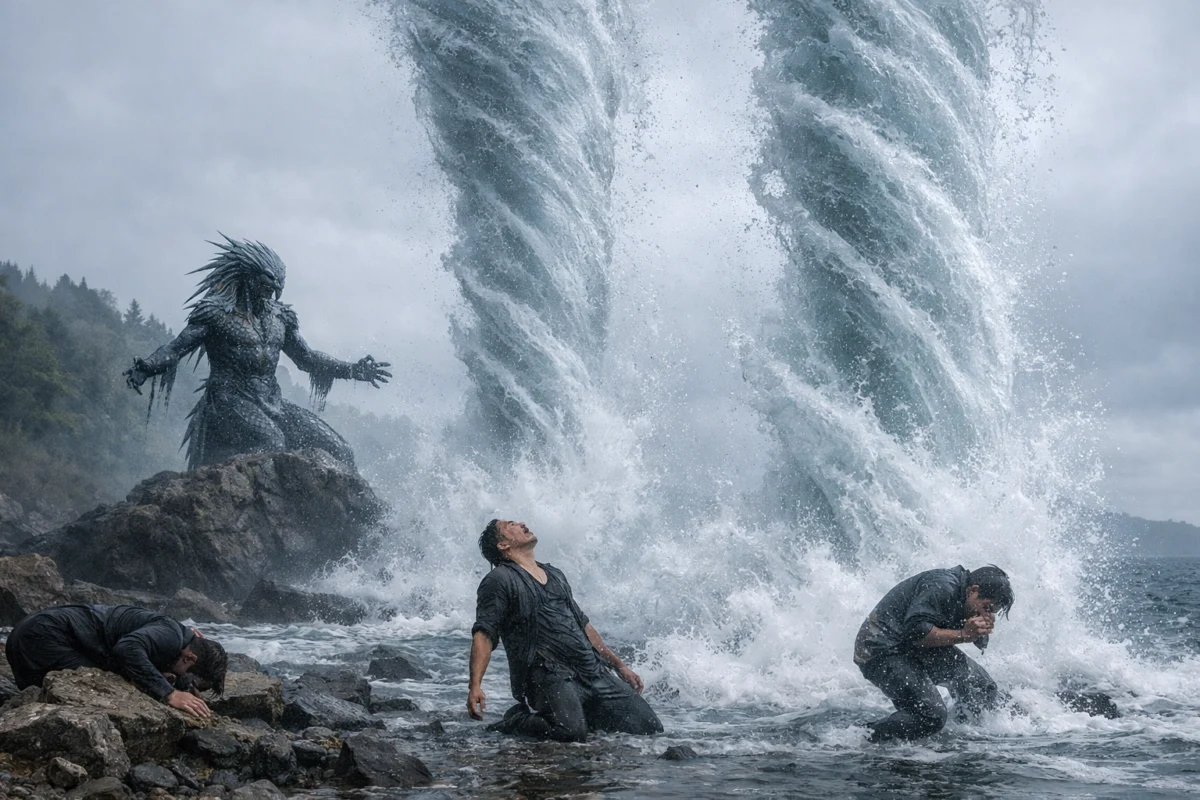
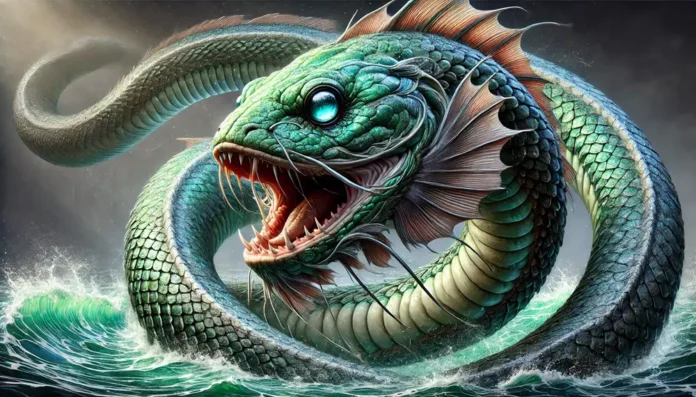
Meet Nyami Nyami, the legendary guardian of the Zambezi River, a creature that’s both feared and adored by the Tonga people of Zambia and Zimbabwe. Imagine a colossal being with a snake’s coiled body and a fish’s scaly head, lurking in the depths of the river, influencing the lives of those who live along its banks.
Nyami Nyami isn’t just some mythological figure; to the Tonga people, he’s the very soul of the Zambezi, controlling its waters and providing sustenance in times of need. But he’s also a force to be reckoned with, one capable of unleashing floods and chaos when disrespected.
His legend is forever tied to the Kariba Dam, a man-made structure that disrupted his domain and sparked tales of divine wrath.
“Nyami nyami’s anger swells with the river; his wrath is as endless as the Zambezi’s flow.” (Tonga Oral Traditions)
Nyami Nyami’s story isn’t just about power; it’s about the delicate balance between humanity and nature. His myth reminds us of the cost of disrupting that harmony, making him one of Africa’s most iconic folklore figures.
History/Origin
Nyami Nyami belongs to the traditions of the Tonga people of the Zambezi Valley in present-day Zambia and Zimbabwe. Tonga communities have long depended on the Zambezi for water, food, travel, and farming, and the river also holds deep spiritual significance.
Nyami Nyami is traditionally associated with the Kariba Gorge and represents both the river’s life-giving abundance and its dangerous power.
Accounts of Nyami Nyami circulated through oral tradition, so the figure’s earliest history cannot be dated precisely. Some stories describe the river god as a protector and provider.
One recurring tradition says that during famine he gave pieces of his flesh to feed the people and then regenerated what had been taken. The age and exact wording of this account are uncertain, but it reflects Nyami Nyami’s close association with sustenance and the Zambezi’s resources.
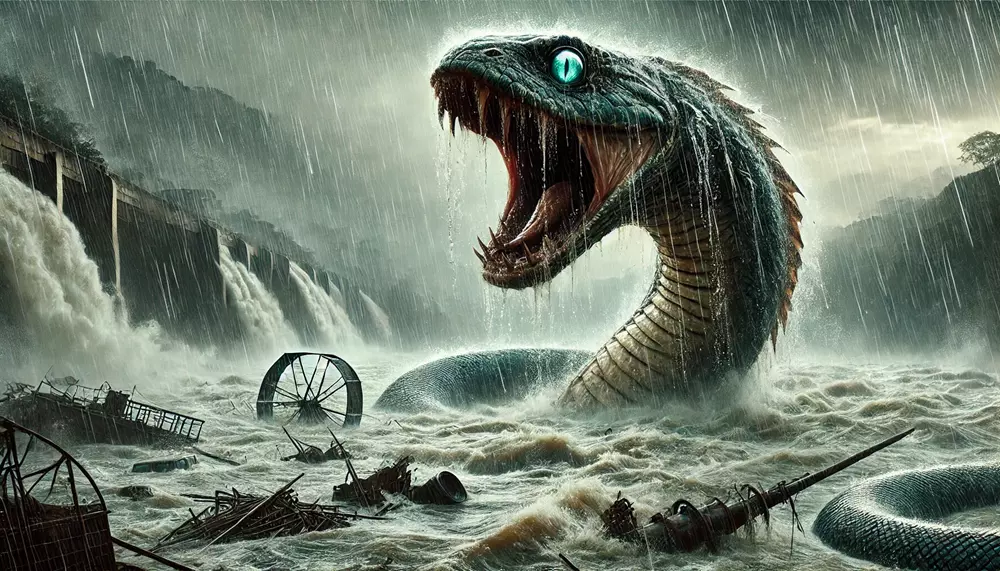
The tradition gained wider attention during construction of the Kariba Dam in the 1950s. The project transformed the river and displaced thousands of Tonga people from communities in the valley.
Floods repeatedly struck the construction works, and within Nyami Nyami legend these disasters were interpreted as the river god’s anger at the disturbance of his domain.
The dam was ultimately completed, but it became inseparable from modern retellings of Nyami Nyami. The river god’s story now preserves both an older spiritual relationship with the Zambezi and the memory of the upheaval caused by the dam.
Name Meaning
The name is written as both Nyami Nyami and Nyaminyami. One reported explanation connects it to the Tonga phrase nyama yamaninganinga, interpreted as “pieces of meat.”
However, the available evidence does not establish this derivation securely, so it is best treated as a traditional or popular interpretation rather than a confirmed etymology.
This interpretation reflects stories in which Nyami Nyami gives pieces of his flesh to sustain the Tonga people during famine and then regenerates what was taken. Whether or not the proposed derivation is linguistically exact, it reinforces the river god’s traditional role as a provider associated with the life-giving resources of the Zambezi.
Appearance
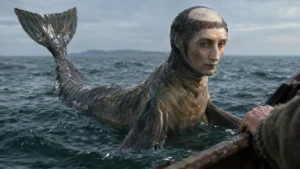
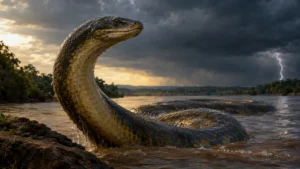
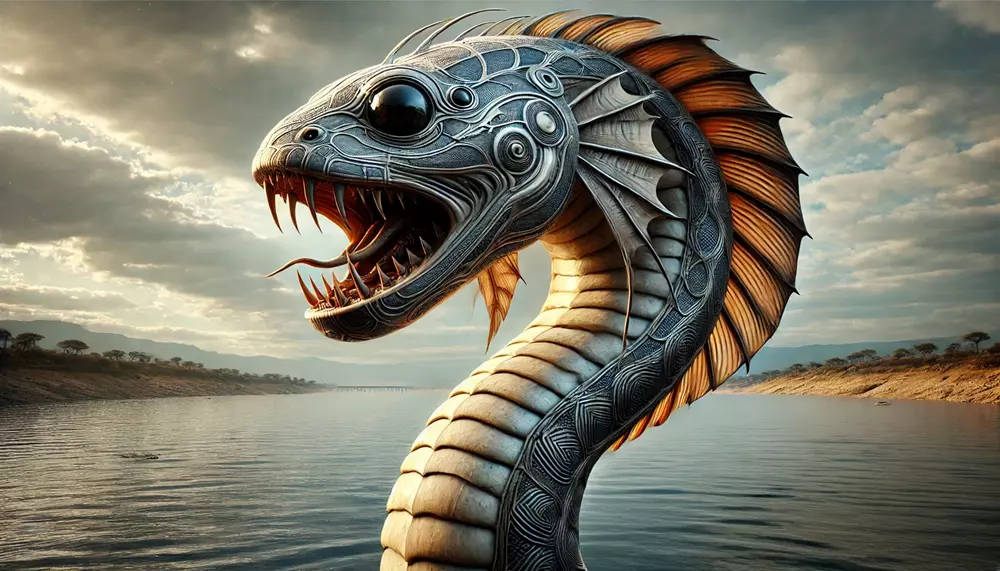
Nyami Nyami is commonly represented as an immense aquatic being that combines serpentine and fishlike features. The most familiar depictions give him the long, curving body of a snake and the head or other features of a fish, visually connecting him with the waters of the Zambezi.
Because the tradition has been transmitted orally and represented through many forms of art, Nyami Nyami does not have a single fixed design. Details such as his fins, scales, and proportions vary between carvings, illustrations, and retellings.
His winding form is often understood as reflecting the river itself, while his aquatic features emphasize his identity as its resident deity.
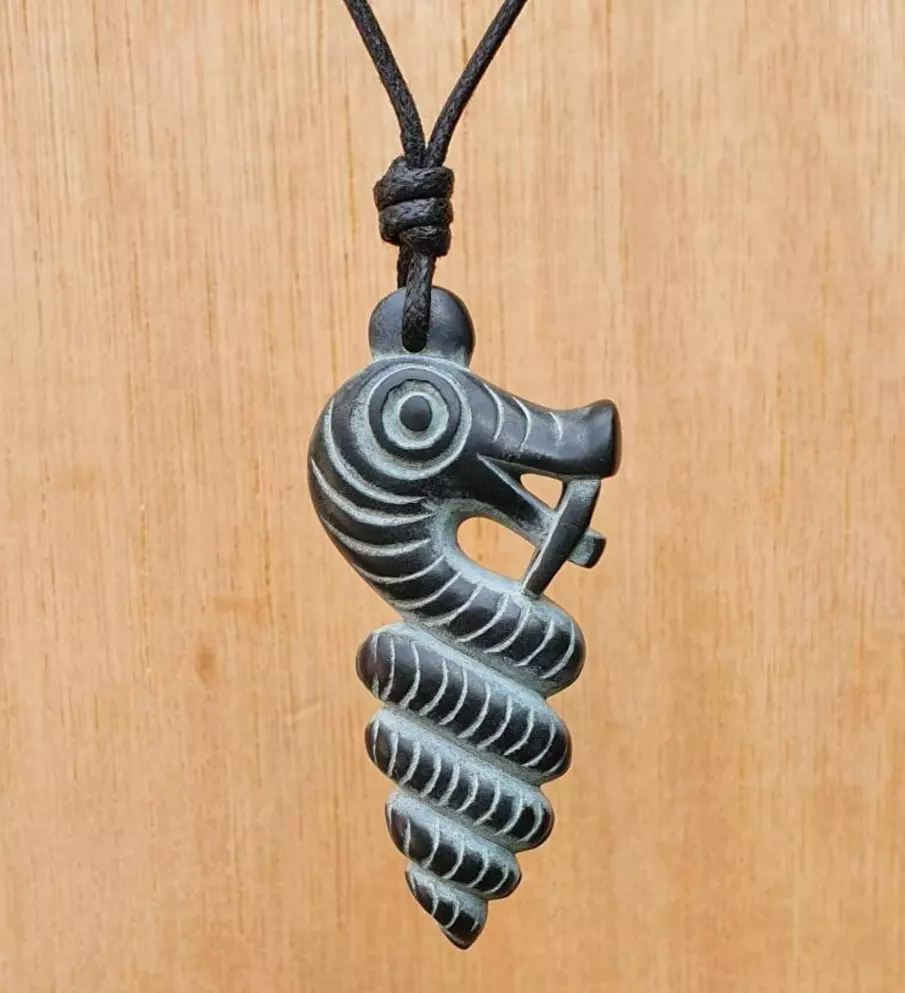
Nyami Nyami also appears in carved pendants and other decorative objects made from materials such as wood, bone, and stone. These objects reproduce his distinctive curved form and may be worn as symbols of protection or as expressions of connection to the Zambezi and Tonga cultural heritage.
Background Story
Nyami Nyami’s modern story is closely bound to the Kariba Gorge, where Tonga tradition places the river god and his wife. They are associated with the Zambezi’s power and its importance as a source of food, water, and livelihood.
This relationship was transformed by construction of the Kariba Dam in the 1950s. The colonial-era project altered the river and displaced thousands of Tonga people from the Zambezi Valley.
In widely repeated accounts, the dam also separated Nyami Nyami from his wife by placing a barrier across their domain.
Floods struck the construction works and caused destruction, deaths, and delays. Within the legend, these disasters were interpreted as signs of Nyami Nyami’s anger and his struggle to reach his wife.
Some versions warn that he may one day destroy the dam and reunite with her.
The dam was completed, but it did not end the tradition. Instead, the story came to express both the dangerous force of the Zambezi and the cultural upheaval experienced by Tonga communities.
Nyami Nyami remains a symbol of a river whose spiritual and natural power cannot be reduced to human control.
Famous Folklore Stories
Nyami Nyami’s traditions are better understood as recurring stories and motifs from Tonga oral tradition than as a fixed collection of formally titled tales. The best-known accounts connect the river god with the floods that struck the Kariba Dam project and with the Zambezi’s power to sustain life.
The Great Flood of 1957
In 1957, a major flood struck the Kariba Dam works, damaging the construction site and contributing to the dangers faced by workers. The flood itself was a historical event, but it acquired a spiritual meaning within stories about Nyami Nyami.
In widely repeated versions of the legend, the dam had disturbed the river god’s domain and separated him from his wife. The flood was therefore interpreted as an expression of his anger or as an attempt to break through the barrier and reunite with her.
Later floods and construction setbacks strengthened the story that the Zambezi could resist human efforts to control it.
The River God as Provider
Another recurring tradition presents Nyami Nyami as a provider during famine. In this account, he allows the Tonga people to take pieces of his flesh for food, after which the missing flesh regenerates.
Some retellings instead describe meat appearing in or floating down the river when communities are suffering from hunger.
The precise age and wording of this tradition are uncertain because it has circulated orally and appears in varying forms. Its central meaning is consistent, however: Nyami Nyami embodies the Zambezi as a source of food, survival, and renewal.
Together with the flood legend, the story shows his dual nature as both a generous protector and a dangerous expression of the river’s power.
Cultural Impact
Nyami Nyami remains a powerful expression of the Tonga people’s relationship with the Zambezi River. As a guardian and provider associated with the river, he represents its importance to community life as well as the danger of disturbing its natural power.
This meaning became closely tied to the construction of the Kariba Dam in the 1950s. The project displaced thousands of Tonga people from the Zambezi Valley, separating communities from ancestral lands and transforming their access to the river.
In modern retellings, Nyami Nyami’s anger at the dam reflects both the disruption of the river and the human cost of that upheaval.
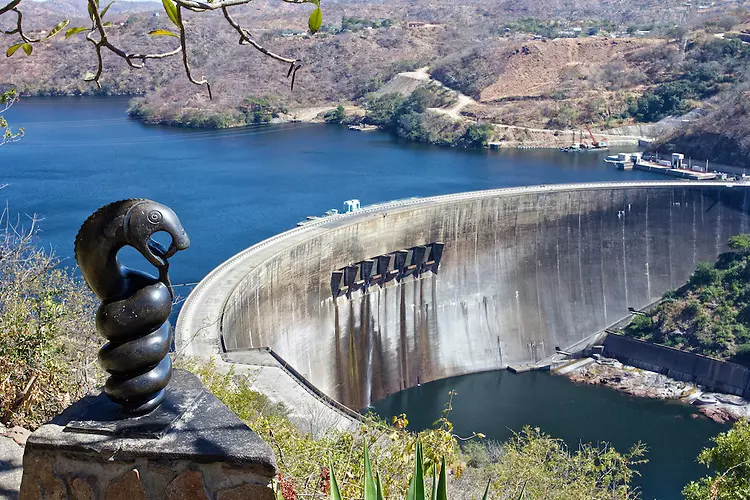
The river god’s distinctive serpentine form continues to appear in statues, carvings, pendants, and other art associated with the Zambezi region. These depictions keep the legend visible while expressing cultural connection, protection, and remembrance.
Nyami Nyami therefore carries significance beyond the dam legend itself. He embodies the enduring bond between Tonga identity and the Zambezi, while the story of his separation from his wife gives symbolic form to the divisions and losses created by the dam.
Similar Beasts
Nyami nyami shares similarities with mythical water deities from around the world. His role as a protector and destroyer mirrors other aquatic guardians who govern rivers, lakes, and seas.
- The Rainbow Serpent (Australia): Like Nyami nyami, the Rainbow Serpent is a protector of waterways and a symbol of life. Both creatures embody the duality of creation and destruction.
- Yacumama (South America): This Amazonian water serpent is said to protect the river and its creatures, punishing those who disrespect its domain, much like Nyami nyami.
- Naga (Hindu/Buddhist Mythology): These serpent deities guard sacred waters and are revered as both life-givers and fearsome beings when angered.
- Jörmungandr (Norse Mythology): While not a river deity, Jörmungandr, the World Serpent, shares Nyami nyami’s immense size and association with destruction when provoked.
These parallels highlight humanity’s universal respect, and fear, of the water’s power.
Religion/Ritual
Nyami Nyami holds spiritual significance in Tonga traditions connected with the Zambezi River. As a river deity associated with protection, sustenance, and the water’s dangerous power, he expresses a relationship with the river that extends beyond folklore or entertainment.
Popular accounts sometimes describe people seeking Nyami Nyami’s protection or favor, particularly in connection with fishing, hardship, and conditions on the river. However, the available evidence does not establish a single, uniform set of ceremonies or confirm specific offerings as practices shared by all Tonga communities.
Such details should therefore be treated as local or reported traditions rather than universal observances.
Carved pendants depicting Nyami Nyami are widely associated with protection, good fortune, and connection to the Zambezi. They may carry spiritual meaning for their wearers, but their production is better understood as devotional, cultural, or artistic expression than as a ritual in itself.
Nyami Nyami’s continuing importance lies in the respect attached to the river and its power. Beliefs and practices may vary between communities, families, and modern retellings, especially after the displacement caused by the Kariba Dam transformed Tonga life along the Zambezi.
Scientific or Rational Explanations
The floods that struck the Kariba Dam works can be understood as natural events within the Zambezi River system. Seasonal rainfall and changes in river flow can produce destructive floods, so the disasters do not require a supernatural cause from a scientific perspective.
That explanation does not erase the meaning the events acquired in Tonga tradition. Stories interpreting the floods as Nyami Nyami’s anger connected a dangerous natural event with the dam’s disruption of the Zambezi and the displacement of Tonga communities from the river valley.
Nyami Nyami’s serpentine form may also reflect the winding movement and power of the river, although the available evidence does not establish a single historical origin for his appearance. Claims that sightings of crocodiles, catfish, or other animals directly created the legend remain speculative.
From a social and environmental perspective, the story gives cultural form to experiences of flood, displacement, and attempts to control a powerful river. Natural explanations for these events and spiritual interpretations of them address different questions, and neither should be presented as a simple dismissal of the other.
Modern Cultural References
Nyami nyami, the revered Zambezi River God, has profoundly influenced various facets of modern culture, particularly in art forms like jewelry, tattoos, and paintings. This serpent-like deity with a fish’s head symbolizes protection and sustenance, making it a popular emblem among locals and tourists alike.
Jewelry
Nyami nyami pendants are iconic in the Zambezi region. These charms, often crafted from wood, stone, or bone, depict the deity’s unique form and are worn as symbols of protection and good fortune.
Tourists visiting areas like Victoria Falls frequently purchase these pendants as meaningful souvenirs, thereby spreading the legend globally.
Art and Sculpture
Local artisans honor Nyami nyami through intricate carvings and sculptures, celebrating the deity’s cultural significance.
Walking sticks featuring the serpent’s head are particularly notable, representing the river god’s presence. These art pieces are displayed in galleries and markets across Zambia and Zimbabwe, attracting both locals and visitors.
Tattoos and Paintings
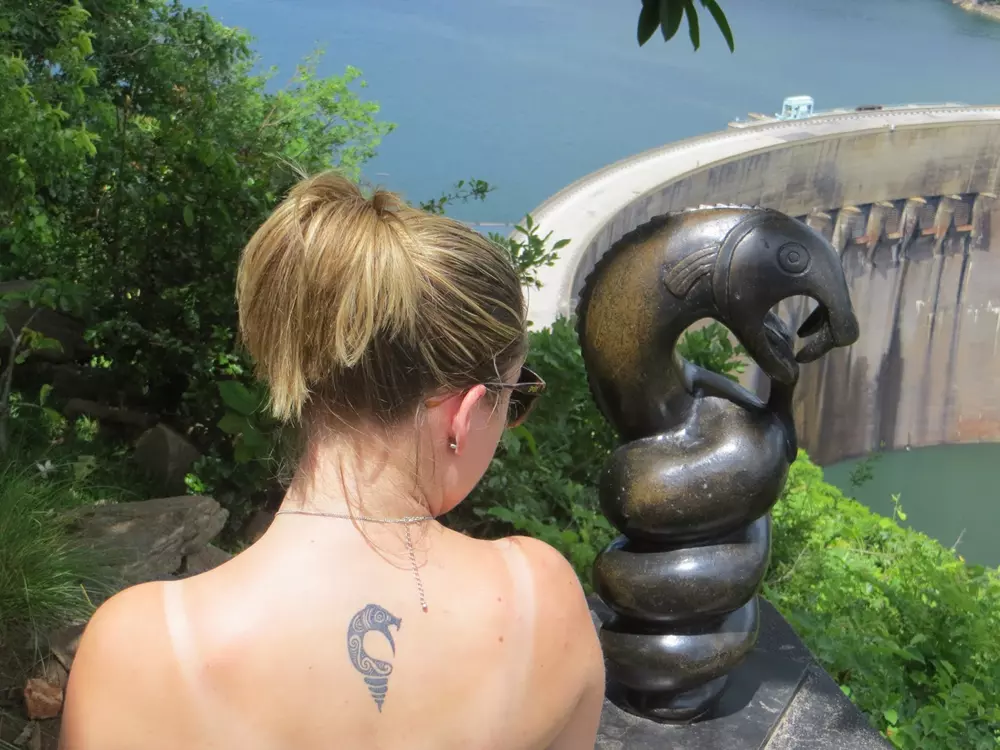
The distinctive imagery of Nyami nyami has inspired tattoos and paintings, with individuals choosing to adorn their bodies or spaces with representations of the river god.
These artworks serve as personal symbols of protection and a connection to the rich cultural heritage of the Zambezi Valley.
Environmental Symbolism
Nyami nyami has become a symbol in conservation efforts within the Zambezi region. The deity’s association with the river underscores the importance of protecting the ecosystem, reminding communities of their duty to preserve the natural environment.
Impact of the Kariba Dam
The construction of the Kariba Dam in the 1950s had a significant impact on the perception of Nyami nyami.
According to local legend, the dam separated Nyami nyami from his wife, leading to natural disasters as manifestations of his anger. The Tonga people believe that the river god will one day destroy the dam to reunite with his mate, a belief that persists due to frequent earth tremors in the area.
Protector Symbolism
Nyami nyami’s enduring popularity stems from his role as a protector and provider. The Tonga people invoke the river god during times of hardship, such as drought or illness, seeking his intervention for relief.
This deep-rooted belief in Nyami nyami’s guardianship reinforces his significance in both traditional practices and modern cultural expressions.
Conclusion
Nyami Nyami embodies the sustaining and destructive powers of the Zambezi River in Tonga tradition. Remembered as a guardian and provider, he also represents the danger of disturbing a river on which communities have long depended.
Oral accounts vary in their details, but the best-known modern tradition connects Nyami Nyami with the construction of the Kariba Dam, the separation from his wife, and the floods interpreted as expressions of his anger. The story also carries the memory of Tonga communities displaced from the Zambezi Valley by the project.
Through oral tradition, carvings, pendants, and other cultural expressions, Nyami Nyami remains a significant symbol of Tonga identity and connection to the Zambezi. His enduring legend preserves both reverence for the river’s power and remembrance of the human losses caused by attempts to control it.