back to top

Holy Ground

Relevant Beasts

Celtic
Ghostly Apparition
Banshee - Celtic folklore
Celtic

Banshee

The Banshee is a legendary figure rooted deeply in Irish mythology, recognized primarily for her mournful wail that is...

  • Skills
Death & NecromancyDeath Sense
  • Weaknesses
Divine RestrictionsHoly Ground
Celtic
Ghostly Apparition
Bean Nighe - Scotish Folklore
Celtic

Bean Nighe

The Bean Nighe is a Scottish spirit from Celtic lore, known as a harbinger of death who washes bloodied...

  • Skills
Death & NecromancyDeath Sense
  • Weaknesses
Blessed WeaponDivine Restrictions
Celtic
Mythic Dog
Cù-Sìth - Scottish folklore
Celtic

Cù-Sìth

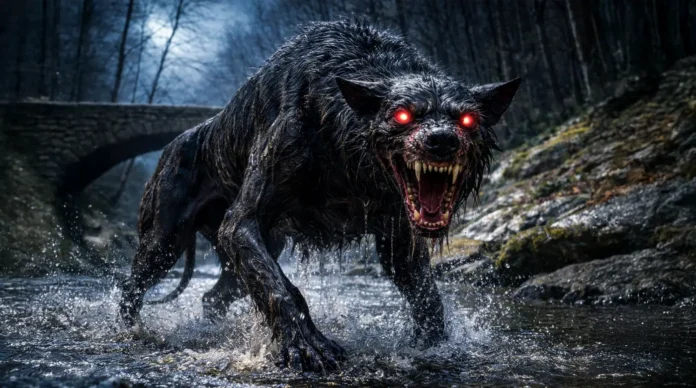
The Cù-Sìth is a giant mythic hound in Scottish lore known to foretell death with its three barks. A...

  • Skills
Fear InducementIllusions & Perception
  • Weaknesses
Blessed WeaponDivine Restrictions
Asia
Human-Animal Shifter
Huli Jing - Chinese folklore
China

Huli Jing

The Huli Jing is a shapeshifting fox spirit from ancient Chinese mythology, known for its illusion powers, beauty,...

  • Skills
Mental PowersMind Control
  • Weaknesses
Divine RestrictionsExorcism
Navajo
Human-Animal Shifter
Skinwalker - Native American Folklore
Navajo

Skinwalker

Skinwalkers are terrifying figures from Navajo folklore, described as malevolent witches who possess the power to shape-shift into animals....

  • Skills
Animal MorphingPhysical Strength
  • Weaknesses
Holy GroundRitual Weak
Asia
Revenge Spirit
Gashadokuro - Japanese Folklore
Japan

Gashadokuro

Gashadokuro are giant skeletons in Japanese folklore, created from the bones of those who died from famine or war.

  • Skills
Fear InducementIllusions & Perception
  • Weaknesses
Divine RestrictionsExorcism

Holy Ground - an Overview

Holy Ground represents a mythological weakness that affects various beings across folklore and cultural traditions. It serves as a limitation or vulnerability, often indicating areas of spiritual significance where certain creatures cannot venture. This weakness underscores the boundary between the sacred and the profane, highlighting the power dynamics between mythological entities and divine spaces. The concept reinforces the idea that some locations possess inherent protective or purifying qualities that can repel or weaken supernatural forces.

Nature of the Vulnerability

How the Weakness Manifests

The manifestation of Holy Ground as a weakness typically involves a being's inability to enter, remain, or exert power within sacred spaces. This limitation can cause discomfort, diminished abilities, or an outright barrier to entry. Mythological entities often experience a profound sense of unease, rendering them unable to function normally. This inability to access or affect these areas highlights the contrasting forces of sacred protection against supernatural influence.

Conditions and Triggers

The vulnerability of Holy Ground becomes relevant under specific conditions, often requiring the space to be consecrated, blessed, or recognized as sacred by a cultural or religious system. Rituals, prayers, or invocations might be necessary to establish or maintain the sanctity of these areas. The demarcation of Holy Ground can vary, relying on cultural definitions, whether through physical boundaries like churches, temples, or natural sites deemed hallowed. These conditions act as triggers, activating the weakness in beings sensitive to the sacred.

Mythological Role and Meaning

Symbolic or Cultural Significance

Symbolically, Holy Ground represents the triumph of order and purity over chaos and corruption in mythological narratives. It signifies the delineation between the mortal and divine realms, reinforcing moral or cosmological structures within various traditions. The weakness emphasizes the reverence accorded to sacred places, illustrating the power imbalance between the divine and supernatural entities. This serves to communicate cultural and religious values, underscoring the sanctity of particular locations and their spiritual importance.

Function Within Mythological Systems

Within mythological systems, the weakness of Holy Ground functions to define boundaries that protect the equilibrium between spiritual and mundane worlds. It serves as a narrative device to establish the limits of supernatural influence, preventing unchecked power in sacred contexts. This reinforces the cosmological rules governing interactions between divine and lower realms, ensuring that supernatural forces respect sanctified spaces. The weakness also balances power dynamics, illustrating the formidable presence of holiness against potentially malevolent beings.

Canonical Beasts Associated with This Weakness

Vampire

In European folklore, vampires are commonly associated with a weakness to Holy Ground. This is a central element, as they cannot enter churches or consecrated burial sites. This limitation underscores their separation from purity and sanctity, marking them as creatures of unclean origins. The significance of Holy Ground in vampire lore illustrates the cultural emphasis on the protective power of sacred spaces.

Wendigo

Originating in Algonquian folklore, the Wendigo is a creature associated with cannibalistic corruption. Holy Ground serves as a weakness, highlighting the creature's antithesis to spiritual purity. Wendigos avoid sacred areas, recognizing the threat posed by their sanctity against their corrupted nature. This vulnerability underscores the cultural tension between survival instincts and spiritual ethics.

Jinn

In Islamic tradition, jinn are supernatural beings with free will, capable of good or evil. Holy Ground represents a limitation for malevolent jinn, who cannot enter mosques or places of prayer. This restriction emphasizes the protective nature of divine presence in these spaces, contrasting jinn's potential for mischief with divine order.

Cultural Distribution and Variations

The weakness of Holy Ground appears in diverse cultural contexts, with variations in interpretation and significance. In Western traditions, it often aligns with Christian sanctity, whereas in Eastern contexts, it may relate to sacred temples or shrines. Differences arise in the types of rituals required to sanctify these areas or the specific creatures affected. Each culture's emphasis on Holy Ground reflects its religious and moral frameworks, highlighting the importance of maintaining spiritual sanctity against supernatural encroachment.

Relationship to Other Mythological Weaknesses

Commonly Associated Limitations

Holy Ground frequently appears alongside weaknesses to religious symbols, such as crosses or holy water, in mythological narratives. These limitations reinforce the power of divine protection against supernatural entities, emphasizing the multi-faceted nature of spiritual defenses. The presence of these associated weaknesses further underscores the importance of religious iconography in safeguarding against otherworldly threats, illustrating a shared thematic focus on spiritual authority.

Distinction from Similar Vulnerabilities

Unlike vulnerabilities tied to physical objects, Holy Ground is location-based and tied to the sanctity of place. It differs from elemental weaknesses, which involve natural forces, by its reliance on spiritual consecration. This distinction highlights its unique role in demarcating sacred versus profane spaces, emphasizing the broader cosmological implications of such a vulnerability. It is not merely a reaction to a tangible threat but a deep-seated respect for the divine.

Scholarly Interpretation and Uncertainty

Literal and Symbolic Readings

Scholars interpret Holy Ground both literally, as physical locations, and symbolically, as representations of moral boundaries. The literal view sees sacred spaces as tangible defenses, while the symbolic interpretation views them as metaphorical barriers. Rituals surrounding these areas reinforce their sanctity and support their protective role. This dual perspective allows for a comprehensive understanding of Holy Ground's function within mythology, bridging tangible and intangible dimensions.

Limits of Historical Evidence

Scholarly exploration of Holy Ground faces limitations due to the scarcity of consistent historical records across cultures. No verified sources describe its application in some contexts, leading to varying interpretations. The regional bias in documentation presents challenges in crafting a unified understanding. This necessitates careful examination of available sources to avoid speculative conclusions, highlighting the importance of acknowledging the gaps in evidence when studying this weakness.

Taxonomic Relevance

Holy Ground functions as a useful classification category within mythological taxonomy, as it helps distinguish beings based on their interaction with sacred spaces. It organizes entities along moral or spiritual lines, based on their vulnerability to consecrated areas. This classification reveals underlying cultural and religious principles, aiding in the understanding of mythological narratives across traditions. The categorization by Holy Ground vulnerability underscores the intersection of sacred and supernatural within cultural belief systems.

Releated Categories