back to top

Desert Cryptid

Desert Cryptid encompasses mythological creatures known for their elusive nature, often embodying the harsh and mysterious aspects of desert landscapes.

Relevant Beasts

Asia
Desert Cryptid
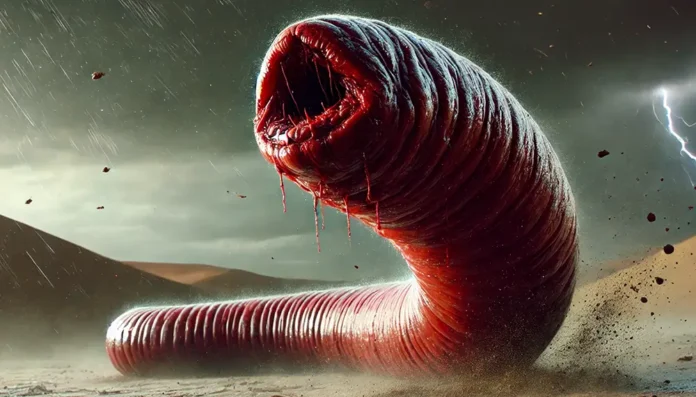
Mongolian Death Worm - Olgoi-Khorkhoi
Mongol Empire

Death Worm

A deadly worm said to inhabit the Gobi Desert, capable of spitting acid and emitting lethal electricity.

  • Skills
Electric ShockPoisonous Breath
  • Weaknesses
Cold SensitiveWater Harm

Desert Cryptid – Overview

Desert Cryptids are mythological entities characterized by their association with arid environments. These beings exhibit shared traits such as elusive visibility, supernatural capabilities, and a connection to desert landscapes. In mythology, they often symbolize survival, mystery, and the hidden threats and secrets of desert environments. Their roles vary from protecting valuable resources to embodying the harshness of their geographic homes, showcasing the resilience and dangers of desert life. Desert Cryptids are found in various cultural narratives, each emphasizing unique interpretations and functions within their mythological frameworks.

Defining Characteristics

Physical Form and Morphology

Typically, Desert Cryptids possess forms adapted to harsh environments. They may feature reptilian scales, camouflaged exteriors, or elongated limbs to traverse sandy terrains. Such morphology echoes the adaptive traits of real desert fauna. Visual depictions often include exaggerated features that symbolize their supernatural nature, such as luminescent eyes or ethereal bodies that blend with the desert mirages, emphasizing their elusive and mystical presence.

Ontological Nature

Ontologically, Desert Cryptids are often seen as liminal beings. They exist on the fringes between the natural world and the supernatural realm, embodying the boundary between known and unknown. This status allows them to act as both guardians and tricksters, influencing the desert’s metaphysical and physical aspects. They are perceived as intermediaries, bridging human understanding and natural forces, often embodying the desert’s spirit or its protective essence against intruders.

Mythological Role and Function

Place in Mythological Systems

Desert Cryptids fit within mythological systems by serving as arbiters of desert dangers and secrets. They interact with gods and humans, often as protectors of sacred sites or as guardians of hidden knowledge. These beings navigate the boundaries between life and death, representing the harsh realities and mysteries inherent to desert environments. They are vital to cosmologies that emphasize balance, acting as forces that maintain the equilibrium of their arid domains.

Perception and Meaning

Culturally, these beings are perceived as both threats and protectors. They punish those who disrespect the desert’s sanctity but also guide and protect travelers who honor its laws. Symbolically, they represent the dual nature of deserts: barren yet bountiful, hostile yet nurturing. This duality is pivotal in their interpretation as embodiments of abstract forces like endurance, wisdom, and the inevitability of nature’s cycles.

Distinction from Related Beast Types

Conceptual Boundaries

Desert Cryptids differ from elemental beings and spirits by their specific association with desert environments. Unlike elemental beings tied to broader natural forces like water or air, Desert Cryptids embody the peculiarities of arid landscapes. They are not undead entities or humanoid monsters, as their mythological roots are deeply entrenched in the terrain’s characteristics rather than in death or human-like forms.

Common Sources of Confusion

Confusion often arises from their similarity to other environment-specific cryptids. Scholars distinguish them by their intrinsic link to deserts rather than just arid climates. Comparative mythology highlights their unique adaptations and roles, emphasizing their environmental specificity, which is crucial in maintaining clear taxonomic boundaries. This distinction is essential to understand their place within mythological classifications accurately.

Canonical Beasts Associated with This Beast Type

The Grootslang

Originating from South African folklore, the Grootslang is a serpent-like creature said to inhabit caves. It exemplifies the Desert Cryptid through its connection to hidden desert treasures guarding them fiercely.

The Afanc

In Welsh mythology, the Afanc is a creature dwelling in lakes, but its association with arid, mystical landscapes classifies it as a Desert Cryptid. It embodies the mystique and danger of hidden desert waters.

The Tatzelwurm

This Alpine cryptid, though primarily linked to mountainous areas, adapts to desert environments. Its elongated, serpent-like body and elusive nature make it a quintessential Desert Cryptid in desert tales.

Historical Distribution and Cultural Context

Desert Cryptids appear across cultures predominantly in regions characterized by vast arid landscapes, such as the Middle East, North Africa, and Southwestern United States. Their presence is deeply rooted in the historical context of these areas, where survival often depended on navigating and respecting the desert’s harsh realities. This beast type reflects broader human themes of endurance and respect for nature, aligning with the historical narratives of civilizations dwelling in or near deserts.

Scholarly Interpretation and Uncertainty

Variation in Definitions

Definitions of Desert Cryptids vary between cultures and academic interpretations. Some define them strictly by geographical association, while others consider broader symbolic functions. This variation highlights the diversity in myth-making and storytelling traditions, showcasing how different societies interpret similar ecological challenges through mythological lenses.

Limits of Available Evidence

Evidence surrounding Desert Cryptids is often limited and fragmented. Many narratives stem from oral traditions, complicating historical analysis. Scholars consistently acknowledge these gaps, emphasizing the need for careful reconstruction of mythological meanings without speculative invention, adhering to established interpretations wherever possible.

Mythological Role Across Cultures

Desert Cryptids recur in various traditions due to their universal relevance to human concerns. They address fears of the unknown, the struggle for survival, and the need to respect nature’s unpredictable forces. This recurrence underscores their role as cultural vessels, facilitating a cross-cultural understanding of mythological systems. By examining their presence, scholars gain insights into how different societies relate to their environments, revealing shared human experiences and symbolic interpretations.