
back to top

Fire-Breathing Beast

Fire-Breathing Beast: Creatures known for exhaling fire, symbolizing destruction and transformation in mythological tales worldwide.

Relevant Beasts

Europe
Dragon
European Dragon
Greece

Dragon

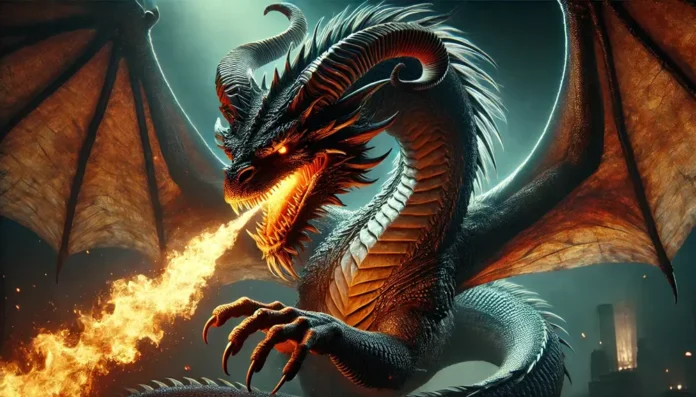
Dragon, the fire-breathing giant from global myths, symbolizes chaos, power, and treasure guardianship, appearing in countless heroic and dark...
  • Skills
Element ControlFire Breathing
  • Weaknesses
Cold SensitiveElement Sensitivities
Catalan
Dragon
Drac - Catalonian Folklore
Catalan

Drac

The Drac, a serpent-like dragon from Catalan folklore, embodies chaos and nature's fury, with legends of terrorizing villages and...

  • Skills
Element ControlFire Breathing
  • Weaknesses
Physical LimitsPiercing Kill

Fire-Breathing Beast – Overview

Fire-Breathing Beasts are mythological entities characterized by their ability to expel fire, often symbolizing destruction and power. They typically embody supernatural or semi-divine traits, transcending mundane existence. Across cultures, these creatures often serve as potent symbols of chaos and primal energy, challenging heroes or acting as guardians of sacred places. Their fiery breath distinguishes them from other mythological beings, marking them as figures of awe and fear. The consistent motif of fire-breathing within this category underscores their role as agents of transformation or purification in various mythological narratives.

Defining Characteristics

Physical Form and Morphology

Fire-Breathing Beasts often possess a reptilian or draconic form, with scaled bodies and elongated limbs, contributing to their formidable presence. Their anatomy typically includes features like wings or tails, enhancing their sense of power. This morphology is not merely aesthetic; it conveys their hybrid nature, existing between worlds. This physicality aligns them with otherworldly realms, underscoring their role as boundary-crossers. The reptilian aspect is consistent across cultures, reinforcing their association with primordial forces or ancient wisdom. These features also emphasize their status as beings beyond natural laws.

Ontological Nature

These creatures are frequently portrayed as liminal beings, straddling earthly and cosmic realms, often serving as intermediaries in mythological systems. Their presence in myths signifies a disruption of the natural order, embodying chaos or change. Often considered guardians of cosmic boundaries, they maintain the balance between worlds. Their existence challenges human understanding, forcing characters in myths to confront their limitations. As agents of fate or destiny, they manifest as both creators and destroyers, integral to the mythological fabric. Their fiery breath symbolizes their transformative role within these narratives.

Mythological Role and Function

Place in Mythological Systems

In mythological systems, Fire-Breathing Beasts embody primal forces, often representing untamed nature or cosmic upheaval. They interact with deities and heroes, serving as obstacles or catalysts for transformation. Their role often involves guarding treasures or sacred knowledge, testing mortal resolve. In some traditions, they are associated with divine punishment or cleansing. Their presence is both a threat and a necessary force within mythologies, pushing narratives toward resolution. These creatures are also seen as manifestations of divine will or cosmic justice, acting according to higher principles beyond human understanding.

Perception and Meaning

Culturally, Fire-Breathing Beasts are perceived as both malevolent and protective, reflecting dualities common in mythological traditions. They can represent chaos, yet also signify renewal through destruction. As symbols, they challenge existing orders, prompting growth. Their fiery breath is often interpreted as a purifying force, burning away impurity. In some contexts, they embody retribution, enforcing moral or cosmic laws. They are revered and feared, embodying untamed aspects of the universe that must be respected and acknowledged. Their symbolism encompasses both existential fear and the promise of renewal.

Distinction from Related Beast Types

Conceptual Boundaries

Fire-Breathing Beasts differ from elemental creatures, which are typically associated with a single element or natural force, by their conflation of multiple elements. Unlike spirits, which often lack physical form, these beasts have defined bodies. They also contrast with humanoid monsters, which generally mirror human traits more closely. While animal-based creatures are bound to earthly traits, Fire-Breathing Beasts transcend such limitations. Their defining feature, fire-breathing, marks them distinctively as beings that embody elemental transformation and destruction, setting them apart as unique entities within mythological frameworks.

Common Sources of Confusion

Confusion arises when Fire-Breathing Beasts are mistaken for dragons or serpentine creatures due to overlapping traits. However, their mythological function often diverges significantly. While both may guard treasures, Fire-Breathing Beasts are typically more aligned with cosmic or moral themes. Scholars distinguish them through their symbolic roles and the thematic emphasis on purification through fire. These creatures’ hybrid nature can also blur lines between categories, necessitating careful interpretation. Understanding their unique mythological role clarifies their distinction from other creatures that superficially resemble them.

Canonical Beasts Associated with This Beast Type

Dragon (Chinese)

In Chinese mythology, dragons are revered as powerful elemental beings, controlling water and weather. Their fire-breathing aspect is less emphasized, but they embody transformation and cosmic balance, fitting the Fire-Breathing Beast archetype.

Chimera (Greek)

The Greek Chimera, a hybrid creature with a lion’s head, goat’s body, and serpent’s tail, breathes fire and terrorizes ancient landscapes. It exemplifies the chaotic and destructive nature central to Fire-Breathing Beasts in Greek mythology.

Zahhak (Persian)

Zahhak, from Persian mythology, is a demon king with serpents growing from his shoulders, consuming human brains. His fire-breathing trait symbolizes tyranny and chaos, reflecting the Fire-Breathing Beast type’s destructive essence.

Historical Distribution and Cultural Context

Fire-Breathing Beasts appear across diverse cultures, from ancient Mesopotamia to medieval Europe, often reflecting local cosmologies. Their presence in these regions highlights shared mythological concerns with chaos, transformation, and moral boundaries. They are frequently found in areas where oral traditions are strong, their narratives evolving over time. Historical contexts show these creatures’ adaptability, reflecting changing cultural values and fears. Their distribution suggests a universal archetype, resonating with fundamental human experiences and anxieties. This widespread occurrence reflects their deep-rooted symbolic power.

Scholarly Interpretation and Uncertainty

Variation in Definitions

Definitions of Fire-Breathing Beasts vary widely among scholars, reflecting differences in cultural contexts and historical perspectives. Some emphasize their symbolic aspects, while others focus on narrative roles. This variation highlights the complexity of their mythological identity, making them subjects of extensive debate. The lack of a singular definition allows for diverse interpretations, adapting to different cultural needs. While some cultures emphasize their destructive power, others highlight their role in cosmic order. This plurality reflects the richness of mythological thought across time and space.

Limits of Available Evidence

Evidence for Fire-Breathing Beasts often comes from fragmented texts or oral traditions, complicating definitive interpretations. Many accounts are secondary or adapted, introducing ambiguities. No verified sources describe some aspects, requiring careful scholarly reconstruction. Gaps in evidence necessitate cautious analysis, distinguishing between established myths and speculative interpretations. The lack of comprehensive records means interpretations can vary, making definitive conclusions challenging. Recognizing these limits is crucial for accurate understanding, ensuring interpretations remain grounded in available evidence, and acknowledging where uncertainties persist in the historical record.

Mythological Role Across Cultures

Fire-Breathing Beasts’ recurrence across cultures highlights shared human concerns with the unknown and the uncontrollable. They symbolize the struggle to impose order on chaos and the potential for destruction inherent in transformation. These creatures serve as allegories for natural disasters, societal upheaval, or personal trials, reflecting universal themes. Their role in myths underscores the need to confront fear and uncertainty, offering catharsis or moral lessons. Recognizing their cross-cultural presence aids in comparative mythology, revealing how different societies articulate similar concepts through unique narrative frameworks.