back to top

Omen of Death

Omen of Death creatures are mythological beings that symbolize impending demise or misfortune across various cultural narratives.

Relevant Beasts

Anglo-Saxons
Devil's Hound
Black Shuck - Omen Black Dog of Anglo-Saxon English Folklore
Anglo-Saxons

Black Shuck

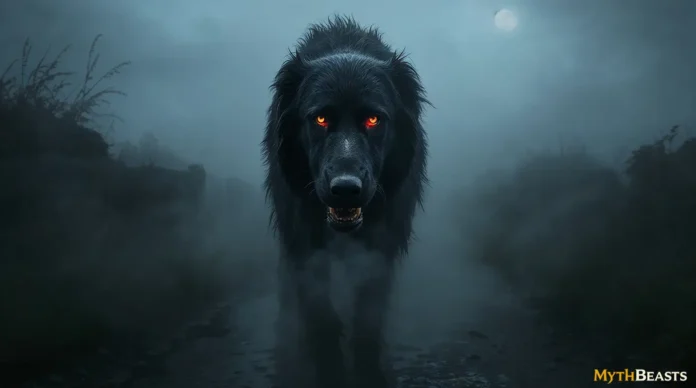
Black Shuck is a spectral black dog from English folklore, known for its terrifying appearance and as an omen...

  • Skills
Fear InducementNight Vision
  • Weaknesses
ExorcismSilver Weak

Omen of Death – Overview

The Omen of Death is a mythological beast type characterized by its association with impending mortality. These entities commonly signal or accompany death. Cultures often perceive them as harbingers of doom, linking them with foreboding events. Across traditions, they share features such as spectral appearances or ominous presences. They function symbolically, heralding the end or transition of life.

Defining Characteristics

Physical Form and Morphology

Beings categorized as Omens of Death typically exhibit ghostly or shadowy forms. They often appear as birds, wolves, or spectral figures. Their physicality emphasizes the boundary between life and death. Their morphology is usually evocative of darkness or decay, symbolizing their foreboding nature. Additionally, these forms are often ethereal or elusive.

Ontological Nature

Ontologically, Omens of Death are often supernatural or spiritual entities. They occupy liminal spaces, existing between the worlds of the living and the dead. Their presence challenges natural orders, emphasizing themes of transition. As metaphysical beings, they embody the inevitability of death. Their nature is often linked to cosmic or divine realms.

Mythological Role and Function

Place in Mythological Systems

In mythological systems, Omens of Death act as intermediaries between divine forces and mortal beings. They often serve to remind humans of their mortality. Typically, they interact with gods or spirits, reinforcing cosmic laws. Through their manifestations, they draw attention to moral or existential themes. Their role underscores the inevitability and universality of death.

Perception and Meaning

Culturally, Omens of Death are seen as warnings or portents. While sometimes feared, they may also be respected as necessary parts of life cycles. In some traditions, they are viewed as protectors, guiding souls to the afterlife. Symbolically, they represent change and transformation. Their meaning varies, reflecting each culture’s understanding of life and death.

Distinction from Related Beast Types

Conceptual Boundaries

Omens of Death differ from elemental or animal spirits through their specific focus on mortality. Unlike undead entities, they do not typically represent post-mortem states. Their symbolism is not tied to earthly elements or animalistic behavior. Instead, they emphasize existential transitions. This sets them apart from other supernatural creatures.

Common Sources of Confusion

Confusion arises when Omens of Death are mistaken for general spirits or demons. This conflation occurs because they share ghostly traits. However, their role is distinct. Scholars differentiate them by their explicit link to death. Their mythological function remains consistently tied to mortality, distinguishing them from other spectral entities.

Canonical Beasts Associated with This Beast Type

Barghest

The Barghest, from English folklore, is a spectral hound appearing before death. Its cultural role as a harbinger aligns with Omen of Death characteristics. Its ghostly form and ominous presence highlight its connection to mortality.

Banshee

In Irish mythology, the Banshee’s wail foretells death. This association with impending doom exemplifies its classification as an Omen of Death. Her spectral nature and mournful cry emphasize her role in signaling life’s end.

Ankou

The Ankou, from Breton folklore, is a personification of death. Often depicted as a ghostly figure, it serves as a death omen. Its presence signifies the inevitability of mortality, aligning with this beast type’s characteristics.

Historical Distribution and Cultural Context

Omens of Death appear in varied historical contexts, from European folklore to Asian myths. Their presence is noted in ancient Celtic, Norse, and Slavic traditions. They often emerge during times of societal stress or upheaval. These entities reflect universal human concerns about mortality. Across cultures, they adapt to local cosmologies and belief systems.

Scholarly Interpretation and Uncertainty

Variation in Definitions

Definitions of Omens of Death vary across cultures and eras. Some view them strictly as negative portents, while others see them as guides. Academic interpretations often differ based on the cultural context. This variability highlights the complexity in defining them. The fluid nature of folklore contributes to these diverse understandings.

Limits of Available Evidence

Evidence about Omens of Death is often fragmented. Myths are passed orally, leading to variations and ambiguities. Scholarly debates focus on their origins and consistent features. While some sources are well-documented, others remain speculative. This lack of clarity challenges definitive interpretations. Critical distinction between folklore and verified accounts is necessary.

Mythological Role Across Cultures

Omens of Death recur in myths due to universal human concerns about mortality. They symbolize transition and the unknown. Recognizing their role aids comparative mythology, revealing insights into shared human fears. Their presence in diverse traditions underscores a common need to understand life and death. Through this lens, they offer rich cultural and symbolic insights.