
back to top

Poisonous Beast

Poisonous Beast encompasses mythological creatures known for their lethal venom, often symbolizing danger and transformation in myths.

Relevant Beasts
Greece
Death Messenger
Catoblepas - MythBeasts.com
Greece

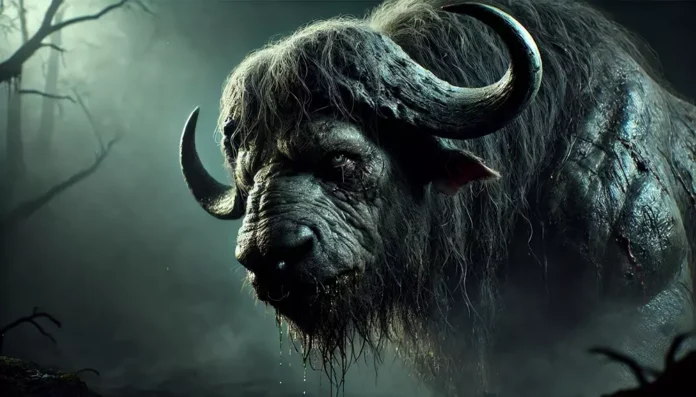
Catoblepas

Catoblepas is an African beast that can kill with a single gaze, having poisonous breath and a sluggish body.

  • Skills
Toxin Generation
  • Weaknesses
Garlic SensitiveSilver Weak

Poisonous Beast – Overview

The term “Poisonous Beast” refers to a category of mythological beings characterized by their toxic nature. These creatures often embody danger and death, symbolizing latent threats within their environments. Across cultures, they serve as metaphors for hidden perils or moral corruptions. Their defining traits include the ability to inflict harm through venom or poison, marking them as significant within mythological ecosystems. These beings often appear in narratives warning of the dangers of hubris or the consequences of trespassing into forbidden realms.

Defining Characteristics

Physical Form and Morphology

Beings in this category typically exhibit features associated with toxicity, such as venomous fangs or stingers. Their morphology often blends animalistic and exaggerated traits, emphasizing their lethal capabilities. Serpentine forms are frequent, showcasing elongated bodies that suggest stealth and unpredictability. Coloration can vary widely, but vibrant patterns often signal danger. These creatures possess adaptations that underline their role as natural deterrents or enforcers of cosmic justice, such as hardened scales or protective exoskeletons.

Ontological Nature

In mythological contexts, Poisonous Beasts occupy a liminal space between the natural and supernatural realms. They are often depicted as spiritual or cosmic entities, transcending mere physicality. Their existence challenges the boundaries between life and death, nature and chaos, often serving as guardians or punishers. These beings are not just physical threats but also symbolize metaphysical principles, such as decay or moral decay. They embody the world’s hidden dangers, serving as reminders of the limits of human control and understanding.

Mythological Role and Function

Place in Mythological Systems

Poisonous Beasts often serve as agents of divine retribution or natural balance within mythological systems. Their presence is a reminder of the tenuous balance between order and chaos. These creatures frequently interact with deities or heroes, acting as tests or trials. Their role is to maintain cosmic equilibrium, punishing hubris or transgressions against natural laws. In some traditions, they protect sacred spaces, ensuring that only the worthy can access divine secrets or resources.

Perception and Meaning

Culturally, Poisonous Beasts are perceived as both threats and protectors. They embody the duality of nature’s beauty and danger, serving as cautionary symbols in folklore. While often feared, these creatures are also respected for their power and role in maintaining balance. They are seen as embodiments of justice, enforcing natural law without bias. In some cultures, they are revered as sacred beings or messengers of the gods, highlighting the complex relationship between humanity and the natural world.

Distinction from Related Beast Types

Conceptual Boundaries

Poisonous Beasts differ from elemental or spirit beings through their emphasis on physical toxicity. While elemental entities represent fundamental natural forces, Poisonous Beasts symbolize the hidden dangers within the environment. Unlike undead creatures, which defy mortality, they underscore life’s fragility through lethal capabilities. Their distinction lies in the embodiment of natural deterrents and moral lessons, rather than mere supernatural phenomena. They occupy a unique niche as both physical and symbolic entities.

Common Sources of Confusion

Confusion often arises between Poisonous Beasts and other dangerous entities like demons or monsters. This stems from their shared threatening nature and narrative roles. However, their defining trait is the use of poison as a symbolic and literal tool. Scholars distinguish them by focusing on their ecological role and mythological significance, as opposed to purely destructive or chaotic elements. Their function as enforcers of natural order further sets them apart from beings of mere malice.

Canonical Beasts Associated with This Beast Type

Naga

Originating in Hindu and Buddhist traditions, the Naga are serpent-like beings associated with water and protection. They exemplify the Poisonous Beast type through their dual role as guardians and threats, embodying both danger and wisdom.

Basilisk

The Basilisk, found in European folklore, is a serpent-like creature whose gaze or breath causes death. It represents the Poisonous Beast type by embodying lethal danger, reinforcing themes of hubris and forbidden knowledge.

Gorgon

In Greek mythology, the Gorgons are monstrous women with snakes for hair, whose gaze turns people to stone. They embody the Poisonous Beast type through their lethal attributes, serving as warnings against arrogance and disrespect towards the divine.

Historical Distribution and Cultural Context

Poisonous Beasts appear in diverse cultures worldwide, from ancient Mesopotamia to indigenous Americas. Their presence is noted in historical texts, art, and oral traditions, reflecting universal concerns. These creatures often emerge during periods of social or environmental upheaval, symbolizing instability. Their appearances are adapted to local ecological and cosmological frameworks, illustrating cross-cultural motifs of danger and protection. The persistence of these creatures highlights their enduring symbolic power.

Scholarly Interpretation and Uncertainty

Variation in Definitions

Definitions of Poisonous Beasts vary widely across cultures and time periods. Some see them as purely malevolent, while others portray them as necessary checks on human ambition. Academic frameworks differ, with some emphasizing ecological roles and others focusing on symbolic interpretations. These variations reflect cultural attitudes towards nature and the supernatural, making universal definitions challenging. Scholars often debate their classification, highlighting differing cultural and historical contexts.

Limits of Available Evidence

The mythological record for Poisonous Beasts is often incomplete or ambiguous. Many traditions lack detailed descriptions, relying on oral histories or fragmented texts. Scholars face challenges in distinguishing myth from cultural metaphor. No verified sources describe every aspect of these creatures’ roles, leading to interpretative diversity. While many accounts exist, they often lack consensus, highlighting the difficulty of categorizing mythological constructs. This uncertainty necessitates careful scholarly analysis.

Mythological Role Across Cultures

The recurrence of Poisonous Beasts in myths underscores shared human concerns about unseen dangers and moral boundaries. These creatures symbolize the balance between protection and threat, reflecting cultural anxieties. They address the need for metaphors of danger, justice, and natural order. Understanding their role aids comparative mythology, revealing universal themes of fear and respect for nature’s power. This cross-cultural presence highlights their enduring relevance in addressing existential and ecological themes.