back to top

Sea Lurker

Sea Lurker embodies mysterious aquatic beasts with unique traits and symbolic roles in mythological narratives.

Relevant Beasts

Inuit
Sea Lurker
Qallupilluit - Alaska Mythology
Inuit

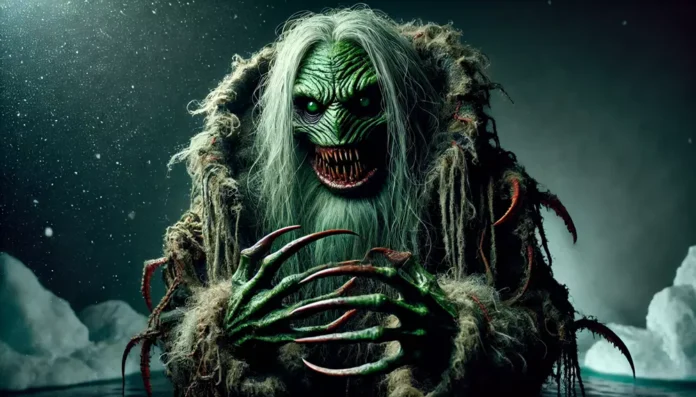
Qalupalik

The Qalupalik is a chilling creature from Inuit mythology, lurking in icy waters and luring children to a watery...

  • Skills
Element ControlHypnosis
  • Weaknesses
Cold SensitiveDaylight Bound

Sea Lurker – Overview

The term Sea Lurker refers to a category of mythological beasts associated with the ocean’s depths. Such creatures share common traits of elusiveness, mystery, and a significant role within cultural mythologies. Typically, Sea Lurkers are known for their ability to remain hidden beneath the waves, surfacing only under specific circumstances, often tied to natural phenomena or supernatural events. Across traditions, these creatures embody both the beauty and terror of the ocean, playing roles as guardians, omens, or symbols of the unknown.

Defining Characteristics

Physical Form and Morphology

Sea Lurkers are commonly depicted as large, aquatic creatures with serpentine or fish-like bodies. These beings often possess features such as scales, fins, or elongated bodies that enable them to maneuver swiftly through water. Their physical forms may combine elements of marine wildlife, such as tentacles or bioluminescent features, which enhance their mystical representation. Variations exist, but the overall morphology suggests adaptation to deep-sea environments.

Ontological Nature

In many mythologies, Sea Lurkers are considered liminal entities, existing between the world of the living and the depths of the ocean, often perceived as supernatural or hybrid beings. Their presence is linked to the metaphysical order, embodying the ocean’s dual role as a source of life and a realm of peril. These creatures may be seen as sentinels guarding ancient secrets or as manifestations of the ocean’s unpredictable power.

Mythological Role and Function

Place in Mythological Systems

Sea Lurkers occupy significant positions within mythologies, often interacting with deities, humans, and other mythological creatures. They may act as messengers or enforcers for ocean deities or serve as protectors of sacred underwater realms. Their role varies, but they often symbolize the natural world’s enigmatic and untamed aspects, challenging human understanding and control. Sea Lurkers can also function as boundary markers, delineating the limits of human exploration.

Perception and Meaning

Cultures generally perceive Sea Lurkers as both menacing and awe-inspiring, embodying the ocean’s hidden dangers and its majestic beauty. They are often seen as warnings of impending natural disasters or as protectors against human hubris. Symbolically, Sea Lurkers represent the mysteries of the deep, the unseen forces of nature, and the boundary between known and unknown realms. Their presence in myth often serves to remind humans of their vulnerability and the limits of their knowledge.

Distinction from Related Beast Types

Conceptual Boundaries

Sea Lurkers differ from other beast types, such as elemental beings or spirits, by their intrinsic connection to the ocean and their distinctive marine attributes. Unlike humanoid monsters or land-based creatures, Sea Lurkers are defined by their aquatic nature and adaptability to underwater environments. Their essence is tied to the oceanic domain, which separates them from other mythological entities that may share similar traits but inhabit different realms.

Common Sources of Confusion

Confusion often arises when Sea Lurkers are conflated with other aquatic creatures that lack the same mythological significance. Scholars distinguish them through detailed analysis of cultural texts that highlight their specific roles and attributes. Comparative mythology provides insights into their unique identity by examining the consistency of their characteristics across different traditions, ensuring accurate classification and separation from superficially similar beings.

Canonical Beasts Associated with This Beast Type

Kraken

Originating from Scandinavian folklore, the Kraken is often seen as a quintessential Sea Lurker. Its massive size and ability to capsize ships highlight the ocean’s perils, making it a powerful symbol of maritime danger.

Umibōzu

A prominent figure in Japanese folklore, the Umibōzu embodies the unpredictable nature of the sea. This Sea Lurker is known for disrupting voyages, symbolizing the ocean’s uncontrollable forces and the need for respect and caution.

Charybdis

In Greek mythology, Charybdis is depicted as a monstrous Sea Lurker creating whirlpools, threatening sailors. Its presence underscores the treacherous aspects of sea navigation, embodying the perils posed by natural ocean phenomena.

Historical Distribution and Cultural Context

Sea Lurkers appear in myths from various cultures, including those in Scandinavia, Japan, and ancient Greece. Their historical distribution highlights the widespread human fascination with the sea’s mysteries. Throughout history, societies living near coastlines have incorporated Sea Lurkers into their mythologies, reflecting the ocean’s critical role in their cultural and economic lives. These mythological entities often emerge during periods of increased seafaring activity, when interactions with the ocean amplify its perceived power and mystery.

Scholarly Interpretation and Uncertainty

Variation in Definitions

Interpretations of Sea Lurkers differ among cultures and scholars, often reflecting local environmental conditions and cultural priorities. Definitions may emphasize their protective nature or their symbolism of chaos, based on the cultural context. Academic frameworks attempt to reconcile these variations by analyzing the symbolic roles Sea Lurkers play, offering insights into broader human concerns about the unknown and the uncontrollable.

Limits of Available Evidence

While many Sea Lurker myths are well-documented, gaps and ambiguities remain due to oral traditions or lost texts. Scholars must carefully separate established interpretations from speculative reconstructions, acknowledging the limits of existing evidence. No verified sources describe specific rituals or ceremonies associated directly with Sea Lurkers. This limitation highlights the need for cautious interpretation and the importance of grounding classification in documented mythologies.

Mythological Role Across Cultures

Sea Lurkers recur across mythologies because they address universal human concerns about the sea’s power and mystery. Their role as boundary markers between known and unknown realms speaks to deeply ingrained human fears and fascinations. By recognizing these shared functions, scholars can better interpret myths, revealing cultural attitudes toward the ocean and its symbolic significance. Understanding Sea Lurkers enhances comparative mythology by illuminating the diverse ways cultures articulate the relationship between humanity and the natural world.