Storm Entity - an Overview
Storm Entities represent a mythological beast type characterized by their intrinsic connection to storms, weather phenomena, and atmospheric forces. These entities often embody the power and chaos of storms, serving as symbols of nature's unpredictability. They are typically associated with ferocity, transformation, and the elements, playing significant roles in mythological narratives across various cultures. As a classification category, Storm Entities help organize and interpret mythological beings whose identities are inseparable from storm-like attributes and functions.Defining Characteristics
Physical Form and Morphology
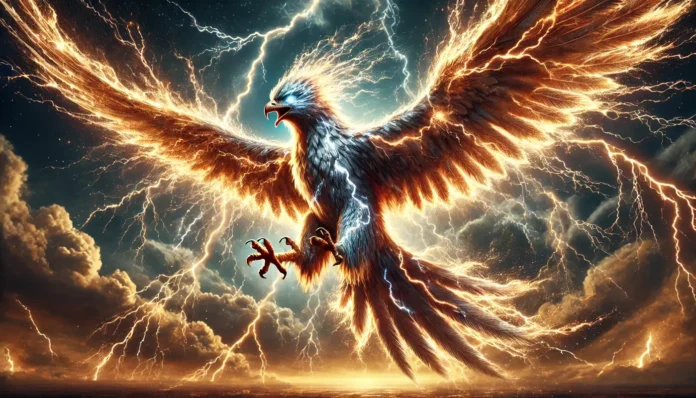
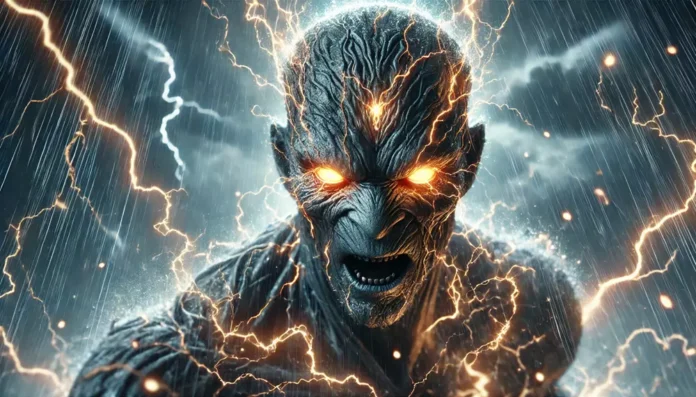
Storm Entities are often depicted with forms that reflect their association with natural elements. Common traits include cloud-like or vaporous bodies, lightning-infused features, and tempestuous auras. They may appear as humanoids enveloped in storms or animalistic forms that physically manifest weather phenomena. This morphology underscores their embodiment of the chaotic nature of storms, their forms shifting and reforming like swirling winds and rain.Ontological Nature
Ontologically, Storm Entities are typically considered supernatural or cosmic in origin. They often exist beyond the physical plane, manifesting through natural phenomena or weather patterns. In some traditions, they are spirits or deities directly responsible for controlling storms, while in others, they are hybrids of natural and supernatural forces, bridging the gap between the earthly and the divine with their presence.Mythological Role and Function
Place in Mythological Systems
Storm Entities occupy significant roles within mythological systems, often acting as agents of change or harbingers of divine will. They can be forces of destruction or renewal, their storms cleansing the earth or punishing humanity. In cosmology, they maintain balance through their tempests, ensuring that natural cycles continue uninterrupted, highlighting their integral part in the world's functioning.Perception and Meaning
Across cultures, Storm Entities are perceived with a mixture of awe and fear. They are seen as powerful guardians of nature's order, unpredictable forces that can bring prosperity or devastation. As liminal beings, they embody the boundary between tranquility and chaos, their presence often interpreted as omens or messages from the divine, urging reflection or change.Distinction from Related Beast Types
Classification Boundaries
Storm Entities differ from elemental or spirit classifications primarily through their specific connection to storms and weather phenomena. While elemental beings might represent broader aspects of nature like fire or water, Storm Entities are explicitly tied to atmospheric dynamics. This distinction is crucial, as it centers their identity around the volatility and power inherent in storms.Common Sources of Confusion
Storm Entities are sometimes confused with elemental spirits or deities due to their shared control over natural forces. These confusions arise when mythologies do not clearly separate elemental control from storm-specific influence. Scholars distinguish them by focusing on the entity's explicit role in storm phenomena, rather than broader elemental associations alone.Canonical Beasts Associated with This Beast Type
Thunderbird
The Thunderbird is a prominent Storm Entity in Native American mythology, often depicted as a giant bird capable of creating storms with its wings. It symbolizes power and protection, exemplifying control over the weather.Raijin
Raijin, from Japanese folklore, is a thunder god who embodies the storm's fury. Depicted with drums that generate thunder, he represents the chaotic and transformative power inherent in storms, central to Japanese cosmology.Perun
In Slavic mythology, Perun is a god of thunder and lightning, ruling the skies with his storms. His role as a Storm Entity is affirmed by his powerful influence over weather, ensuring balance and order within the mythological universe.Historical Distribution and Cultural Context
Storm Entities appear in mythologies worldwide, from North America's Thunderbird to Asia's Raijin, reflecting a universal recognition of storms' power and mystery. Their presence across diverse cultures underscores the common human experience of weather's unpredictable force and the need to personify it within mythological frameworks.Scholarly Interpretation and Uncertainty
Variation in Definitions
Definitions of Storm Entities vary among traditions, with some cultures emphasizing their divine aspects while others focus on their naturalism. Academic interpretations differ on whether these entities are primarily weather deities or spirits, reflecting diverse cultural nuances.Limits of Available Evidence
Gaps in historical and mythological records present challenges in fully understanding Storm Entities. In many cases, oral traditions and fragmented texts provide incomplete snapshots, leaving room for interpretation and debate among scholars regarding their precise roles and origins.Taxonomic Relevance
The classification of Storm Entities is crucial within a mythological taxonomy system, providing a framework to organize beings intimately tied to storm phenomena. This categorization allows for comparative analysis across cultures, enhancing understanding of how humans interpret and mythologize natural forces.