
back to top

Winged Beast

Winged Beast refers to mythological creatures defined by their wings, symbolizing freedom and transcendence in various cultural narratives.

Relevant Beasts
Mississippian
Guardian Animal
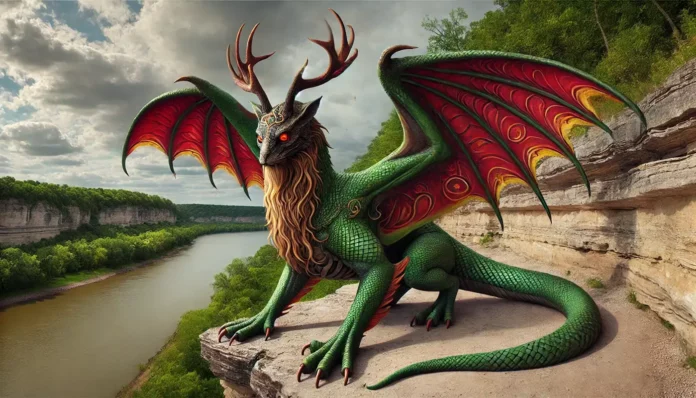
The Piasa Bird - Native American folklore
Mississippian

Piasa Bird

The Piasa Bird, a monstrous winged predator from Native American folklore, is said to dwell near the cliffs of...

  • Skills
CamouflageFire Breathing
  • Weaknesses
Blunt ForceLightning Damage
Africa
Winged Beast
Kongamato - South African Myth
Zambia

Kongamato

The Kongamato is a winged beast from African folklore, feared for its pterosaur-like appearance and aggressive attacks on those...

  • Skills
FlightPhysical Strength
  • Weaknesses
Physical LimitsPiercing Kill

Winged Beast – Overview

Winged Beasts are mythological entities characterized by their defining feature of wings, symbolizing a bridge between earth and sky. They often embody traits of strength, freedom, and transcendence. Across various cultures, these creatures frequently embody supernatural or divine attributes. They may serve as messengers, agents of divine will, or symbols of chaos and change. The Winged Beast category is a recurring motif in mythological narratives, often linked with themes of transformation or communication between realms.

Defining Characteristics

Physical Form and Morphology

Winged Beasts typically exhibit a combination of avian features with those of land creatures. Common morphological patterns include large, feathered wings attached to a mammalian or reptilian body. Their wings are often depicted as powerful and majestic, enabling flight beyond the mundane world. These creatures may possess additional animalistic features such as claws, beaks, or tails, which enhance their formidable presence in various mythologies.

Ontological Nature

In mythological systems, Winged Beasts are frequently seen as hybrid entities occupying a liminal space between the earthly and the divine. They are often regarded as supernatural, with abilities or attributes that transcend human limitations. These creatures are sometimes viewed as guardians of sacred spaces or bearers of divine messages. Their existence challenges the boundaries of the natural order, representing cosmic forces or spiritual truths.

Mythological Role and Function

Place in Mythological Systems

Winged Beasts play significant roles in mythological cosmologies, often as intermediaries between gods and humans. They may interact with natural forces, symbolizing elements like air or storm. In some traditions, they serve as protectors of knowledge or sacred places. Their presence often signifies a disruption or realignment of cosmic order, acting as agents of change or heralding significant events.

Perception and Meaning

Culturally, Winged Beasts can be perceived as both benefactors and threats. They may be seen as protectors or punishers, depending on their narrative context. Often, they embody abstract forces such as freedom, mystery, or divine power. These creatures are frequently linked with omens, representing either auspicious beginnings or impending doom. Their symbolic roles may vary widely between different cultural interpretations.

Distinction from Related Beast Types

Conceptual Boundaries

Winged Beasts differ from elemental beings or spirits by their physical embodiment and specific role as intermediaries. Unlike humanoid monsters, they are less anthropomorphic, emphasizing their connection to nature and the divine. They are distinct from purely animal-based creatures, as their wings and hybrid forms signify a deeper symbolic function.

Common Sources of Confusion

Confusion often arises when Winged Beasts are conflated with other mythological entities like dragons or griffins. Scholars distinguish them based on their specific roles and physical characteristics. Winged Beasts emphasize the theme of transcendence, which is less pronounced in other beast types. Clear differentiation hinges on their mythological function, not just morphology.

Canonical Beasts Associated with This Beast Type

Garuda

Originating from Hindu and Buddhist traditions, Garuda is a winged creature often depicted as half-man, half-eagle. It serves as the divine vehicle of Vishnu, representing speed, power, and the ability to traverse realms.

Roc

The Roc, from Arabian folklore, is a gigantic bird capable of carrying elephants. It symbolizes immense power and the untamed force of nature, embodying the awe-inspiring aspects of Winged Beasts.

Thunderbird

In Native American mythology, the Thunderbird is a powerful being associated with storms and thunder. It represents an elemental force, acting as a guardian of the skies and a symbol of both creation and destruction.

Historical Distribution and Cultural Context

Winged Beasts appear in diverse mythologies across the globe, from ancient Mesopotamian to Indigenous American cultures. They often emerge in regions where avian symbolism holds significant spiritual value. Their historical distribution reveals a pattern of cultural fascination with the sky and its mysteries, reflecting broader human concerns with transcendence and divine communication.

Scholarly Interpretation and Uncertainty

Variation in Definitions

Definitions of Winged Beasts vary significantly across cultures and historical periods. Some traditions emphasize their divine role, while others highlight their chaotic nature. Academic frameworks often differ in interpreting these creatures’ mythological significance, leading to varied understandings.

Limits of Available Evidence

While many cultures feature Winged Beasts, evidence can be sparse or ambiguous. Some depictions rely on oral traditions, which complicates scholarly analysis. No verified sources describe all characteristics universally, highlighting the need for cautious interpretation of these mythological entities.

Mythological Role Across Cultures

The recurrence of Winged Beasts across mythologies underscores shared human concerns with bridging realms and understanding the divine. These creatures often address symbolic needs for protection, communication, and transformation. By recognizing their role, scholars can gain insights into the comparative study of mythological systems and their cultural functions.