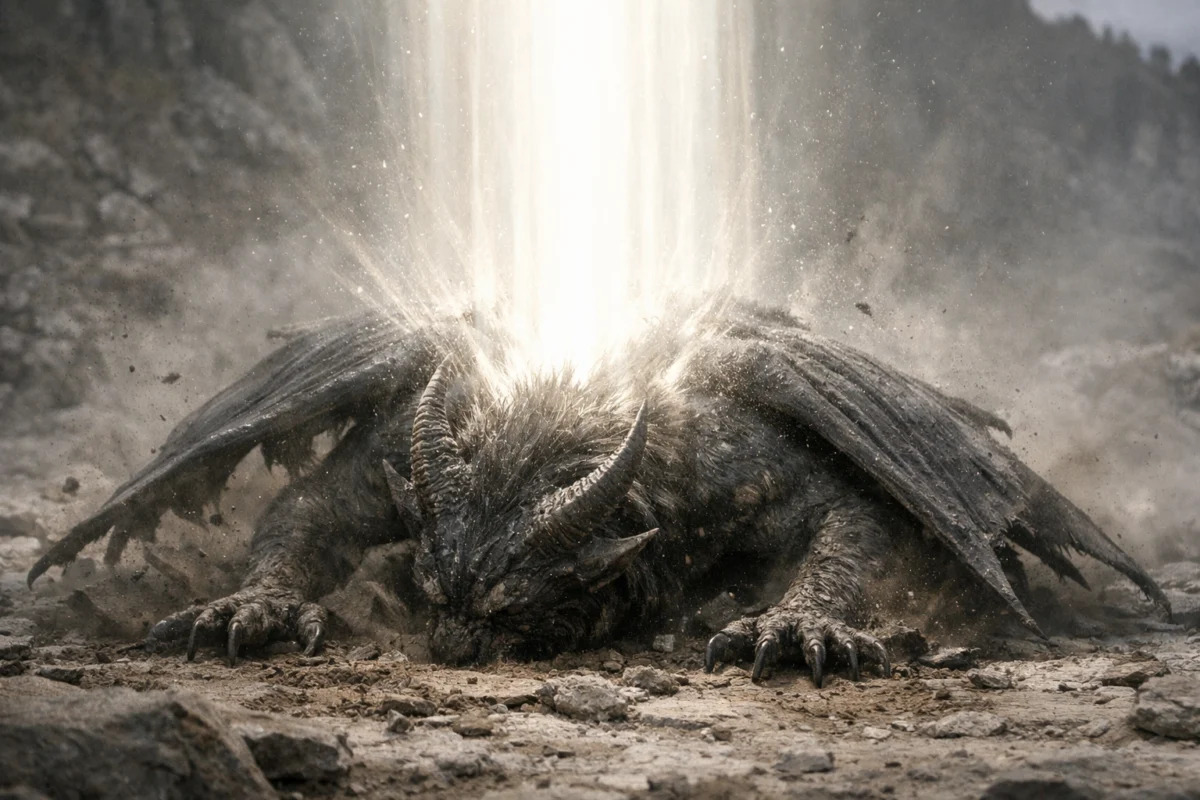
Tarasque: The Taming of the Legendary Beast
The Tarasque is one of the most famous monsters of Provence, a legendary beast tied to Tarascon, a town on the Rhône River in southern France. In medieval Christian legend, it haunted the river landscape between Arles and Avignon, threatening travelers, boats, and nearby communities.
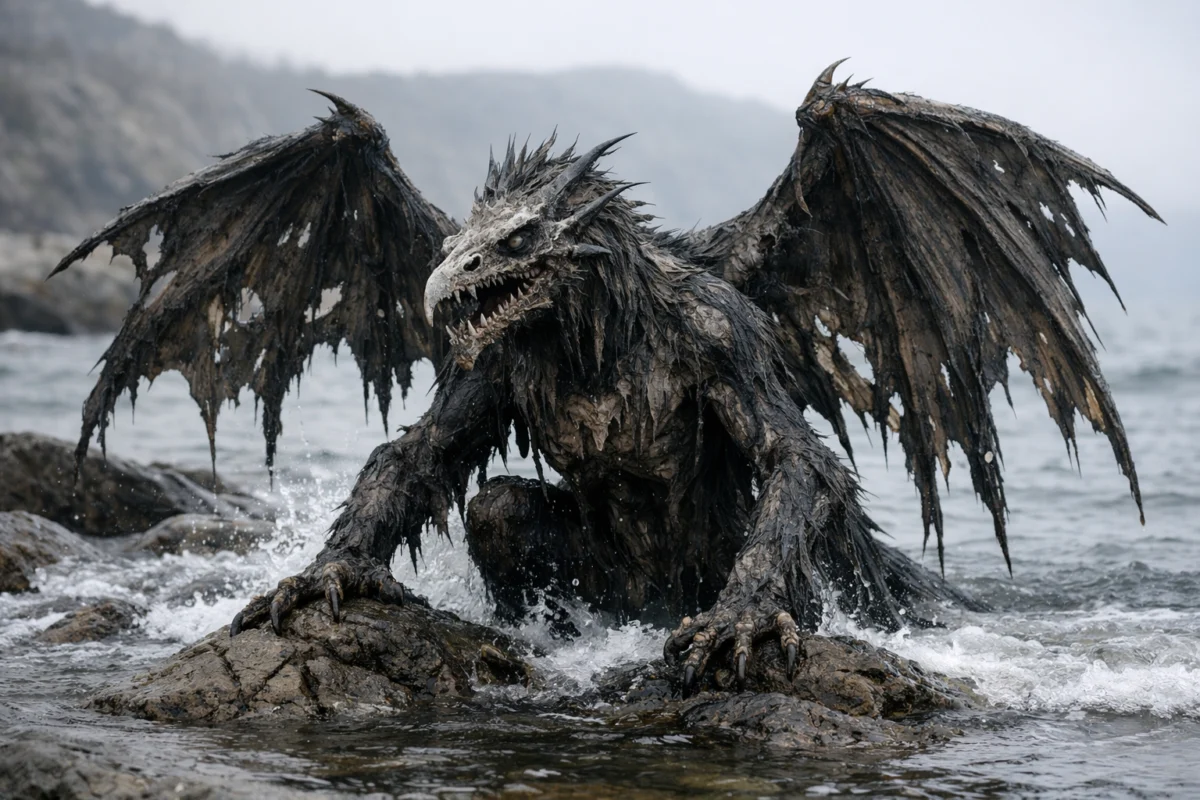
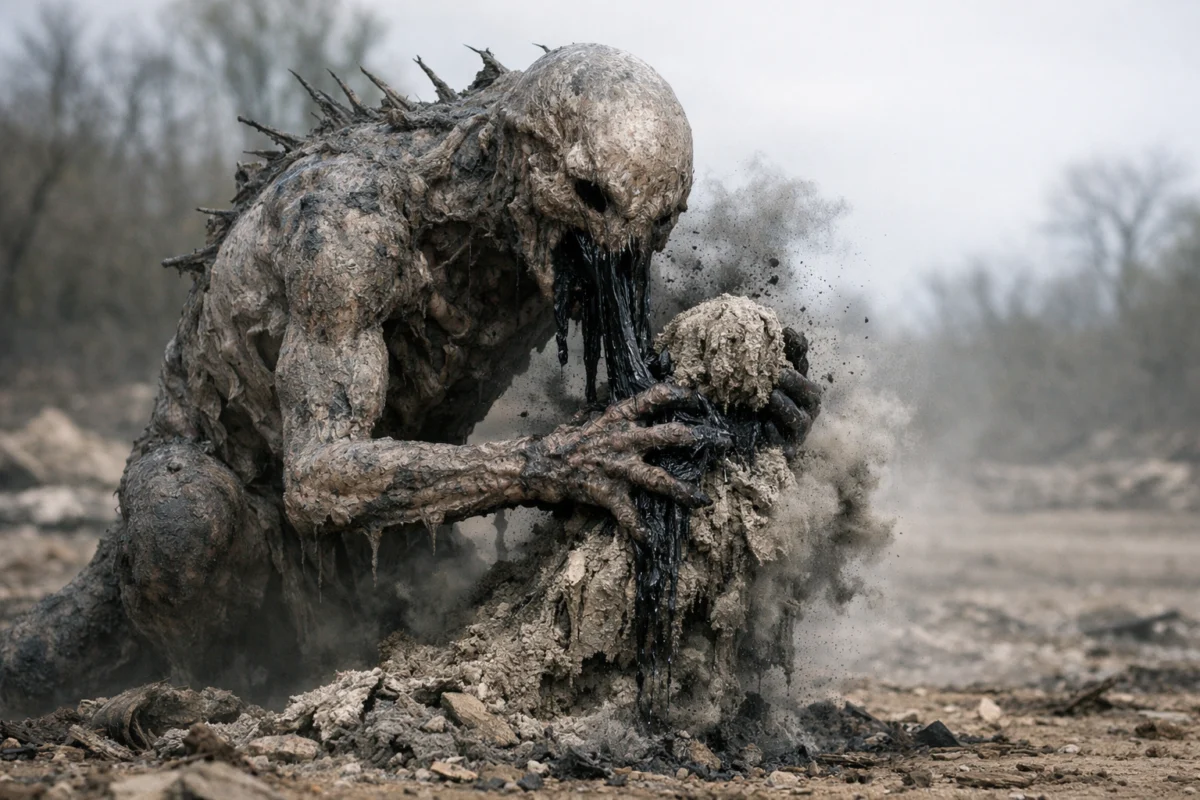
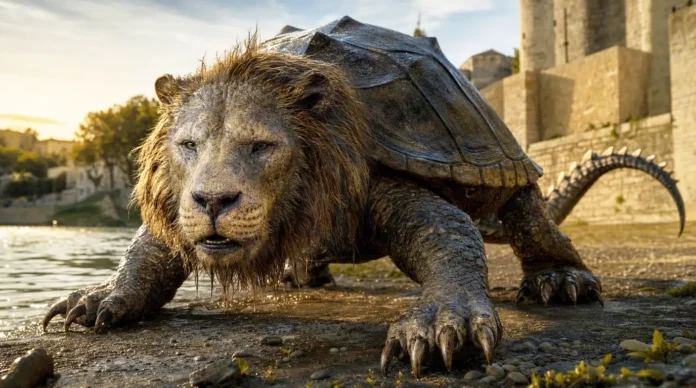
Its body changed across time. Medieval texts describe a strange dragon-like creature, part land animal and part fish, with a lion-like head and a serpent tail.
Later Provençal tradition shaped the image many people know today: a lion-headed monster with a turtle-like shell, six legs, heavy claws, and a dangerous spiked tail.
The Tarasque is best known through the story of Saint Martha. Unlike many dragon legends, this tale does not end with a warrior proving his strength through combat.
Martha tames the beast through faith, calm courage, holy water, and the sign of the cross. That makes the Tarasque more than a monster.
It becomes a symbol of fear brought under control, chaos turned into civic memory, and a local legend that still walks through Tarascon in festival form.
History/Origin
The Tarasque legend belongs to medieval Provence, especially the region around Tarascon on the Rhône River. Its strongest written tradition comes from Christian hagiography, the genre of saints’ lives.
These stories often show holy figures facing monsters, demons, storms, or dangerous animals to reveal spiritual authority.
The earliest known medieval text to introduce the Tarasque appears to be the Life of Saint Martha attributed to Pseudo-Marcelle, usually dated between 1174 and 1210. This makes the legend older than its famous appearance in The Golden Legend, the 13th-century collection of saints’ lives compiled by Jacobus de Voragine.
The Golden Legend helped spread the story widely. In that version, the beast lives in a wood between Arles and Avignon.
It threatens the people near the Rhône and attacks those who try to pass through the region. The setting matters because the Tarasque is not a random fantasy dragon.
It is a river monster shaped by a real landscape of crossings, floods, travel, trade, and fear.
“half beast and half fish”
“greater than an ox, longer than an horse”
“head like a lion, tail like a serpent”
These short descriptions show how strange the medieval Tarasque was. It was not yet the neat parade creature with a turtle shell that appears in later local imagery.
The early beast is a hybrid river dragon, built from several kinds of danger at once: animal strength, serpent terror, water threat, and monstrous size.
The story also gives the Tarasque a legendary ancestry. The Golden Legend says it came from Galatia and was born from Leviathan and a beast called Onachus or Bonachus.
This is not zoology. It is medieval monster logic. The text links the Tarasque with older symbolic creatures to make it feel ancient, unnatural, and almost impossible to defeat.
Over time, the Tarasque became more visually stable. Later Provençal tradition, town seals, procession figures, and festival art fixed its popular form: lion-like head, armored shell, six feet, bear-like claws, and a spiked or serpent-like tail.
This version works perfectly as a public festival creature because it can become a large body moved through the streets.
That change from manuscript monster to civic emblem is central to the Tarasque’s history. In the medieval text, the beast threatens the people.
In Tarascon’s later tradition, the town carries it, celebrates it, and turns it into part of local identity.
Name Meaning
The name Tarasque is usually linked to Provençal tradition. French dictionary sources connect it with Provençal tarasca or tarasco, tied to Tarascon, the town most closely associated with the legend.
This makes the name deeply local. The monster is not only called Tarasque because it has a mythic identity.
It carries the memory of Tarascon, the Rhône, Saint Martha, and the town’s public celebrations.
Some older explanations connect the name with Celtic roots, ancient regional traditions, or even Greek Tartarus. These ideas can appear in discussions of the legend, but they should stay marked as uncertain.
The most reliable explanation is the Provençal and Tarascon connection.
Background Story
The central myth begins with a region in fear. Near Nerluc, the place later associated with Tarascon, the Tarasque lives close to the Rhône and makes the surrounding land dangerous.
It attacks travelers, threatens boats, and turns the river crossing into a place of dread.
The people cannot defeat it through force. In dragon legends, knights often solve the problem with weapons. The Tarasque story moves differently.
The community needs someone who does not approach the monster as a soldier.
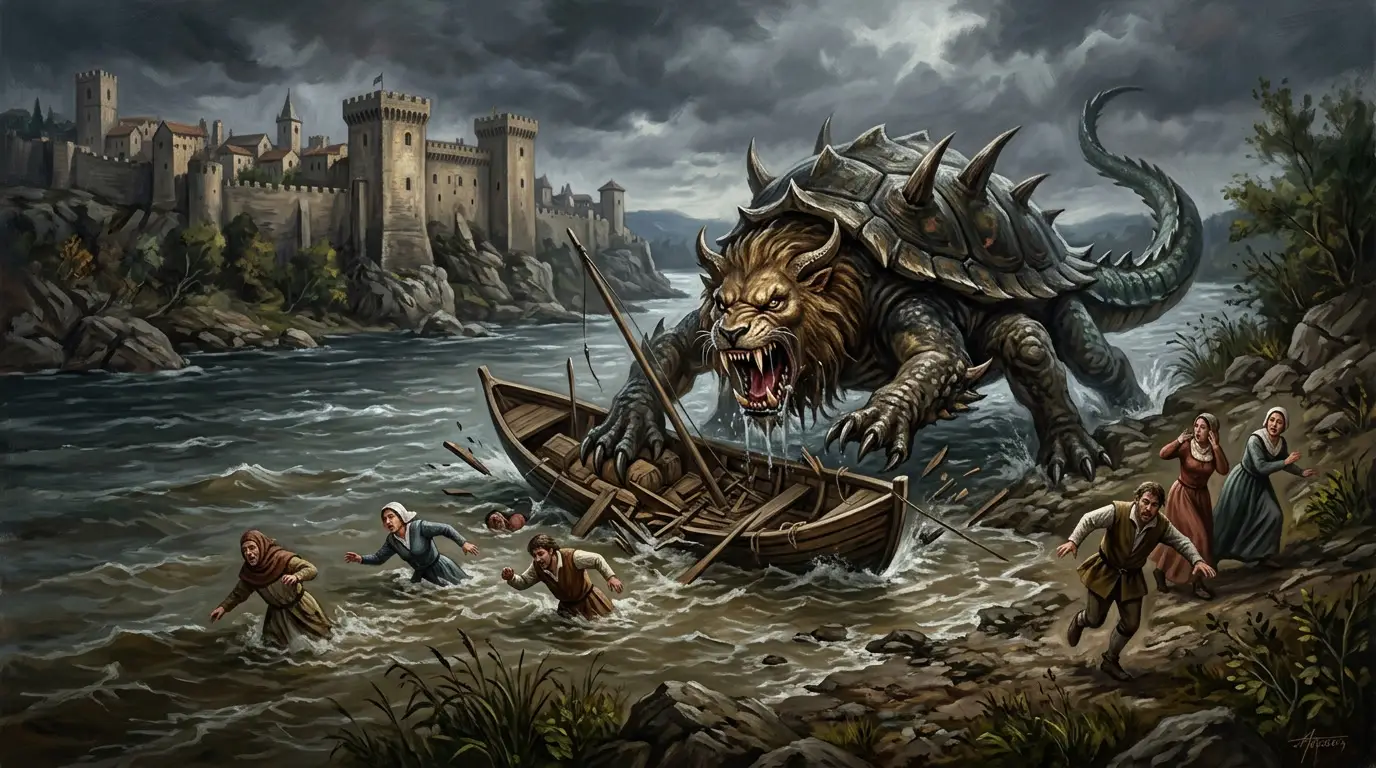
Saint Martha enters the legend as that figure. In Christian tradition, Martha is connected with the New Testament household of Bethany.
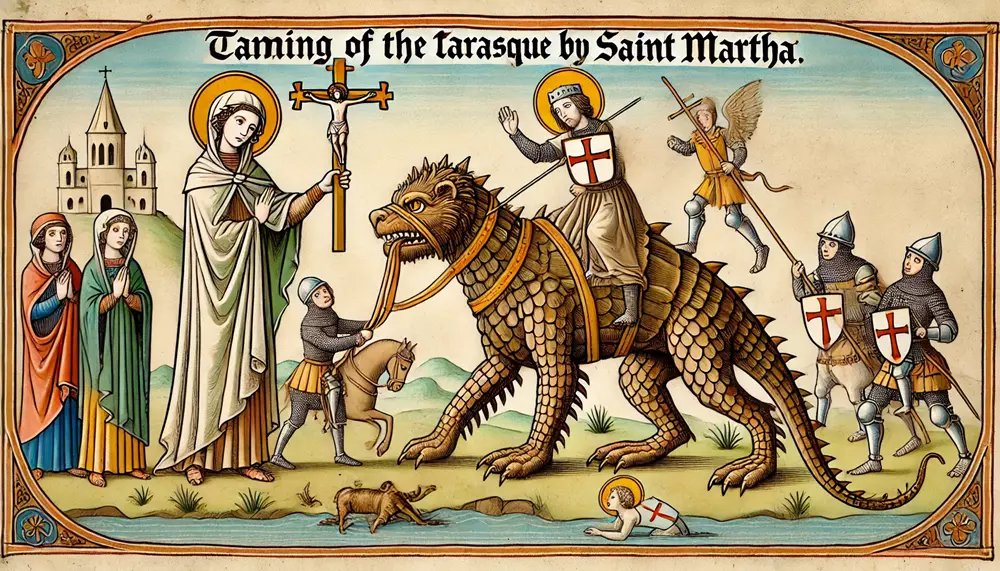
In the Provençal legend, she comes to the troubled region and faces the Tarasque without armor, sword, or army.
Martha finds the beast and subdues it with holy water and the cross. In The Golden Legend, she binds it with her girdle and leads it back like a harmless animal.
This is the most powerful image in the whole myth: a monster feared by everyone becomes calm before a saint.
The ending is darker. When Martha leads the tamed beast back to the people, they kill it out of fear.
The creature offers no real resistance once subdued. That detail makes the story more complex than a simple victory tale.
Martha controls the monster, but the community cannot stop seeing it as a threat.
This ending also explains why the Tarasque became such a strong symbol. The beast represents danger, but also fear itself.
The saint can tame the monster, yet the people still need time to learn what that taming means.
Similar Beasts
Graoully of Metz is another French dragon linked to a saint. In local tradition, Saint Clement saves Metz from the monster and the snakes around it, turning a dangerous creature into a civic symbol.
Gargouille of Rouen connects to Saint Romanus. Like the Tarasque, it belongs to a French pattern where a saint protects a community from a dragon-like threat tied to water, marshland, or local danger.
La Velue, also called the Peluda, is a French beast from the area of La Ferté-Bernard. It shares the Tarasque’s hybrid body and river-linked terror, though its legend follows a more direct monster-slaying pattern.
The Spanish Tarasca appears in Corpus Christi processions in cities such as Granada. It adapts the Tarasque idea into a public festival figure, often shown as a dragon-like beast with a woman or mannequin above it.
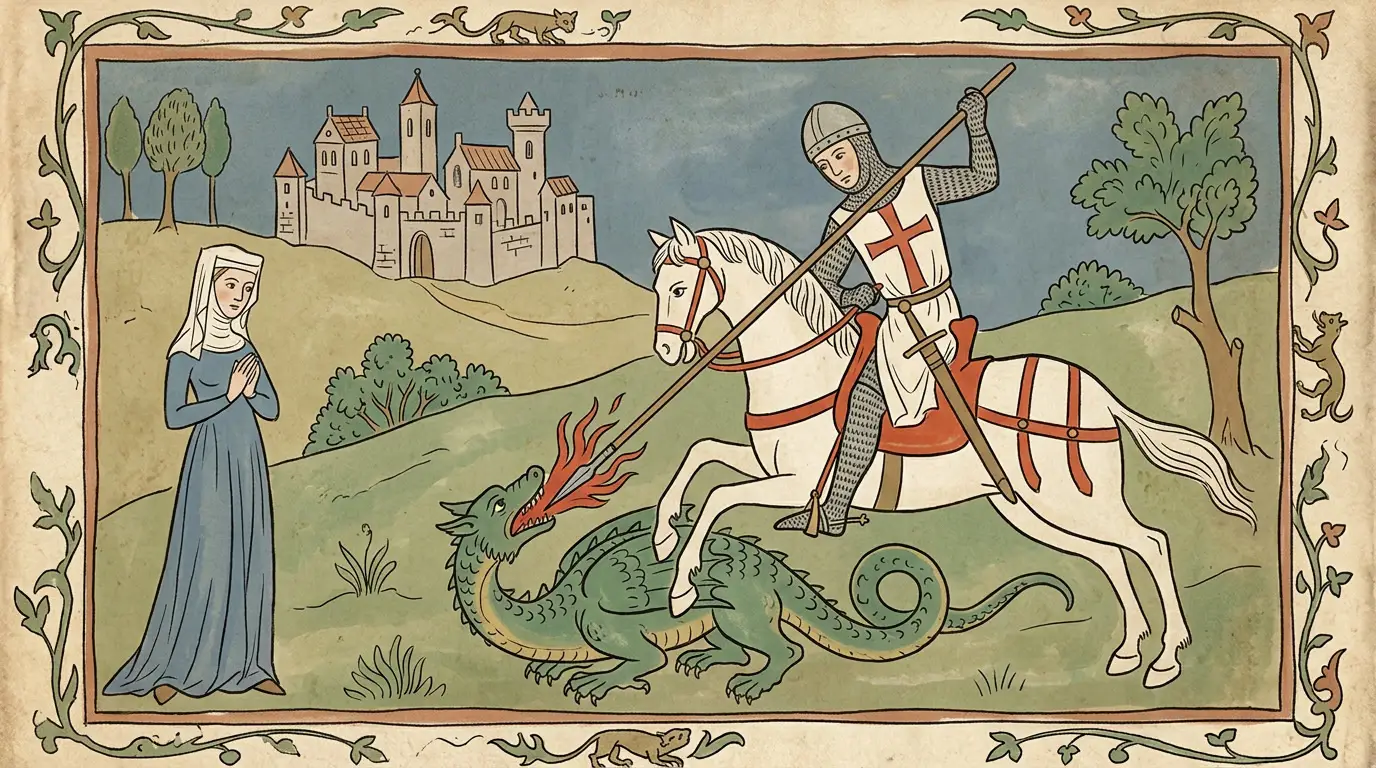
Saint George’s Dragon is the most famous Christian dragon-slaying parallel. The Tarasque story differs because Martha does not kill the beast in combat. She tames it through sacred authority.
Cultural Impact
The Tarasque became one of Provence’s strongest legendary symbols because the story moved beyond medieval writing. It entered civic identity, public celebration, performance, visual art, tourism, and local memory.
Tarascon did not only preserve the monster. It turned the monster into a public emblem.
The first major cultural example is the Fêtes de la Tarasque in Tarascon. These festivities center on a large Tarasque effigy that moves through the town.
The creature once represented terror in the legend, but in festival form it becomes a shared figure of celebration.
The second example is the Order of the Knights of the Tarasque, traditionally linked with King René of Anjou in 1474. Local heritage accounts connect King René with formal organization of Tarasque festivities and with maintaining the dignity of the celebration.
This gave the monster a civic role beyond storytelling.
The third example is the older link with Pentecost. Some earlier Tarasque celebrations took place around Pentecost, placing the creature inside a Christian calendar of public ritual and communal gathering.
Tarasque compared to Dragon
| Aspect | Tarasque | Dragon |
|---|---|---|
| Origin | The Tarasque's legend originated in French medieval folklore. | Dragons have various origins across multiple cultures worldwide. |
| Physical Appearance | It features a lion's head, turtle-like body, and six legs. | Dragons typically have a reptilian appearance with wings and fire-breathing abilities. |
| Abilities | The Tarasque is known for its fire-breathing and invulnerability. | Dragons are often depicted with powerful elemental abilities and flight. |
| Behavior | It terrorized villages, burning crops and attacking livestock. | Dragons are often portrayed as fierce creatures that hoard treasure. |
| Cultural Significance | The Tarasque symbolizes the triumph of good over evil in folklore. | Dragons often represent chaos, power, or wisdom in different cultures. |
| Taming Stories | Saint Martha tamed the Tarasque through compassion and faith. | Many stories depict heroes slaying or befriending dragons for glory. |
The fourth example is Saint Martha’s feast day, traditionally July 29. The beast’s legend belongs to Martha’s local veneration, and Tarascon’s memory of the Tarasque cannot be separated from the saint who tamed it.
The fifth example is the modern annual festival pattern. Since the mid-20th century, especially after 1946, Tarasque festivities became a regular part of Tarascon’s cultural calendar.
Today, celebrations usually take place at the end of June, with music, costume, procession, and a public monster figure.
The sixth example is the Tarasque’s place in processional giants and dragons traditions. UNESCO recognizes these traditions in Belgium and France as intangible cultural heritage.
This places the Tarasque inside a wider European world of giant figures, dragon processions, public memory, and local performance.
The seventh example is the creature’s visual identity. The medieval text gives one body, but festival tradition gives another.
The popular Tarasque with a shell, lion head, six legs, and aggressive tail is not just decoration. It is a civic design that made the monster easy to recognize and perform in public space.
The eighth example is tourism and regional branding. Tarascon still uses the Tarasque as a recognizable cultural marker.
Visitors meet the beast through festivals, local stories, town imagery, and heritage writing. The monster that once threatened the community now helps identify it.
This cultural afterlife changes how readers should understand the Tarasque. It is not only a medieval dragon. It is a performed monster, a local mascot, a saint legend, a heritage figure, and a symbol of how communities can transform fear into identity.
Religion/Ritual
The religious meaning of the Tarasque centers on Saint Martha. In the medieval legend, she defeats the beast through sacred authority rather than violence.
Her tools are holy water, the cross, prayer, and courage. The story presents faith as stronger than brute force.
The ritual side appears most clearly through procession. A large Tarasque figure moves through Tarascon during festival celebrations, recalling the moment Martha led the subdued creature back to the town.
Older observances connected the beast with Pentecost and Saint Martha’s feast day. Modern celebrations blend religious memory, civic pride, costume, music, and public performance.
The verified ritual focus is procession, saintly veneration, public memory, and the reenactment of a monster tamed by sacred power.
Scientific or Rational Explanations
The Tarasque does not need to come from a real animal to make sense. Medieval communities often used monsters to express fear of dangerous places, dangerous forces, and moral disorder.
The Rhône River setting gives the story a strong natural background.
Rivers could drown travelers, damage boats, flood settlements, and make crossings dangerous. A river monster turns those real dangers into a memorable body.
The Tarasque becomes the fear of the river made visible.
Its hybrid form also follows medieval monster-making. Lion, serpent, fish, dragon, turtle, and scorpion-like traits gather different fears into one body.
The result feels unnatural because it combines several dangers that people already understood.
A historical explanation can also connect the Tarasque to the wider Christian pattern of saints defeating dragons. In these stories, the dragon often represents chaos, fear, pagan memory, wild nature, or a threat to community order.
The saint restores safety without becoming a warrior hero.
Some writers have suggested older pre-Christian or Celtic layers behind the Tarasque, especially because Provence has ancient material culture and local monster imagery. This idea is possible as a cultural background, but the best-supported surviving sources are medieval Christian texts.
The strongest rational reading is not “this was a real animal.” It is that the Tarasque gives form to river danger, social fear, religious teaching, and local memory.
That makes the legend understandable without reducing it to a mistaken crocodile or fossil.
In Modern Culture
Modern culture often separates the Tarasque from Saint Martha. The old Provençal monster could be tamed. Modern fantasy usually makes the Tarrasque almost unstoppable.
The first major example is Dungeons & Dragons. In D&D, the spelling usually becomes Tarrasque, and the creature becomes one of the game’s most destructive monsters.
It is huge, extremely durable, and designed as a near-final challenge for powerful characters.
This version keeps the idea of an overwhelming legendary beast but removes the heart of the Provençal legend. There is no Saint Martha, no Tarascon, no Rhône River, and no lesson about fear being calmed by faith.
The D&D Tarrasque turns the name into a symbol of raw destruction.
The second example is Pathfinder. In Pathfinder, the Tarrasque becomes “The Armageddon Engine,” a catastrophic creature tied to divine destruction and world-level danger.
This pushes the monster even further from local folklore and closer to apocalypse fantasy.
The third example is Magic: The Gathering. The card The Tarrasque appears in Adventures in the Forgotten Realms, a D&D crossover set.
It is a legendary dinosaur creature, which shows how the game version of the monster has become its own pop-culture identity.
The fourth example is Final Fantasy XII, where Tarasque appears as a rare game enemy. This kind of use shows how fantasy games borrow the name for powerful or unusual monsters, even when they do not retell the Saint Martha legend directly.
The fifth example is the Granada Tarasca in Spain’s Corpus Christi celebrations. This is not fantasy media, but it is a living modern cultural reference.
A female figure or mannequin rides above a dragon-like beast, turning the Tarasca into a public symbol of festival, fashion, satire, and local excitement.
The older Provençal tradition still survives most strongly in Tarascon itself. There, the Tarasque is not just a boss monster or game stat block.
It is a public creature carried through streets, watched by families, connected to Saint Martha, and rooted in local heritage.
This split is important. Modern games made the Tarrasque bigger. Provence kept the Tarasque deeper.
One version asks, “Can anyone defeat it?” The older legend asks, “What happens when fear is finally tamed?”
Conclusion
The Tarasque is one of the clearest examples of a monster that changed meaning across time. In medieval hagiography, it is a terrifying Rhône-side beast subdued by Saint Martha.
In Provençal civic tradition, it becomes the emblem of Tarascon. In modern fantasy, it becomes the near-invincible Tarrasque.
The legend works because it is not only about a fight. Martha does not defeat the creature through violence.
She calms it, binds it, and leads it back. The people then kill it because fear remains stronger than trust.
That ending gives the story emotional weight.

Further reading
Christian Iconography, Here Followeth the Life of St. Martha, Jacobus de Voragine, Caxton translation. Key medieval source for the Tarasque’s Rhône setting, hybrid body, Saint Martha’s holy water, cross, girdle, and public taming scene. https://www.christianiconography.info/goldenLegend/martha.PDF
Fordham Internet Medieval Sourcebook, The Golden Legend, Jacobus de Voragine, 13th century. Useful background for the wider medieval hagiographic collection that popularized saints’ lives and miracle legends across Christian Europe. https://sourcebooks.web.fordham.edu/basis/goldenlegend/
Iris, Représentation(s) et fonction(s) d’un dragon nommé Tarasque, 2020. Scholarly article explaining Pseudo-Marcelle, the earlier 1174-1210 tradition, later medieval versions, and changing visual functions of the Tarasque. https://publications-prairial.fr/iris/index.php?id=2237&lang=en
Dictionnaire de l’Académie française, Tarasque, 9th edition, 2024. Reliable French dictionary entry for the name, Provençal origin, Tarascon connection, and later popular description of the monster. https://www.dictionnaire-academie.fr/article/A9T0307
Larousse, Tarasque. Concise French dictionary source confirming the Provençal form, Tarascon link, Saint Martha legend, and the creature’s place in regional popular tradition. https://www.larousse.fr/dictionnaires/francais/tarasque/76704
Le Coeur de la Provence, Immerse yourself in the legend of the Tarasque. Useful local heritage source for King René, the Order of the Knights of the Tarasque, and festival tradition. https://www.lecoeurdelaprovence.fr/en/incontournables/plonger-dans-la-legende-de-la-tarasque/
Provence-Alpes-Côte d’Azur Tourism, Tarasque of Tarascon, 2023. Useful for modern festival history, postwar revival, UNESCO context, local celebration, and the Tarasque’s role in Provençal heritage. https://provence-alpes-cotedazur.com/en/things-to-do/culture-and-heritage/traditions/tarasque/ (
UNESCO Intangible Cultural Heritage, Processional Giants and Dragons in Belgium and France, 2008. Confirms the wider heritage category that includes major processional dragon and giant traditions in France and Belgium. https://ich.unesco.org/en/RL/processional-giants-and-dragons-in-belgium-and-france-00153
Metz Tourism, Legends: Le Graoully. Local tourism source for the Graoully of Metz, Saint Clement, and the French saint-dragon comparison used in Similar Beasts. https://www.tourisme-metz.com/en/discover-metz-metropole/legends (tourisme-metz.com)
La Mythologie Française, La Gargouille. French folklore source for the Rouen Gargouille, Saint Romanus, water-dragon tradition, and comparison with other saint-linked French monsters. https://www.mythofrancaise.asso.fr/mythes/figures/Gargouille.htm (mythofrancaise.asso.fr)
Granada Tourism, The Tarasca and the Big Heads. Official tourism source for Granada’s Corpus Christi Tarasca, the female figure, dragon mount, and modern festival role. https://turismo.granada.org/en/tarasca-and-big-heads (turismo.granada.org)
D&D Beyond, Tarrasque, Basic Rules 2014. Official Dungeons & Dragons source for the modern fantasy Tarrasque, its huge combat role, durability, attacks, and shift from folklore to game monster. https://www.dndbeyond.com/monsters/17034-tarrasque (dndbeyond.com)
Archives of Nethys, Tarrasque, The Armageddon Engine, Pathfinder 2e. Official Pathfinder reference showing the Tarrasque as a catastrophic world-level creature far removed from the Provençal saint legend. https://2e.aonprd.com/Monsters.aspx?ID=490 (2e.aonprd.com)
Magic: The Gathering Gatherer, The Tarrasque, Adventures in the Forgotten Realms, 2021. Official Wizards source for the Tarrasque as a legendary creature card in modern tabletop fantasy culture. https://gatherer.wizards.com/AFR/en-us/333/the-tarrasque (Gatherer)
Final Fantasy Wiki, Tarasque (Final Fantasy XII). Useful pop-culture reference for Tarasque as a rare game enemy in Final Fantasy XII, showing the name’s spread into Japanese RPG media. https://finalfantasy.fandom.com/wiki/Tarasque_(Final_Fantasy_XII) (finalfantasy.fandom.com)