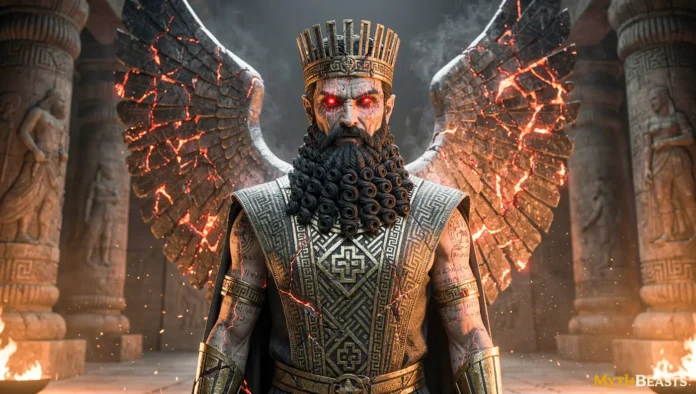
Achaemenid Empire – an Overview
The Achaemenid Empire, known as the First Persian Empire, was an influential historical and cultural entity. It existed from approximately 550 BCE to 330 BCE, expanding across three continents: Asia, Africa, and Europe. Its legacy is significant in shaping subsequent cultural narratives and political systems.
Founded by Cyrus the Great, the empire was renowned for its complex administration and architectural achievements. It functioned as a hub for cultural and religious exchange, influencing societies across its expansive territories, including Mesopotamia and Egypt.
Historical and Environmental Context
Time Frame and Location
The Achaemenid Empire’s timeline spans from the mid-sixth century BCE until its conquest by Alexander the Great. Its geographic span included modern-day Iran, parts of Greece, Egypt, and the Indus Valley, providing diverse environmental contexts.
Contact and Cultural Exchange
The Achaemenid Empire was notable for its interactions with various cultures, fostering exchanges through trade and conquest. Its administration allowed for local customs to continue, creating a rich tapestry of cultural influences within its territories.
Mythological Framework
Worldview and Cosmological Concepts
The Achaemenid worldview was deeply influenced by Zoroastrianism, which introduced dualistic cosmology emphasizing the eternal battle between good and evil. This religious framework underpinned social and moral order within the empire’s vast territories.
Spiritual or Supernatural Categories
In the Achaemenid Empire, spiritual entities were categorized through the lens of Zoroastrianism. Ahura Mazda, the supreme deity, represented truth and light, while Angra Mainyu symbolized chaos and deceit, illustrating a structured moral dualism.
Folklore and Narrative Tradition
Recurring Mythological Themes
Recurring themes in Achaemenid narratives include the triumph of order over chaos, reflecting Zoroastrian dualism. Heroic figures, exemplifying these virtues, often appear, highlighting the cultural emphasis on moral rectitude and cosmic balance.
Transmission and Preservation
Mythological knowledge in the Achaemenid Empire was primarily transmitted through oral tradition, with some material culture evidence. The eventual codification into texts occurred post-empire, reflecting the continuation of its mythological legacy.
Mythological Beasts and Non-Human Entities
Mythological beasts in the Achaemenid context include creatures like the Simurgh, a benevolent bird symbolizing protection and wisdom. Its association with Ahura Mazda underscores its indispensable role within the empire’s spiritual narrative.
Simurgh
The Simurgh is integral to Achaemenid mythology due to its embodiment of divine wisdom and protection. Misclassifying it without this context ignores its pivotal role in symbolizing the empire’s harmonious cosmology.
Symbolic Roles of Creatures and Forces
Creatures like the Simurgh served as allegories for divine protection and wisdom. They symbolized the empire’s aspiration to maintain order and justice, reflecting its cosmological beliefs and reinforcing its societal values.
Internal Variation and Temporal Change
Evidence indicates regional variations within the Achaemenid Empire, particularly in local religious practices. While Zoroastrianism remained dominant, different regions incorporated local deities and customs, reflecting a synthesis of beliefs over time.
Related Cultural Origins and Myth Sources
The Achaemenid Empire’s mythology shares roots with earlier Mesopotamian and Indo-Iranian traditions, highlighting a blend of influences. This syncretism is evident in its narratives, which borrow elements from pre-existing cultural and religious frameworks.
Evidence Limits and Scholarly Uncertainty
Archaeological and textual evidence regarding the Achaemenid Empire’s mythological framework is limited. Much of what is known comes from later sources, leading to scholarly debates about the authenticity and interpretation of these myths.
Primary sources are scarce, and many narratives survive only in post-Achaemenid texts, complicating historical reconstruction efforts. Scholars often rely on comparative analysis with neighboring cultures to fill these gaps responsibly.