Ghana – an Overview
Ghana, historically known as the Ghana Empire or Wagadou, represents a significant cultural and mythological source in West Africa. Flourishing between the 6th and 13th centuries, it was located in what is now southeastern Mauritania and western Mali.
The empire played a pivotal role in trans-Saharan trade routes, enabling cultural and economic exchanges. This trade brought wealth and facilitated the spread of ideas, impacting the region’s cultural and religious landscape significantly.
Historical and Environmental Context
Time Frame and Location
The Ghana Empire is believed to have begun around the 6th century, reaching its peak in the 9th and 10th centuries. Its geographic location spanned arid to semi-arid regions, influencing its agricultural practices.
Evidence of settlements and archaeological findings suggest a society adapted to its environment. The empire’s decline is linked to environmental changes and shifting trade routes, though exact timing remains partially speculative.
Contact and Cultural Exchange
The Ghana Empire was a key player in trans-Saharan trade, exchanging gold, salt, and ivory. This interaction with North African and Islamic cultures led to significant cultural exchanges, influencing local traditions and governance.
Through these exchanges, Islam began to integrate into local practices, although traditional beliefs persisted. This created a multicultural tapestry where indigenous animistic beliefs coexisted with introduced Islamic practices.
Mythological Framework
Worldview and Cosmological Concepts
No verified sources describe this for this context. The Ghana Empire’s worldview remains partially reconstructed through oral traditions and comparative analysis with neighboring cultures.
Spiritual or Supernatural Categories
Spiritual categories in the Ghana Empire likely included animistic elements, with spirits tied to natural phenomena. Ancestors played a crucial role, believed to influence the living. Specific deities are less documented but inferred from regional traditions.
The integration of Islamic beliefs introduced concepts of monotheism, though how these were adapted remains partially unclear. This blending of beliefs would have shaped the cosmological understanding in the empire.
Folklore and Narrative Tradition
Recurring Mythological Themes
Mythological themes in the Ghana Empire often centered around the origin of their ruling dynasties. Ancestral lineage and divine right narratives were crucial, reinforcing the legitimacy of rulers through mythic ancestry.
Transmission and Preservation
Oral tradition was the primary means of preserving myths and histories in the Ghana Empire. Griots, or traditional storytellers, played a key role in maintaining continuity, passing knowledge through generations.
Material culture, such as inscriptions and artifacts, also contributed to preserving these narratives, though many details have been lost over time. This reliance on oral tradition leaves much open to interpretation.
Mythological Beasts and Non-Human Entities
Djinn
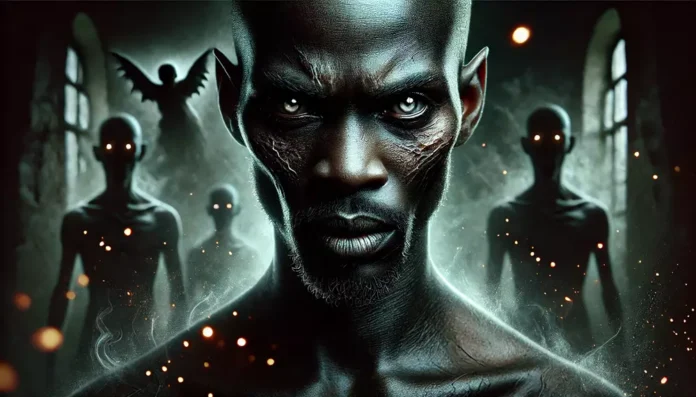
In the context of the Ghana Empire, djinn were considered powerful spirits that interacted with humans. Their presence in local beliefs highlights the syncretism between indigenous spiritual systems and Islamic influences.
Misclassifying djinn without acknowledging the Ghana Empire overlooks the unique way these entities were integrated into the local belief system, reflecting a blend of spiritual ideologies.
Symbolic Roles of Creatures and Forces
Creatures and supernatural forces in Ghanaian mythology often symbolized natural phenomena and social principles. They served as moral guides, warning against hubris and promoting communal values, reflecting the society’s environmental dependencies.
These symbolic roles facilitated social cohesion by reinforcing communal ethics and human-nature relationships. This interpretative function was essential for maintaining the society’s structure and environmental harmony.
Internal Variation and Temporal Change
Over time, the Ghana Empire experienced shifts in its cultural and religious practices. Regional variations arose as external influences permeated through trade. This created diverse local practices while maintaining a shared overarching identity.
As Islam gained prominence, there was a gradual transformation in spiritual practices. However, indigenous beliefs persisted, adapting to incorporate new elements. This illustrates a fluid cultural evolution rather than abrupt change.
Related Cultural Origins and Myth Sources
Ghana’s mythological and cultural origins share parallels with surrounding West African cultures, such as the Mali and Songhai empires. These connections highlight shared mythic themes and structural similarities in narrative traditions.
Divergences can be seen in specific ancestral myths and historical narratives, shaped by unique geographical and political contexts. Such distinctions underscore the rich diversity within West African cultural heritage.
Evidence Limits and Scholarly Uncertainty
No verified sources describe this for this context. Much of the Ghana Empire’s mythology remains speculative due to reliance on oral traditions and scarce archaeological findings. This creates gaps in understanding its mythological structure.
Scholarly disagreements persist regarding the details of its spiritual practices and cosmological views. Further archaeological research may illuminate these areas, offering clearer insights into Ghana’s mythological heritage.