back to top

Persia

Persia cosmic order shaped by sacred kingship, moral dualism, and layered spiritual realms structuring fate, duty, and righteous human alignment

Relevant Beasts
Asia
Chaos Giant
Div-e Sepid
Iran

Div-e Sepid

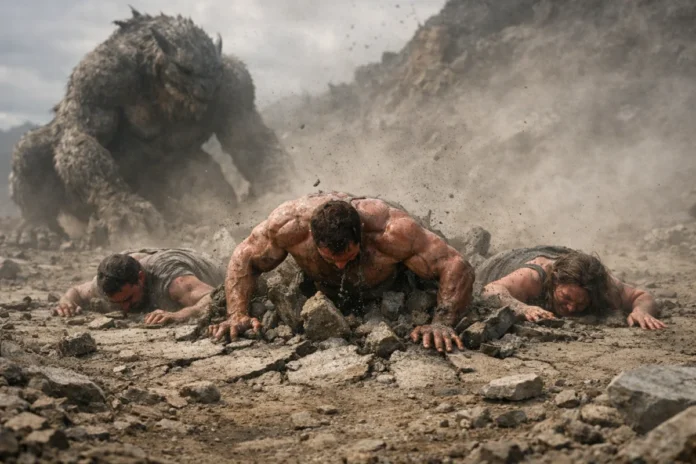
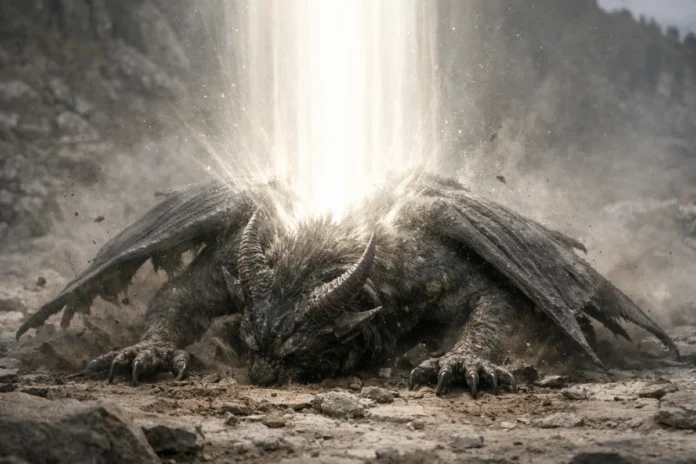
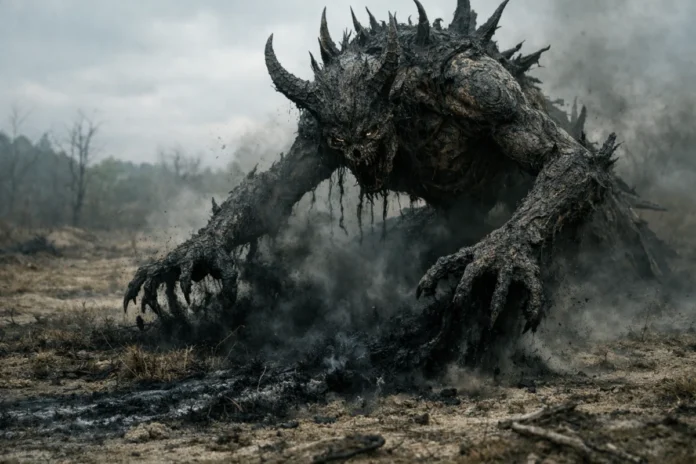
Div-e Sepid, the White Demon in Persian mythology, symbolizes chaos and evil. Known from the epic Shahnameh, it challenges...

  • Skills
Physical StrengthStrength
  • Weaknesses
Divine RestrictionsHoly Ground
Asia
Giant Bird
Chamrosh - Guardian bird - Persian and Zoroastrian folklore
Iran

Chamrosh

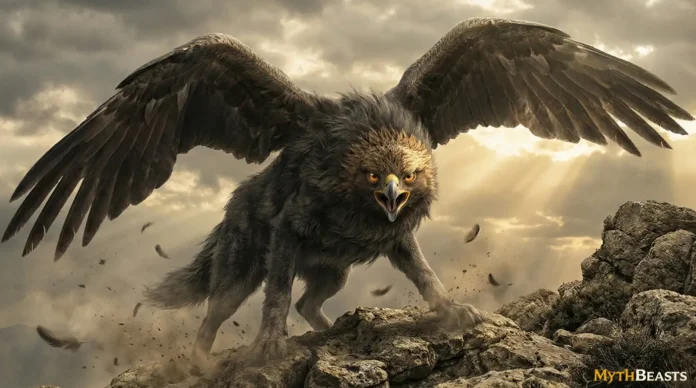
A mighty guardian bird beneath the sacred tree on Mount Alborz that gathers seeds, spreads them across the earth,...

  • Skills
Animal CommunicationControl & Summoning
  • Weaknesses
Consecrated LandDivine Restrictions
Asia
Giant Bird
Roc - Achaemenid empire
Ghaznavid Empire

Roc

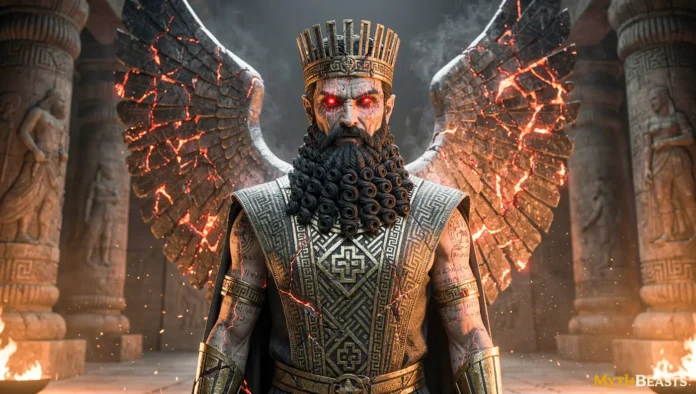
Colossal bird from Persian & Arabian tales, famous in Sinbad’s voyages for lifting elephants & wrecking ships with its...
  • Skills
Physical StrengthStrength
  • Weaknesses
BeheadingElement Sensitivities
Achaemenid Empire
Demonic Form
Aeshma - the Zoroastrian demon
Achaemenid Empire

Aeshma

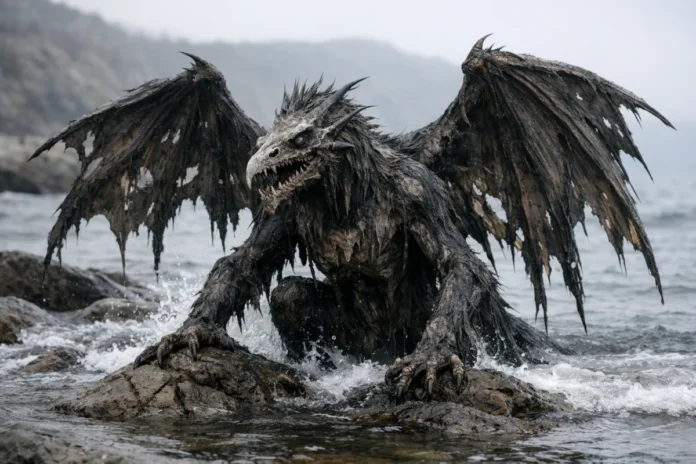
Aeshma - a Zoroastrian demon of wrath and violence who disrupts ritual, drives humans to rage and bloodshed, and...
  • Skills
Disease ManipulationFear Inducement
  • Weaknesses
Blessed WeaponDivine Restrictions
Iran
Horned Creature
Shadhavar or Âras - Persian Mythology
Iran

Shadhavar

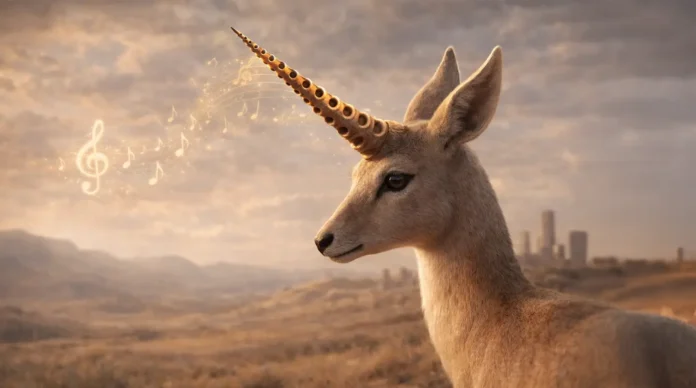
The Shadhavar is a unicorn-like creature from Persian folklore whose horn produces beautiful, enchanting music.
  • Skills
EnchantmentMelody Control
  • Weaknesses
DeafnessLight

Persia – an Overview

Persia designates the cultural sphere centered on the Iranian plateau, anchored historically by Iranian-speaking populations whose religious ideas shaped Zoroastrian, later Islamic, and neighboring mythologies through sustained political power and literary production.The term connects especially with the Achaemenid, Parthian, and Sasanian empires, whose administrative coherence enabled transmission of cosmological concepts, ritual frameworks, and heroic narratives across western Asia, the Caucasus, Central Asia, and parts of South Asia.As a mythological source, Persia matters because its priests, poets, and scribes preserved cosmogonic, eschatological, and heroic materials in Avestan and Middle Persian, which later influenced Arabic, Persianate, and even Greek and Jewish interpretive traditions.Persia functions within taxonomy as an origin context where Indo-Iranian religious inheritances interacted with imperial ideology, producing distinctive dualistic cosmology, structured angelology, and heroic genealogies that cannot be reduced to generic Near Eastern patterns.Any taxonomy excluding Persia risks misclassifying Iranian deities, spirits, and mythic kings as either generic Indo-European or undifferentiated “Mesopotamian,” ignoring the specifically Iranian linguistic, ritual, and ethical framing documented in surviving texts.

Historical and Environmental Context

Time Frame and Location

Persia as mythological source begins with early Iranian groups attested archaeologically and linguistically during the late second and early first millennium BCE across the Iranian plateau, extending into Central Asian steppe and Zagros highlands.The Achaemenid period provides the earliest securely dated royal inscriptions using Old Persian cuneiform, which anchor political geography and reference certain deities, thereby situating Iranian religious concepts within a broad imperial territorial framework.Sasanian rule offers the most important pre-Islamic chronological frame for Persian mythic codification, because many Middle Persian compilations, later preserved in Islamic manuscripts, reflect redactional activity associated with Sasanian religious institutions.

Contact and Cultural Exchange

Persian imperial expansion brought Iranian religious ideas into contact with Babylonian, Elamite, Anatolian, Egyptian, and later Hellenistic environments, evidenced by multilingual inscriptions and administrative documents referencing local gods alongside Iranian divine figures.Greek authors, including Herodotus and later Plutarch, reported selected Iranian beliefs through Hellenic categories, creating a secondary reception layer where Persian practices appeared filtered, sometimes distorted, yet still identifiable within broader Mediterranean intellectual discourse.Central Asian contacts linked Persian traditions with eastern Iranian, Sogdian, and Bactrian communities, whose inscriptions and iconography reveal shared deities and motifs, yet demonstrate regional adaptations shaped by trade routes and local political structures.Following the Islamic conquests, Persian mythic materials entered Arabic and New Persian literature, especially through historians and adab writers, creating a composite narrative environment where pre-Islamic Iranian kings and heroes received new theological framing.

Mythological Framework

Worldview and Cosmological Concepts

Pre-Islamic Persian cosmology, based primarily on Avestan and Middle Persian sources, presents existence as structured through a conflict between beneficent and hostile principles, which organize both cosmic history and moral orientation for human communities.The Avestan Gathas associate this structure with two primal mentalities, later interpreted within Middle Persian texts as opposing spiritual entities, whose divergent choices establish a universe characterized by ethical tension rather than simple hierarchical order.Sasanian theological writings describe a finite cosmic period during which the good creation suffers assault from destructive forces, followed by a final renovation where time-bound mixture ends and perfected existence emerges under righteous governance.Cosmography in Middle Persian materials divides reality into layered realms, including a material world and spiritual domains, with specific attention to bridge, mountain, and star symbolism, which frame postmortem journeys and divine oversight of earthly processes.

Spiritual or Supernatural Categories

Persian religious taxonomy distinguishes a supreme beneficent deity from subordinate yazatas, who receive veneration as worthy beings, each associated with specific aspects of cosmos, morality, or ritual, forming an organized hierarchy without strict numerical closure.Hostile entities appear under categories such as daivas or later Middle Persian demons, understood as destructive intelligences aligned with falsehood, whose activities threaten ritual purity, social order, and individual spiritual progress within the finite cosmic struggle.Fravashis, attested in Avestan hymns, constitute another category, representing protective preexistent aspects or spiritual doubles of righteous beings, including cosmic entities, and functioning as intermediaries between divine sovereignty and human communities.Fire, water, and earth receive quasi-personified status in Avestan and Middle Persian sources, not simply as elements, but as sacred hypostases requiring protection from pollution, thereby linking cosmological structure with concrete ritual and ethical regulations.

Folklore and Narrative Tradition

Recurring Mythological Themes

Iranian heroic traditions, later crystallized in New Persian literature, revolve around lineages of mythic kings and champions whose legitimacy depends on divine favor, correct ritual observance, and maintenance of cosmic order against monstrous or rebellious forces.Several narratives emphasize contested succession among royal houses, where rightful rule depends on charisma linked with divine radiance, termed khvarenah in Avestan, which departs from unjust rulers and thereby explains dynastic rupture within sacred history.Myths concerning primordial creation stress the vulnerability of the first perfect world, whose assault by destructive forces introduces death, decay, and predation, establishing a background for ethical obligation toward animals, plants, and the agricultural landscape.Eschatological stories describe individual judgment after death, involving crossing a symbolic bridge whose width reflects moral standing, thereby encoding social virtues like truthfulness and generosity into spatial images accessible to wider communities beyond priestly elites.

Transmission and Preservation

Early Iranian religious material circulated primarily through oral recitation by specialized ritual practitioners, whose memorized hymns and formulas formed the basis for later Avestan textual collections, although exact procedures for selection remain imperfectly documented.Sasanian authorities sponsored codification of religious texts in written form using Avestan and Pahlavi scripts, yet surviving manuscripts are much later, so current scholarship reconstructs redactional stages through linguistic analysis and internal doctrinal comparison.Post-Sasanian Islamic scholars, writing in Arabic and New Persian, preserved fragments of pre-Islamic narratives within universal histories, adab collections, and epic poetry, thereby transmitting mythic material detached from many original ritual contexts.Archaeological evidence, including rock reliefs, fire temples, and funerary remains, supplements textual testimony by showing how mythological motifs appeared in royal iconography and local religious architecture across different regions of the former Persian empires.

Mythological Beasts and Non-Human Entities

Persian tradition contributes several non-human entities whose identities depend on Iranian linguistic forms, cosmological assumptions, and ritual contexts, so removing them from Persia would erase essential explanatory links between narrative function and theological background.

Ahura Mazda

Ahura Mazda belongs centrally to Persia because his earliest explicit attestations appear in Avestan and Old Persian inscriptions, where he functions as creator and moral authority within specifically Iranian imperial and ritual settings.

Angra Mainyu

Angra Mainyu, described in Avestan and elaborated in Middle Persian literature, cannot be detached from Persian dualistic cosmology without losing his role as structured opponent within a temporally bounded Iranian vision of conflict.

Fravashis

Fravashis depend on Persian contexts because their theological interpretation connects with Iranian ideas of preexistence, lineage protection, and military victory, which differ from ancestor or guardian concepts in neighboring Mesopotamian or Mediterranean systems.

Daivas

Daivas exemplify Persian reclassification of older Indo-Iranian divine categories into harmful beings, so interpreting them without Iranian religious reform contexts risks misreading their polemical and ethical significance within local ritual debates.

Symbolic Roles of Creatures and Forces

Ahura Mazda symbolizes the alignment of legitimate kingship with cosmic truth, so Persian royal inscriptions present obedience to this deity as justification for empire, integrating theology with administrative loyalty and territorial claims.Angra Mainyu functions symbolically as concentrated falsehood and pollution, so Persian purity laws and ethical teachings acquire cosmological depth by framing everyday moral failures as participation in a larger metaphysical campaign.Fravashis embody collective memory and protective solidarity, especially for warriors and communities, so Persian military ideology links battlefield success with correct veneration of these entities rather than solely with tactical or numerical superiority.Daivas signify rejected ritual practices and rival cults, so their demonization within Persian texts communicates boundaries against alternative sacrificial systems and marks a distinct Iranian religious identity amid broader Indo-Iranian continuities.

Internal Variation and Temporal Change

Between Achaemenid and Sasanian periods, terminology for divine and demonic beings shifts, indicating doctrinal development, changing ritual emphases, and possible responses to Hellenistic, Mesopotamian, and later Christian theological environments.Post-Islamic Persianate literature reinterprets pre-Islamic kings and heroes within Islamic cosmology, preserving narrative structures but altering explicit theological framing, thereby transforming earlier religious figures into exemplars of moral or political wisdom.

Related Cultural Origins and Myth Sources

Persian mythology shares Indo-Iranian roots with Vedic traditions, yet differs in evaluating certain divine categories, especially daivas, which become negative in Iran, highlighting divergent theological trajectories from a partially common linguistic heritage.Contacts with Mesopotamian cultures produced overlapping royal and cosmic imagery, yet Persian dualistic emphasis and structured eschatology distinguish Iranian systems from Mesopotamian models centered more strongly on cyclical kingship and underworld administration.In Central Asia, Sogdian and Bactrian materials show adaptation of Persian deities within local artistic styles and languages, demonstrating regional integration of Iranian cosmology alongside distinctive mercantile and urban religious concerns.

Evidence Limits and Scholarly Uncertainty

Surviving Avestan texts represent only a fraction of earlier oral traditions, so reconstructing complete Persian mythic systems involves uncertainty, especially regarding lost narrative cycles, local cults, and regional ritual variations.Middle Persian compilations often date centuries after Sasanian redaction efforts, so distinguishing pre-Islamic doctrine from later interpretive layering requires careful philological comparison and sometimes yields competing scholarly reconstructions.Archaeological evidence remains uneven across the Iranian plateau and Central Asia, leaving significant gaps for rural religious practices, non-elite mythic expressions, and interactions between official Zoroastrian institutions and local traditions.No verified sources describe this for this context regarding many everyday folktales, women’s ritual songs, and children’s narratives, so current taxonomies primarily reflect elite, priestly, or courtly perspectives rather than complete societal belief.