back to top

Fog Generation

Fog Generation is a mythical skill involving the creation and manipulation of mist, often used to obscure vision or create mysterious atmospheres.

Relevant Beasts

Europe
Water Dwelling Creature
Grindylow - water spirit from 18th-century English folklore
United Kingdom

Grindylow

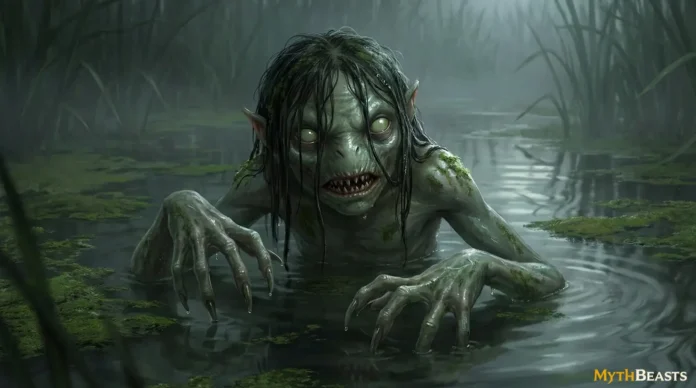
Grindylow, a sinister water spirit from 18th-century English folklore, haunted marshes and ponds, snatching children who strayed too close...

  • Skills
CamouflageFog Generation
  • Weaknesses
BeheadingFire Vulnerable

Fog Generation – an Overview

Fog Generation is recognized as a distinct mythological function, separate from general supernatural effects, due to its specific role and manifestations in various traditions. It represents a boundary between the known and unknown, often invoked to denote transitions and mysteries within cultural narratives. Its unique qualities distinguish it from other atmospheric phenomena, as its appearance and implications are deeply embedded in the mythological fabric of cultures that embrace it. The function is often portrayed as a means to obscure, guide, or transform, signifying its essential role in mythological systems.

Manifestation and Constraints

How Fog Generation Is Expressed

In mythological contexts, Fog Generation manifests through noticeable environmental changes, often heralding the arrival or presence of supernatural entities or forces. The fog may obscure vision, conceal secret realms, or embody divine presence, creating a marked shift in the narrative or physical landscape. This transformation often signals a liminal space, where reality and myth intertwine, allowing for the enactment of sacred or transformative events. The concept emphasizes the tangible impact of fog as a metaphysical threshold.

Limits and Conditions

The constraints on Fog Generation are deeply tied to the cultural and cosmological frameworks in which it appears. Often, only specific beings or divine forces can wield this power, and its use is frequently restricted to particular sacred or narrative contexts. It might symbolize divine intervention, moral boundaries, or cosmic cycles, limiting its accessibility to conditions of ritual or mythic necessity. These constraints illustrate its role not as an indiscriminate force but as a regulated element within a broader cosmological order.

Mythological Role and Meaning

Symbolic and Cultural Significance

Fog Generation holds significant symbolic weight in mythological worldviews, often representing mystery, transformation, or divine presence. This function can be a metaphor for the unknown or a bridge to spiritual realms, highlighting its connection to change and renewal. In some traditions, it serves to obscure truth or reveal hidden realities, reflecting psychological and moral dimensions. Its cultural significance varies, but it consistently reinforces themes of transition, boundary, and divine interaction within various narratives.

Fog Generation in Myth and Folklore

In myth and folklore, Fog Generation often structures authority, transformation, and boundary formation. It may be used to mark the presence of divine beings, to create sacred spaces, or to signal mythic events. Its presence in narratives highlights the transition between worlds or states of being, reinforcing its role as a mediator between the mortal and divine. These narratives underscore its function not merely as a backdrop but as an active agent in mythological storytelling.

Beasts with Fog Generation

The Fenrir Wolf

In Norse mythology, the Fenrir Wolf is often associated with fog, symbolizing chaos and transition. Fog Generation marks its movements, heralding impending doom or change. This association underscores Fenrir’s role in apocalyptic narratives, distinguishing it as a force of transformation rather than destruction alone.

The Enenra

Originating from Japanese folklore, the Enenra is a creature of smoke and shadow, often using Fog Generation to conceal itself. This ability defines its identity as a spirit of mystery and illusion, crucially framing its role within cultural beliefs about the unseen and ethereal.

The Cailleach

In Celtic tradition, the Cailleach is a hag-like figure whose control over fog illustrates her dominion over weather and the natural world. This power is essential to her mythology, symbolizing her as a force of seasonal change, shaping her narrative as a shaper of landscapes and time.

Cultural Interpretations and Regional Emphasis

Different cultures interpret Fog Generation with varying symbolism and cosmological roles. In Norse traditions, it often signifies impending transformation, whereas in Japanese culture, it emphasizes concealment and mystery. These interpretations reflect divergent moral and cosmological frameworks, illustrating how the same phenomenon can embody distinct meanings across traditions. This diversity highlights the adaptability and depth of Fog Generation as a mythological function, illustrating its ability to both unify and diversify cultural narratives.

Similar or Related Mythological Functions

Fog Generation is conceptually adjacent to functions like Shadow Manipulation and Weather Control, yet distinct in its role as a boundary marker. While shadow and fog share concealment aspects, fog’s association with transformation or divine presence separates it. Weather Control overlaps in atmospheric influence but lacks fog’s specific symbolic or transitional connotations. This delineation underscores fog’s unique position within mythological taxonomies, illustrating its distinct narrative and symbolic roles.

Historical Interpretation and Evidence Limits

Scholars interpret Fog Generation both symbolically and literally, considering its role as a narrative device and spiritual metaphor. Historical evidence is often fragmentary, with gaps in understanding its full cultural significance. Some sources focus on symbolic interpretations, while others emphasize its literal narrative function. Uncertainty arises in regional variations, where specific roles or meanings might be lost or conflated over time. Despite these challenges, its continued presence in myth speaks to its enduring cultural resonance.