
back to top

Lightning Summoning

Explore the mythological skill of Lightning Summoning, a legendary ability to control and call forth storms and lightning in ancient traditions.

Relevant Beasts
Native American
Giant Bird
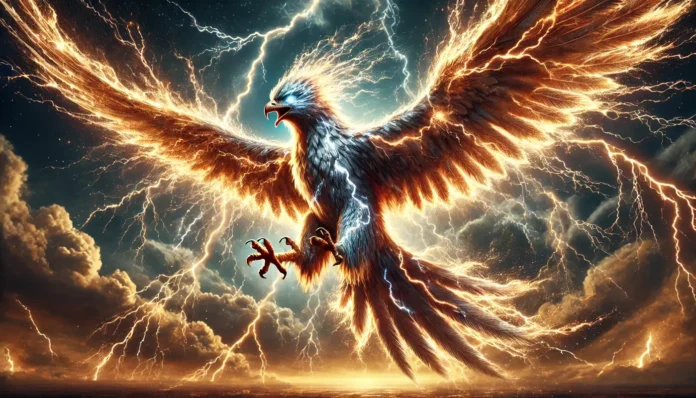
Thunderbird - Native American Folklore
Native American

Thunderbird

The Thunderbird, a powerful symbol of storms and divine wrath, is a legendary bird from North American Indigenous cultures....
  • Skills
Lightning SummoningPhysical Strength
  • Weaknesses
Lightning DamageWind Impact
Middle East
Giant Bird
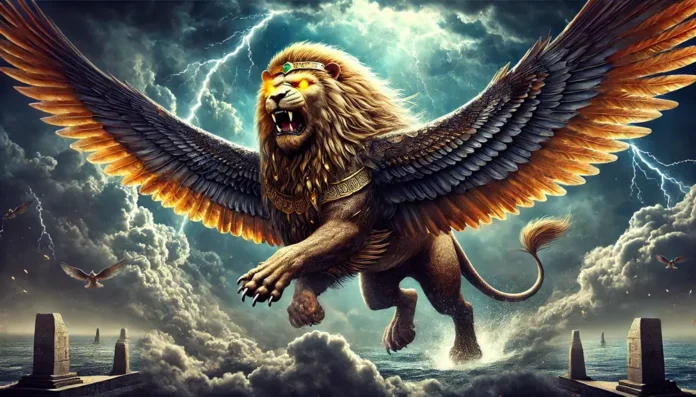
Anzu
Sumerians

Anzu

Anzu is a lion-headed eagle from Mesopotamian mythology, symbolizing chaos and power. Famous for stealing the Tablet of Destinies...

  • Skills
Control WeatherFlight
  • Weaknesses
BeheadingEasily Deceived

Lightning Summoning – an Overview

Lightning Summoning distinguishes itself as a mythological function by manifesting a controlled command over natural forces, specifically lightning. Traditions treating it as a separate category underscore its unique role in symbolizing divine or supernatural authority. Its boundaries are set by cultural narratives that define it as more than just a supernatural effect; it represents a dynamic interaction with the cosmos. Recognized across various cultures, Lightning Summoning often signifies a connection to deities or powerful beings. This function is not merely an atmospheric event but a potent symbol of control over nature.

Manifestation and Constraints

How Lightning Summoning Is Expressed

In mythological traditions, Lightning Summoning often manifests through dramatic environmental changes, such as storms or sudden thunder, signifying divine presence or wrath. It can cause transformations, like turning night into day, symbolizing celestial power. The effects, like splitting trees or igniting structures, are described vividly in narratives, accentuating its mighty impact. These consequences are not just physical disruptions but also carry profound symbolic meanings, representing the intervention of higher powers in human affairs. Lightning Summoning thus becomes a vehicle for expressing cosmic disorder or divine judgment.

Limits and Conditions

The use of Lightning Summoning is often bound by strict moral and environmental constraints, reflecting its immense power. Traditions typically restrict its use to divine or demi-divine entities, underlining its sacred nature. It is rarely accessible to mortals, emphasizing its role as a divine prerogative. Environmental conditions, like the presence of thunderstorms, may signify when it can manifest, highlighting its dependence on natural phenomena. Furthermore, only legitimate moral contexts, such as punishing transgressors, justify its use, underscoring its role in maintaining cosmic and social order.

Mythological Role and Meaning

Symbolic and Cultural Significance

Within mythological worldviews, Lightning Summoning symbolizes divine authority, moral judgment, and cosmic balance. It often represents the power to enforce justice, punishing those who defy divine laws. The lightning bolt, as a symbol, signifies illumination and insight, breaking through ignorance. These symbolic functions are critical in maintaining social norms and articulating moral values within a culture. The fear and respect it commands reinforce hierarchies, reminding societies of their relative powerlessness against natural and divine laws. Lightning Summoning thus serves as a reminder of cosmic order and divine presence.

Lightning Summoning in Myth and Folklore

Lightning Summoning features prominently in many mythological narratives as a tool for divine beings to assert authority or punish defiance. In these stories, it often marks moments of transformation or boundary formation, such as the creation of sacred spaces or the punishment of hubris. It delineates the divine from the mortal, allowing gods to intervene directly in human affairs. These narratives highlight the role of Lightning Summoning in structuring authority, emphasizing its function as an instrument of divine will. It is not merely a story element but a crucial narrative device.

Beasts with Lightning Summoning

Thunderbird

The Thunderbird from Native American mythology is a prime example of a creature defined by its association with Lightning Summoning. This powerful spirit is believed to control the skies and bring storms, its wings creating thunder. Without Lightning Summoning, the Thunderbird loses its role as a divine enforcer and weather controller. Its presence signifies a natural balance, underscoring its connection to fertility and renewal. This creature embodies the sacred and fearsome power of lightning, marking it as a guardian of the natural world.

Raiju

In Japanese folklore, Raiju is a mythical beast often associated with storms and lightning. Known as the thunder beast, its appearance signals the arrival of a storm, embodying nature’s untamed power. Lightning Summoning is crucial to Raiju’s identity, as it underscores its role as a messenger of the gods. Without this ability, Raiju’s significance as a divine intermediary is diminished. This creature highlights the intersection of natural phenomena and divine will, representing both chaos and communication from the heavens.

Indra’s Elephant

Indra’s elephant, Airavata, from Hindu mythology, is intrinsically linked to Lightning Summoning through its connection to Indra, the god of thunder and rain. Airavata represents strength and fertility, carrying Indra during battles where lightning is wielded as a weapon. Without Lightning Summoning, Airavata’s role diminishes, losing its significance as an embodiment of divine power and authority. This creature underscores the divine aspect of lightning, symbolizing protection and prosperity within Hindu cosmology.

Cultural Interpretations and Regional Emphasis

Different cultures interpret Lightning Summoning in diverse ways, reflecting their unique cosmological and moral frameworks. In some traditions, it is seen as a benevolent force, bringing rain and fertility, while in others, it represents divine wrath and punishment. For example, in Greek mythology, Zeus wields lightning as a means of maintaining order, whereas in Norse mythology, Thor’s Mjölnir symbolizes protection against chaos. These interpretations reveal cultural values, with lightning embodying both creative and destructive potential. Such divergences illustrate the complexity of Lightning Summoning as a mythological function.

Similar or Related Mythological Functions

Conceptually adjacent to Lightning Summoning are mythological functions like Weather Control and Thunder Creation. While closely related, these functions have distinct boundaries. Weather Control involves broader climatic manipulation, not limited to lightning. Thunder Creation focuses on sound, often lacking the destructive power inherent in Lightning Summoning. Each function serves different symbolic and narrative purposes, underscoring the specificity of Lightning Summoning in representing divine intervention and power. These distinctions help clarify its unique role within mythological systems, ensuring its classification remains precise and meaningful.

Historical Interpretation and Evidence Limits

Scholarly interpretation of Lightning Summoning often involves symbolic readings, exploring its role in expressing divine will and cosmic order. However, gaps exist due to limited historical sources and potential biases in interpretation. Some traditions may have emphasized its destructive aspects, while others highlighted its creative potential. No verified sources describe Lightning Summoning comprehensively across all cultures, leading to interpretative challenges. This uncertainty necessitates caution when reconstructing its historical significance, emphasizing the need for critical engagement with available evidence while acknowledging the limits of such reconstructions.