Poisonous Breath – an Overview
In mythological systems, Poisonous Breath is considered a distinct function due to its unique ability to alter environments and beings. It is not just a general supernatural effect, but a specific category recognized across various traditions. This function often signifies danger and transformation, setting it apart from other mythological phenomena that may involve physical harm or alteration. Its classification highlights its distinct impact on life and surroundings, marking it as an essential component in the mythological taxonomy.
The recognition of Poisonous Breath as a separate entity underscores its significance in shaping narratives and cultural beliefs. This function often entails an inherent duality, representing not only physical danger but also moral and spiritual trials. This duality ensures its classification remains central in mythologies, distinguishing it from similar but less defined supernatural effects. As a result, cultures have cultivated a rich tapestry of stories centered around this theme, highlighting its enduring presence in mythological discourse.
Manifestation and Constraints
How Poisonous Breath Is Expressed
Poisonous Breath manifests in mythological traditions through various observable effects such as desolation or transformation of landscapes and beings. This function’s impact often includes pollution or corruption of the natural environment, leading to ecological imbalance. Mythological narratives describe it as a force causing illness, decay, or death, thereby symbolizing disruption within the natural order. In some traditions, the poisonous nature is depicted through its ability to transform living beings into monstrous forms, emphasizing its potent and transformative power.
Rather than focusing on the processes of Poisonous Breath, myths highlight the consequences of its presence, marking it as a catalyst for change or chaos. Its manifestation is not merely a destructive force but often a harbinger of profound shifts within the mythological landscape. This effect can also serve as a metaphor for moral or societal decay, underscoring the broader implications of its presence. By examining these consequences, one can discern the broader cosmological significance of Poisonous Breath within cultural narratives.
Limits and Conditions
Poisonous Breath, despite its destructive nature, is typically governed by symbolic and moral constraints within mythologies. Traditions often depict it as a power wielded only by certain beings or under specific conditions, which aligns it with moral or cosmological laws. These constraints serve to limit its use, ensuring it does not become a universally accessible or uncontrollable force. In some cultures, it is portrayed as a divine punishment or a natural consequence of overstepping moral boundaries, underscoring the importance of balance and order.
Environmental conditions also play a role in defining the limits of Poisonous Breath, as certain geographical or cosmic alignments may restrict its influence. These conditions emphasize the idea that such powers are not random but instead woven into the fabric of the universe’s moral and natural laws. Such limitations are crucial for maintaining cosmological equilibrium, suggesting an underlying rationale behind the allocation and manifestation of this potent force. The constraints reinforce the need for harmony and caution in the face of potentially catastrophic powers.
Mythological Role and Meaning
Symbolic and Cultural Significance
Within mythological worldviews, Poisonous Breath often represents moral and spiritual challenges, symbolizing the consequences of hubris or transgression. It embodies not just physical danger but also deeper psychological and societal truths. In many cultures, it serves as a reminder of the delicate balance between humanity and the mystical forces governing the universe. This function also plays a role in social regulation, emphasizing the importance of adhering to communal norms and ethical standards. By serving as a cautionary symbol, Poisonous Breath reinforces the moral codes within these societies.
The presence of Poisonous Breath also highlights themes of transformation and renewal, as its effects frequently lead to new beginnings or revelations. This duality lends a complex layer to its symbolic interpretation, suggesting that destruction is often a precursor to creation or enlightenment. The narratives surrounding this function often explore themes of rebirth and redemption, illustrating its multifaceted significance within mythological traditions. Such symbolic interpretations resonate across cultures, demonstrating the universal appeal and relevance of this mythological function.
Poisonous Breath in Myth and Folklore
Poisonous Breath is integral to many mythological narratives, often serving as a powerful force that structures authority and boundaries. Within these stories, it frequently acts as a test of character or a means of divine retribution, highlighting the consequences of violating sacred laws. Its role in myth is not merely punitive but also transformative, offering opportunities for growth and change. In some traditions, it forms boundaries between worlds or realms, emphasizing its function as a guardian of cosmic order. These narratives underscore its importance in shaping cultural and spiritual landscapes.
Through its presence in folklore, Poisonous Breath often delineates the limits of human ambition and the peril of overreaching. The function’s inclusion in these stories reflects cultural anxieties about the unknown and the uncontrollable, serving as a narrative device that explores human limitations. By examining these myths, one can understand how Poisonous Breath aids in the maintenance of societal and cosmological boundaries. It also provides a framework for understanding the interplay between humanity and the supernatural, illustrating how myth serves to mediate these complex relationships.
Beasts with Poisonous Breath
Nidhogg
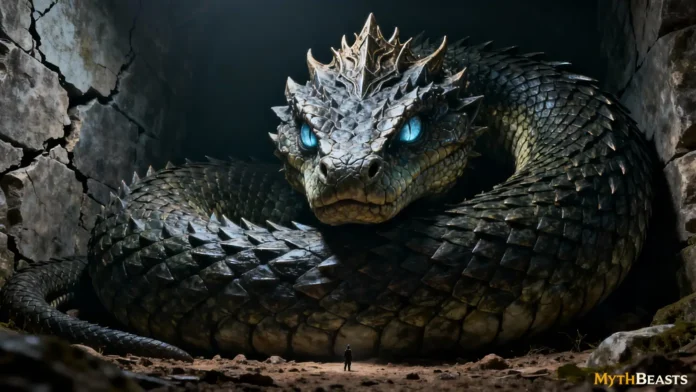
In Norse mythology, Nidhogg is a serpent or dragon residing at the base of the Yggdrasil world tree. Poisonous Breath is central to its identity, symbolizing decay and corruption which it inflicts upon the tree. This attribute is key to understanding its role in the cosmological cycle of destruction and regeneration within Norse belief systems. Without Poisonous Breath, Nidhogg’s function as a destabilizing force and embodiment of entropy within the mythological framework would be diminished, misrepresenting its vital place in the mythology.
Chimata-no-Kami
In Japanese folklore, Chimata-no-Kami is a deity associated with crossroads and thresholds. Poisonous Breath is integral to its identity, representing the potential danger and transformation inherent in traversing boundaries. This characteristic underscores the deity’s role in protecting sacred spaces and maintaining order at these liminal points. Without Poisonous Breath, the deity’s function as a guardian and symbol of transitional power would be incomplete, neglecting its essential contribution to the cultural understanding of boundaries and protection.
Typhon
In Greek mythology, Typhon is a monstrous serpentine giant and one of the deadliest creatures. Poisonous Breath is crucial to its narrative role, representing chaos and destruction during its battles with the Olympian gods. This attribute exemplifies its power to threaten the cosmic order, emphasizing its place as a significant adversary within the mythological hierarchy. Without Poisonous Breath, Typhon’s depiction as a formidable force opposing divine authority would be undermined, mischaracterizing its impact within the mythological tradition.
Cultural Interpretations and Regional Emphasis
Different cultures interpret Poisonous Breath in diverse ways, highlighting variances in moral framing and cosmological roles. In Norse mythology, it often signifies cosmic decay and cyclical rebirth, while in Greek traditions, it exemplifies the chaos that threatens divine order. These interpretations emphasize the varied symbolic meanings attributed to this function across cultures, showcasing its adaptability to different mythological narratives. By examining these differences, one can appreciate how regional contexts shape the understanding and significance of Poisonous Breath within each tradition.
In East Asian traditions, Poisonous Breath often represents the balance between protection and peril at thresholds or boundaries. This interpretation underscores the importance of maintaining order and respect for sacred spaces, differentiating it from the more adversarial roles seen in Western mythologies. Such contrasting views highlight the diversity of mythological roles and meanings attributed to Poisonous Breath, illustrating its broad cultural significance. These interpretations reflect underlying societal values and concerns, offering insight into how different cultures conceptualize the relationship between humanity and the supernatural.
Similar or Related Mythological Functions
Conceptually related to Poisonous Breath are mythological functions such as the Evil Eye or Curses, both involving harmful supernatural effects. Unlike Poisonous Breath, these functions often rely on intent or malice from a sentient being, whereas Poisonous Breath can be an innate characteristic of a creature. The Evil Eye and Curses primarily affect individuals rather than entire environments, highlighting their distinct scope. Despite these differences, all share themes of transformation and disruption, providing a framework for understanding their symbolic and cultural roles within mythologies.
Another related function is the concept of Sacred Fire, which, like Poisonous Breath, can purify or destroy, depending on the context. However, Sacred Fire often symbolizes divine intervention and enlightenment, contrasting with the primarily destructive implications of Poisonous Breath. This distinction highlights the multiplicity of interpretations and uses within mythological systems. By exploring these related functions, one gains a deeper understanding of the nuanced ways in which cultures express supernatural power and its impact on the natural world.
Historical Interpretation and Evidence Limits
Scholarly interpretations of Poisonous Breath often grapple with its symbolic and literal readings, reflecting tensions between historical evidence and mythological imagination. While some traditions offer detailed accounts, others provide only fragmentary glimpses, limiting comprehensive analysis. Scholars must navigate these gaps, acknowledging biases inherent in surviving sources, which may obscure the function’s full historical context. Consequently, interpretations often rely on comparative analysis, drawing parallels between related functions across cultures to infer broader meanings.
Despite these challenges, the enduring presence of Poisonous Breath in mythologies underscores its significance within cultural narratives. Scholars must carefully contextualize interpretations, distinguishing between symbolic meanings and literal depictions, to avoid conflating distinct traditions. By recognizing these limitations, researchers can better appreciate the complexity and richness of Poisonous Breath’s role in mythological systems. This approach ensures that interpretations remain grounded in evidence while remaining open to evolving understandings informed by new discoveries and insights.