Swamp Manipulation – an Overview
Swamp Manipulation is a mythological function recognized for its ability to control, alter, or influence swamp environments. It is distinct from general supernatural effects due to its specialized nature. Traditions often identify it as an intersection of environmental and spiritual domains. While other elemental manipulations are broader, Swamp Manipulation’s specificity arises from its unique ecological and symbolic milieu. This function involves both transformation and disruption, often tied to deeper cosmological beliefs. Its classification reflects cultural attempts to articulate the complex interactions between humanity and nature’s liminal spaces.
Manifestation and Constraints
How Swamp Manipulation Is Expressed
Swamp Manipulation becomes observable within mythological traditions through environmental changes like the sudden appearance of fog, altered water levels, or the transformation of creatures. These manifestations highlight the swamp’s role as a dynamic, living entity. The manipulation is not always overt; sometimes it is subtle, marked by shifts in natural rhythms or unexplained phenomena. The presence of mythic figures may catalyze these changes, linking the mystical and mundane. Accounts suggest that significant cosmological impacts, such as the creation of life forms or the alteration of landscapes, are attributed to this function. However, these are described within the bounds of legends rather than empirical observations.
Limits and Conditions
Swamp Manipulation operates under several constraints that are cultural, symbolic, and environmental. Many traditions limit this manipulation to sacred or cursed spaces, highlighting the inherent power of swamps as boundary zones. The moral implications often dictate that only particular figures, such as shamanic intermediaries or divine entities, possess this ability. Environmental conditions like specific lunar phases or seasonal changes might also restrict access, emphasizing the swamp’s connection to cyclical natural processes. Cosmologically, these limits serve to maintain balance, ensuring that the swamps remain places of transition and transformation rather than unchecked chaos.
Mythological Role and Meaning
Symbolic and Cultural Significance
Swamp Manipulation represents transformation and the reconciliation of opposites within mythological worldviews. It embodies the duality of life and decay, reflecting the swamp’s role as a site of both danger and fertility. Symbolically, it challenges the boundaries between the known and the unknown, often serving as metaphors for psychological or spiritual journeys. Socially, it enforces regulations through myths that caution against hubris or disrespect towards sacred natural spaces. Cosmologically, it highlights the interconnectedness of all things, suggesting that even the most stagnant environments are part of a larger, dynamic system.
Swamp Manipulation in Myth and Folklore
Within mythological narratives, Swamp Manipulation often structures authority and transgression, marking where heroes or deities assert control or face consequences. It can signify transformation, where characters undergo significant changes, reflecting internal growth or external punishment. Additionally, it shapes boundaries between the mortal and divine, or the civilized and wild, reinforcing the swamp’s liminal nature. These stories utilize the manipulation to explore themes of authority, balance, and the consequences of overstepping natural bounds. The function is integral in narratives that involve moral or existential challenges.
Beasts with Swamp Manipulation
The Bunyip
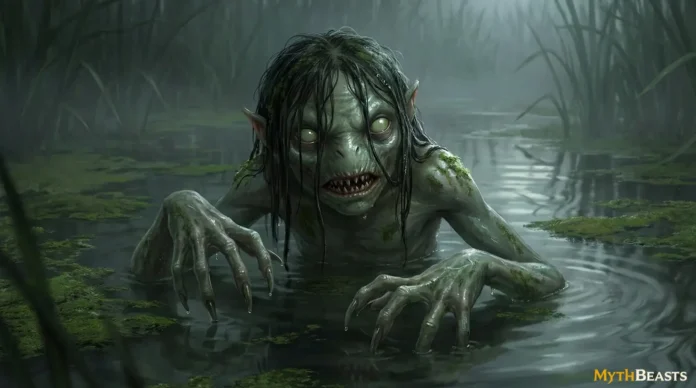
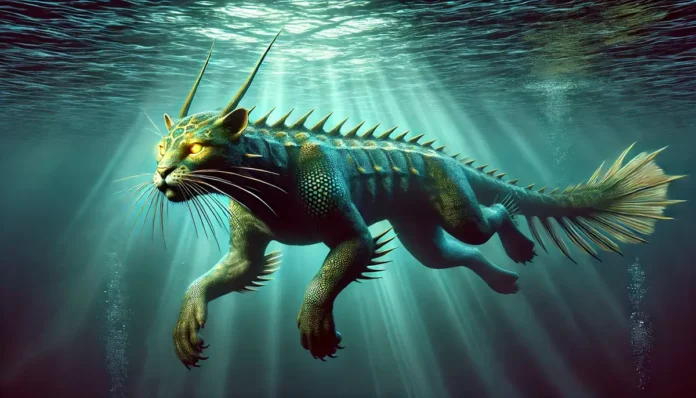
Originating from Australian Aboriginal mythology, the Bunyip embodies Swamp Manipulation through its power to alter water and earth to protect its territory. This creature is said to dwell in swamps, billabongs, and creeks, using the environment as a cloak for its presence. Without Swamp Manipulation, the Bunyip loses its defining ability to interact with and impact its surroundings, essential for its role as a territorial guardian.
Kappa
In Japanese folklore, the Kappa is closely associated with Swamp Manipulation, inhabiting rivers and swamps. Its control over water is central to its identity, allowing it to drown unsuspecting travelers. The Kappa’s manipulation of its environment emphasizes its reputation as a trickster and instills cautionary tales about respecting natural boundaries. Without this function, the Kappa’s narrative as a powerful aquatic being diminishes significantly.
Will-o’-the-Wisp
The Will-o’-the-Wisp, found in various European folklore, is a manifestation of Swamp Manipulation that entices travelers into dangerous swampy areas with its ghostly lights. The manipulation of light and environment underlines its role as a deceiver, leading to stories that warn against following unfamiliar paths. Its essence as a cautionary figure is inseparable from its ability to control swamp landscapes.
Cultural Interpretations and Regional Emphasis
Swamp Manipulation is interpreted differently across cultures, reflecting diverse symbolisms and moral frameworks. In some traditions, it is seen as a protective force, guarding sacred spaces. Others view it as a malevolent power, reflecting cultural fears of the unknown. Cosmologically, swamps may be portrayed as gateways to other realms in some regions, while others see them as places of transformation or rebirth. These differences highlight the swamp’s multifaceted role within global mythologies, emphasizing the cultural importance of interpreting natural spaces through a mythological lens.
Similar or Related Mythological Functions
Functions adjacent to Swamp Manipulation include Water Control and Earth Shaping, both interacting with elemental aspects of the swamp environment. However, Swamp Manipulation’s focus on liminality and transformation distinguishes it from these broader categories. Unlike general Water Control, it emphasizes the mystical transition zones. Similarly, while Earth Shaping involves terrestrial manipulation, Swamp Manipulation integrates water and earth, highlighting their union. This conceptual separation underscores the swamp’s unique mythological role as a locus of change and mystery, bridging disparate elements into a cohesive mythological function.
Historical Interpretation and Evidence Limits
Scholarly interpretations of Swamp Manipulation often explore its symbolic versus literal aspects, examining its role in myth as reflective of human interactions with uncertain landscapes. Gaps in historical sources make definitive analyses challenging, with much reliance on oral traditions or fragmentary texts. Biases in documentation often favor dominant cultural narratives, sometimes obscuring regional variations. Scholars caution against overinterpretation, given these limitations, advocating for careful distinction between symbolic readings and unverified historical claims. Understanding Swamp Manipulation thus requires recognition of its diverse manifestations and varied cultural contexts.