back to top

Telekinesis

Explore telekinesis, the mythological ability to move objects with the mind, found in various cultural legends and ancient stories.

Relevant Beasts

North America
Abyssal Guardian
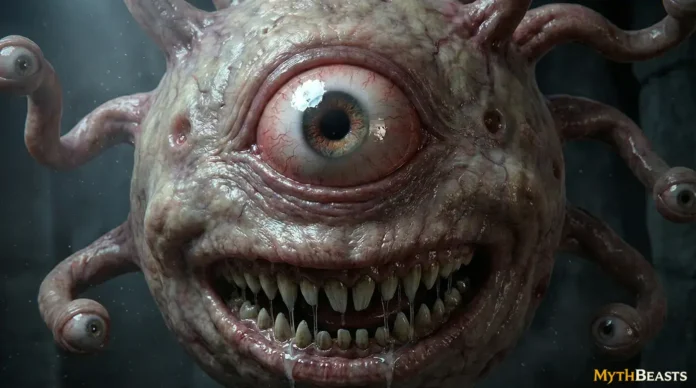
Beholder - dungeons & dragons
USA

Beholder

Beholders are otherworldly creatures with a central eye and many smaller eye stalks, each capable of casting powerful magical...

  • Skills
Life DrainMind Control
  • Weaknesses
Anti-MagicLight

Telekinesis – an Overview

Telekinesis, within mythological frameworks, is a distinct function whereby physical objects are moved or manipulated without physical interaction. It is not simply an extension of supernatural abilities but is recognized as a unique category. This distinction is crucial because it reflects a specific aspect of control and influence over the material world, separate from other supernatural phenomena such as elemental control or shape-shifting. Mythological systems classify Telekinesis as an independent category due to its emphasis on mental or spiritual exertion rather than physical might or magical incantation. Traditional recognition of this function underscores its role in demonstrating an entity’s or deity’s power over the physical realm, symbolizing the bridging of mental and physical planes.

Manifestation and Constraints

How Telekinesis Is Expressed

Telekinesis manifests in mythological traditions through various observable effects, including the movement of objects, environmental alterations, or cosmic disturbances. Historical sources often describe these occurrences as a result of divine will, spiritual presence, or magical influence. In mythic narratives, the disruption of natural order usually signifies Telekinesis, such as objects floating or unnatural phenomena taking place. These expressions are less about the mechanics of action and more about consequence, illustrating the power dynamics within mythological stories. The impact of Telekinesis often acts as a symbol of authority or divine intervention, reinforcing the entity’s power while serving narrative functions within myths.

Limits and Conditions

Telekinesis in mythology is typically bound by symbolic, moral, and cosmological constraints. Traditions often impose conditions that frame Telekinesis as a limited or conditional power, emphasizing its selective accessibility. Examples include moral purity, divine favor, or specific rituals as preconditions for its use. Some cultures portray Telekinesis as a reflection of the user’s mental or spiritual strength, where its misuse can lead to corruption or divine retribution. Others restrict it cosmologically, linking it to specific times, places, or cosmic alignments, thus ensuring that its use aligns with universal laws or moral order. These constraints ensure that Telekinesis remains a sacred or forbidden art rather than an everyday skill.

Mythological Role and Meaning

Symbolic and Cultural Significance

Telekinesis holds rich symbolic and cultural significance in mythological worldviews, often representing mastery over the physical world and bridging realms of thought and matter. It symbolizes the mental or spiritual authority of deities or heroes, signifying transcendence beyond mortal limitation. Telekinesis can also represent balance or disruption, used to restore order or demonstrate the chaos of divine intervention. In psychological terms, it reflects the power of will and intention, mirroring themes of mind over matter. Socially, it often enforces hierarchical structures, where only chosen individuals or divine figures wield such influence, reaffirming cultural norms and cosmological structures.

Telekinesis in Myth and Folklore

Within mythological narratives, Telekinesis often serves to structure authority and define divine or heroic roles. It is frequently central to tales where manipulation of the physical world demonstrates moral or spiritual superiority. Telekinesis may demarcate boundaries between human and divine, marking transgression when mortals attempt to wield such power. Its use in myths signifies transformation or divine intervention, underpinning narratives of creation or destruction. This functional role, distinct from storytelling, frames Telekinesis as a mythological tool for explaining supernatural phenomena or reinforcing theological doctrines, serving as a narrative mechanism for illustrating power dynamics.

Beasts with Telekinesis

Roc

The Roc, a gigantic bird from Middle Eastern mythology, is often depicted as having powers akin to Telekinesis. Its ability to lift objects as large as elephants into the sky symbolizes its telekinetic identity. This mythological function is critical to its narrative role, showcasing its divine or supernatural nature. The Roc’s power over the physical realm transcends mere flight, making its classification incomplete without recognizing its telekinetic aspect, as it embodies control over the terrestrial domain, a trait essential for its mythological purpose and cultural impact.

Thunderbird

In Native American folklore, the Thunderbird is a powerful supernatural being associated with storm creation and control. Its telekinetic attributes are inferred through its power to move clouds and create thunder. This ability is not merely a weather-manipulating skill but a manifestation of Telekinesis, illustrating its divine authority over the natural world. The Thunderbird’s mythological identity is deeply tied to these telekinetic functions, symbolizing its role as a mediator between humans and the divine, marking its significance as a spiritual and cultural emblem.

Poltergeist

The Poltergeist, often found in European folklore, is characterized by its ability to move objects and create disturbances without physical presence. This spirit’s identity revolves around its telekinetic abilities, fundamentally defining its mythological role. Unlike other spirits, the Poltergeist’s essence is inseparable from its power to manipulate the physical environment, symbolizing unrest and mischief. Its presence serves as a cultural warning about unseen forces, encapsulating societal fears and superstitions. Telekinesis, in this context, is central to its characterization, embodying the chaos and unpredictability of the spiritual world.

Cultural Interpretations and Regional Emphasis

Cultural interpretations of Telekinesis exhibit significant regional diversity, reflecting unique symbolic and moral frameworks. In Eastern traditions, such powers may signify spiritual enlightenment or the harmony between mind and matter. Conversely, Western narratives might portray Telekinesis as a divine or demonic attribute, reflecting moral dualities and religious doctrines. These differences emphasize regional cosmologies, where Telekinesis is viewed through lenses of moral order, spiritual progress, or divine favor. Thus, while superficially similar, Telekinesis is imbued with culturally specific meanings and implications, framing it within diverse traditions as either a blessing or a curse.

Similar or Related Mythological Functions

Telekinesis is conceptually adjacent to other mythological functions like elemental control, where entities command natural elements, and transformation, involving shape-shifting or metamorphosis. Elemental control focuses on manipulating physical substances, whereas Telekinesis emphasizes movement or manipulation without direct interaction. Transformation involves change in form or state, distinct from the dynamic action of Telekinesis. While overlapping in supernatural scope, these functions maintain analytical separation by their unique focus and expression, with Telekinesis centering on the exertion of mental or spiritual force over the physical realm, defining its distinct mythological identity.

Historical Interpretation and Evidence Limits

Scholars interpret Telekinesis as both a symbolic and literal element of mythology, reflecting cultural attitudes towards power and control. Historical evidence often lacks detailed descriptions, leading to interpretive challenges. Surviving sources may be biased or fragmentary, limiting definitive conclusions. Symbolic readings focus on Telekinesis as an allegory for mental power, while literal interpretations view it as a genuine belief in supernatural ability. Ambiguities in historical records necessitate caution, with scholars acknowledging the complexity and variability of Telekinesis across traditions. No verified sources provide a comprehensive account, underscoring its role as a nuanced mythological function.