back to top

Consecrated Land

Consecrated Land imposes an absolute limitation on certain beings, rendering them powerless, unable to enter, or forced to withdraw from its bounds.

Relevant Beasts

Asia
Giant Bird
Chamrosh - Guardian bird - Persian and Zoroastrian folklore
Iran

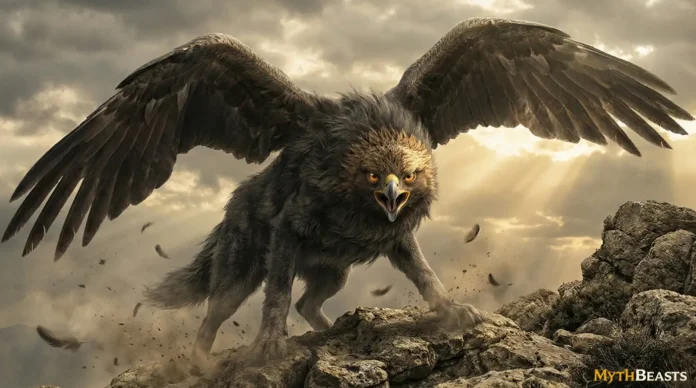
Chamrosh

A mighty guardian bird beneath the sacred tree on Mount Alborz that gathers seeds, spreads them across the earth,...

  • Skills
Animal CommunicationControl & Summoning
  • Weaknesses
Consecrated LandDivine Restrictions

Consecrated Land – Overview

Consecrated Land, as a mythological weakness, signifies a site or terrain imbued with sacred power, where certain supernatural beings experience unique limitation or existential threat. This concept is not reducible to mundane inconvenience or mere physical terrain. Within mythological frameworks, Consecrated Land functions as a categorical vulnerability. It imposes ontological boundaries, compelling supernatural entities to respect, avoid, or lose their potency within specific sacred spaces recognized by a culture. The significance of Consecrated Land arises from its consistent use as a structurally central weakness, not a contingent narrative obstacle. Its presence signals a recognized cosmological hierarchy and moral boundary in which land itself possesses agency. Mythological systems treated Consecrated Land as essential for regulating the relationship between the supernatural and the sacred. It was not considered an incidental hazard, but a necessary principle upholding cosmic or moral order.

Defining Characteristics of the Weakness

Nature of the Limitation

Consecrated Land constitutes a metaphysical restriction rather than a merely physical threat. Beings subject to this weakness are fundamentally altered or rendered powerless within spaces considered sanctified by tradition. Unlike weaknesses based on substance or weaponry, Consecrated Land is characterized by environmental dependency. The power of the land derives from ritual consecration, historical association, or divine presence established through cultural consensus. This limitation often signifies a cosmological boundary. Supernatural entities are reminded of their place in a greater order, and forbidden from overreaching by transgressing into the domain of the sacred through raw force. Consecrated Land also sometimes operates as a moral prohibition. The inability of certain beings to enter or act freely within these spaces reflects a deeper code of cosmic justice, not simply strategic disadvantage.

Conditions of Exposure

Consecrated Land becomes relevant when a being attempts to cross into or act within spaces recognized as sacred by the surrounding community or cosmological framework. Its power is not arbitrary, but arises from established cultural symbolism. Symbolic conditions, such as the performance of rituals or the presence of relics, determine whether land is considered consecrated. Entities vulnerable to this weakness are affected only when these markers of sanctity are present and recognized. Moral conditions can also activate the weakness. Supernatural entities associated with evil or impurity may be specifically barred or harmed by spaces consecrated to purity, justice, or divine presence, reflecting the moral logic of the tradition. Environmental conditions, such as the geographical boundaries of a temple or cemetery, function as practical markers. However, the underlying power is attributed to spiritual or metaphysical qualities rather than mere physical enclosure. Cosmological conditions, such as festivals or celestial alignments, may intensify the potency of Consecrated Land. This highlights the intersection of time, space, and ritual in the manifestation of this mythological constraint.

Mythological Role and Function

Function Within Mythological Systems

Consecrated Land regulates supernatural power by defining zones where transgressive beings lose their abilities or face existential risk. This control preserves the boundary between the human and the supernatural in mythological systems. It enforces cosmic balance by ensuring that entities associated with chaos, death, or impurity cannot dominate spaces deemed sacred to order, life, or the divine. This restriction is fundamental to the maintenance of mythic equilibrium. The weakness of Consecrated Land enables the downfall of otherwise unstoppable beings. It provides a consistent, culturally sanctioned limitation that averts the possibility of supernatural invulnerability or unchecked malevolence. Most importantly, Consecrated Land prevents absolute dominance by any supernatural entity. It does so not by chance, but through a structural principle that upholds the primacy of the sacred within a given cosmological hierarchy.

Symbolic and Cultural Meaning

Consecrated Land often symbolizes the inevitability of moral and cosmic order. It demonstrates that certain forces are always subordinate to sanctified spaces, regardless of their power elsewhere. In many cultures, this weakness is a manifestation of sacred law. It asserts that the authority of the divine or the community’s ritual is absolute within its proper bounds, immune to supernatural subversion. Consecrated Land also represents boundary enforcement in symbolic terms. It demarcates spaces where the profane is excluded and the sacred is maintained, thus reinforcing cultural concepts of purity and separation. This concept can reflect the limitation of hubris. Supernatural beings who believe themselves invincible are shown to have limits; their inability to defy Consecrated Land reveals the supremacy of higher principles or deities.

Distinction from Related Mythological Weaknesses

Conceptual Boundaries

Consecrated Land differs from general mortality, which is a universal human condition, not reserved for supernatural beings transgressing sacred spaces. It is a specific constraint, not a natural endpoint shared by all creatures. The distinction from physical injury lies in the source of harm. Consecrated Land’s effect is metaphysical or existential, not the result of weapons or combat. Its power is derived from sanctity, rather than force. Unlike divine punishment, which is often episodic and individually targeted, Consecrated Land is a standing condition. Its limitation is inherent to the space itself, not imposed as retribution for a particular act. Taboo violation refers to breaking cultural or religious rules, sometimes incurring supernatural consequences. However, Consecrated Land is not about violation, but about inherent restriction: beings are unable to operate within these spaces regardless of intent. Situational defeat is a temporary or context-dependent vulnerability. Consecrated Land, by contrast, creates an enduring and repeatable boundary, woven into the cosmological fabric of the mythological system.

Common Sources of Misclassification

Consecrated Land is often misunderstood due to superficial similarities with other vulnerabilities. For example, it may be conflated with holy objects or rituals, when its defining trait is the spatial sanctity of the land itself. Comparative mythology sometimes misclassifies Consecrated Land as a narrative trope, rather than recognizing its structural role. This oversight obscures its significance in preserving the cosmological order within distinct traditions. Scholarly distinctions rely on the recognition that Consecrated Land is not a tool wielded against supernatural beings, but an ontological state. Failing to observe this distinction leads to conflation with more tactical or weapon-based weaknesses. Some cultures lack a direct analogue to Consecrated Land, further complicating cross-cultural comparison. This absence can result in projection or misapplication of the concept where it does not historically belong.

Canonical Beings Defined by Consecrated Land

Vampires (Eastern European Folklore)

In Eastern European traditions, vampires are fundamentally constrained by consecrated ground, such as churchyards. Without this limitation, vampires would appear invulnerable to the most holy aspects of communal and cosmological order.

Demons (Medieval Christian Tradition)

Medieval Christian demonology characterizes demons as unable to enter or remain within consecrated spaces, especially churches. This constraint is essential to their identity, reinforcing the absolute sanctity of the sacred and the otherness of the demonic.

Jinn (Certain Islamic Traditions)

In some Islamic interpretations, jinn encounter barriers or loss of power within mosques or places ritually purified for prayer. The inability to cross into consecrated land marks a fundamental boundary distinguishing jinn from human and angelic realms. No verified sources describe additional beings that are so fundamentally defined by Consecrated Land as a weakness. Only these three examples are academically defensible within this context.

Historical Distribution and Cultural Context

The motif of Consecrated Land appears across diverse cultures, though its prominence and specific form vary. It is most visible in societies with strong ritual landscapes or clearly demarcated sacred spaces. Historical periods marked by institutionally sanctioned religion, such as medieval Europe or Islamic civilizations, provide the richest documentation of this weakness. The underlying principle exists wherever sacred space is thought to possess inherent power. In cultures with animist or shamanic frameworks, the concept is less spatially fixed, though analogues exist where certain terrains are reserved for the divine or ancestral. This demonstrates the adaptability of the weakness to varied cosmological settings. The recurrence of Consecrated Land is not universal, but when present, it reflects a broader cultural concern with preserving the separation between the sacred and the profane through physical and metaphysical boundaries.

Scholarly Interpretation and Uncertainty

Variation in Interpretation

Interpretations of Consecrated Land differ widely between cultures. Some traditions emphasize its literal spatial qualities, while others regard it as symbolic of larger cosmic or moral truths. Within scholarly frameworks, debates center on whether the weakness should be viewed primarily as an expression of ritual efficacy, a cosmological axiom, or a social mechanism for enforcing communal boundaries. In some cases, Consecrated Land is interpreted as a metaphor for the triumph of good over evil. In others, it is seen as evidence of the land’s sanctity transcending individual agency or intent.

Limits of the Evidence

No verified sources describe every aspect of Consecrated Land’s historical deployment. Documentation is often fragmentary, with gaps in both primary narrative and ritual context within many traditions. Ambiguities persist regarding the universality of the weakness, especially in cultural contexts where the sacred is not spatially delimited. Scholarly consensus recognizes the motif mainly where explicit references to sanctified land constrain supernatural agency. Where evidence is lacking, it remains unclear whether the absence of Consecrated Land reflects genuine cosmological difference or incomplete transmission of tradition. Caution is warranted when generalizing beyond well-documented cases.

Mythological Function Across Cultures

The recurrence of Consecrated Land as a weakness across mythologies reflects a shared human need to assert the power of the sacred over disruptive supernatural forces. It embodies a symbolic assertion of order against intrusion. By demarcating inviolable spaces, societies reinforce communal identity, moral boundaries, and cosmological hierarchy. Consecrated Land addresses concerns about vulnerability, pollution, and the maintenance of ritual purity within the collective worldview. Recognizing Consecrated Land as a distinct weakness enables more precise comparative analysis. It clarifies how mythological systems encode limitation not as random adversity, but as an essential structural feature for balancing power. This concept illustrates how mythological thought situates supernatural beings within a framework of constraint and accountability. It is integral to understanding the cultural logic of sanctity, authority, and regulation of the otherworldly.