back to top

Crawling Reptile

Crawling Reptile creatures embody a serpentine form, inhabiting mythic spaces as persistent, earth-bound entities with transformative potential.

Relevant Beasts
Europe
Crawling Reptile
Basilisk - Greco-Roman serpent with lethal gaze
Greece

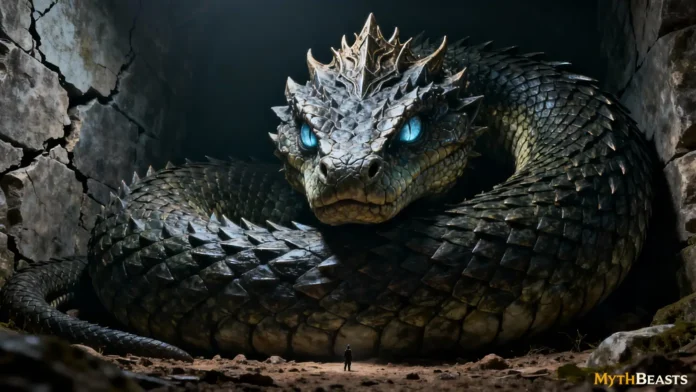
Basilisk

Basilisk, ancient Greco-Roman and medieval European serpent, crowned and colossal, whose lethal gaze embodies death, corruption, and sovereign terror...

  • Skills
Gaze of DeathPetrification
  • Weaknesses
Magic Reflection

Crawling Reptile – Overview

The category of Crawling Reptile refers to mythological beings characterized by their serpentine or reptilian form. These entities appear in various cultural narratives as creatures embodying themes of transformation, danger, or wisdom. Often, they mediate between the physical and spiritual realms.

Defining Characteristics

Physical Form and Morphology

Crawling Reptiles typically share a sinuous body structure, often depicted with scales, long tails, and elongated forms. Such features resonate across cultures, presenting an image of stealth and fluid movement, which distinguishes them from other beast types.

Ontological Nature

These creatures are frequently portrayed as liminal beings, straddling the boundaries between worlds. They may manifest supernatural qualities, serve as guardians, or act as avatars of broader cosmic forces. Their role in myth often transcends their physicality.

Mythological Role and Function

Place in Mythological Systems

Crawling Reptiles often hold significant positions within mythological schemas, acting as intermediaries between deities and humans. They may control elements, guard sacred spaces, or embody moral lessons. Such roles highlight their importance in maintaining cosmic balance.

Perception and Meaning

Cultural interpretations of Crawling Reptiles vary, but they are frequently seen as symbols of renewal, danger, or protection. They can be feared as chaotic threats or revered as wise ancients. Their ambivalence enhances their mythological significance.

Distinction from Related Beast Types

Conceptual Boundaries

Crawling Reptiles diverge from elemental beings and spirits by their specific reptilian nature. Unlike humanoid monsters, they lack human traits, focusing instead on their serpentine form to convey their mythological roles and narrative functions.

Common Sources of Confusion

Confusion often arises when Crawling Reptiles are conflated with dragons or aquatic monsters. Scholars distinguish them through their consistent portrayals as ground-based, elongated entities, emphasizing their unique mythological attributes and roles.

Canonical Beasts Associated with This Beast Type

Ouroboros

Associated with ancient Egyptian and Greek cultures, the Ouroboros symbolizes eternity and cyclical time. Its depiction as a serpent eating its own tail underscores its role as a Crawling Reptile, embodying perpetual renewal.

Rainbow Serpent

This Aboriginal Australian mythological creature is a creator figure associated with water and life. Its serpentine form and transformative powers exemplify the Crawling Reptile type, central to cultural narratives about creation and destruction.

Naga

In Hindu and Buddhist traditions, Nagas are semi-divine creatures, often linked with water bodies. Their serpentine appearance and spiritual significance align them with the Crawling Reptile category, where they serve as protectors and wise beings.

Historical Distribution and Cultural Context

Crawling Reptiles appear across diverse cultural landscapes, from Ancient Egypt to Mesoamerica and Southeast Asia. Their historical prevalence suggests a universal fascination with serpentine forms, reflecting shared human concerns about power, wisdom, and the unknown.

Scholarly Interpretation and Uncertainty

Variation in Definitions

Different cultures and scholars interpret Crawling Reptiles variously, often emphasizing local symbolic meanings or moral teachings. These interpretations highlight the adaptable nature of this mythological type, reflecting diverse historical and cultural priorities.

Limits of Available Evidence

While many tales feature Crawling Reptiles, specific details can be scarce or disputed. The ambiguity in their roles and forms prompts scholarly debate, with interpretations often reliant on fragmentary archaeological or textual sources.

Mythological Role Across Cultures

The recurring presence of Crawling Reptiles in mythology underscores their role in addressing universal themes of danger, transformation, and wisdom. They symbolize humanity’s engagement with the mysterious, reflecting cultural values and existential questions across traditions.