back to top

Flesh-Eating Undead

Flesh-Eating Undead embody mythic horror, sharing traits of insatiable hunger and symbolic roles as harbingers of death in various legends.

Relevant Beasts

Mississippian
Flesh-Eating Undead
Wendigo - North American folklore
Mississippian

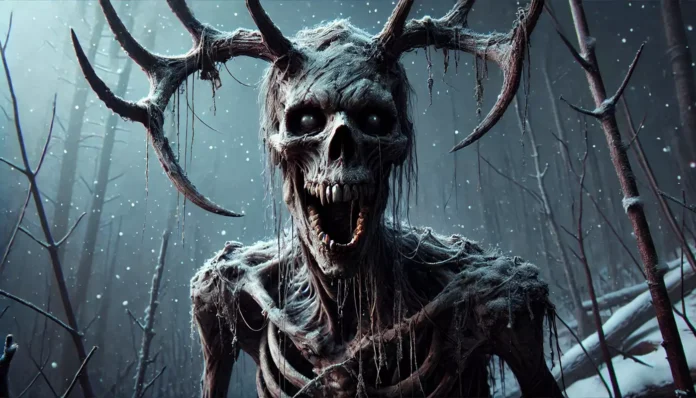
Wendigo

The Wendigo, rooted in Algonquian folklore, embodies insatiable greed and cannibalism. Depicted as a gaunt, emaciated figure with...

  • Skills
Cold ResistanceEnhanced Stamina
  • Weaknesses
Blessed WeaponFire Vulnerable

Flesh-Eating Undead – an Overview

Flesh-eating undead represent a class of mythological creatures characterized by their predation on the living. These entities embody themes of decay, hunger, and the disruption of natural death. They are often central to cultural cautionary tales and rituals.

Defining Characteristics

Physical Form and Morphology

Flesh-eating undead typically display decayed or distorted forms, reflecting their unnatural resurrection. Common features include skeletal frames, sunken eyes, and decaying flesh. Their appearance often serves as a visual metaphor for death and decay.

Ontological Nature

These beings are mostly of supernatural origin, often depicted as spirits inhabiting once-living bodies. They straddle the boundary between life and death, embodying hybrid existence that challenges natural and spiritual orders.

Mythological Role and Function

Place in Mythological Systems

Flesh-eating undead occupy liminal spaces within mythological systems, acting as reminders of mortality and the darker aspects of human nature. They disrupt balance by feeding on the living, symbolizing the unnatural breach of death’s finality.

Perception and Meaning

Different cultures perceive these entities as malevolent threats requiring ritual appeasement or avoidance. Some traditions see them as omens of otherworldly punishment or as entities to be vanquished through spiritual or physical means.

Distinction from Related Beast Types

Classification Boundaries

Flesh-eating undead differ from spirit or elemental types due to their physical, decaying forms and predatory actions. They are categorized distinctly from animal-based entities which lack the symbolic death-related connotations integral to this class.

Common Sources of Confusion

Confusion arises when flesh-eating undead are conflated with generic zombies or ghouls without recognizing their cultural specificity. Scholarly distinction often rests on the entity’s role in perpetuating unnatural life through consumption.

Canonical Beasts Associated with This Beast Type

Ghoul

Originating in Arabian folklore, the ghoul is a flesh-eating undead known for inhabiting graveyards and preying on the dead. Its role as a desecrator of graves exemplifies the threat of the flesh-eating undead.

Vrykolakas

In Greek folklore, the vrykolakas is a vampiric undead creature. Its tendency to feast on flesh and blood during nocturnal visits to the living underscores its classification as a flesh-eating undead.

Jiangshi

The Chinese jiangshi, or hopping vampire, feeds on the life force or flesh of the living, reflecting a unique cultural interpretation of undead predation. Its physical rigidity and movement echo the disruption of natural rest.

Historical Distribution and Cultural Context

Flesh-eating undead appear across global mythologies, with notable concentrations in Middle Eastern, European, and East Asian traditions. These entities often arise in contexts where death and burial customs hold significant cultural weight.

Scholarly Interpretation and Uncertainty

Variation in Definitions

Definitions of flesh-eating undead vary widely, with some scholars emphasizing physicality and others focusing on their symbolic aspects. Such divergence reflects the complexities of interpreting mythological categories across different cultures.

Limits of Available Evidence

Many accounts of flesh-eating undead are fragmented or allegorical. Scholarly consensus acknowledges that gaps and ambiguities persist, particularly where oral traditions and regional variations obscure a unified understanding.

Taxonomic Relevance

Classifying flesh-eating undead aids in understanding cultural anxieties about death and the unnatural. This taxonomy helps organize diverse mythological narratives by highlighting common themes of disruption, decay, and the violation of natural life cycles.