back to top

Flying Head

Flying Head, known for its floating visage and fearsome traits, plays a symbolic role in various mythological narratives.

Relevant Beasts
Chile
Death Messenger
Chonchon - Chilian folklore
Chile

Chonchon

A Chilean creature with human ears that acts as wings, the Chonchon is known to steal life force.

  • Skills
Life DrainSilent Flight
  • Weaknesses
Salt BurnSun Harm

Flying Head – Overview

The mythological beast known as Flying Head is a conceptual category characterized by its unique disembodied nature. Typically depicted as a large, floating head, it often appears in folklore as a supernatural entity. Its primary role across mythologies is to act as a harbinger of doom or chaos, manifesting as a formidable force that defies natural laws. Various cultures recognize these creatures as powerful symbols, reflecting societal fears, taboos, and cosmic principles.

Defining Characteristics

Physical Form and Morphology

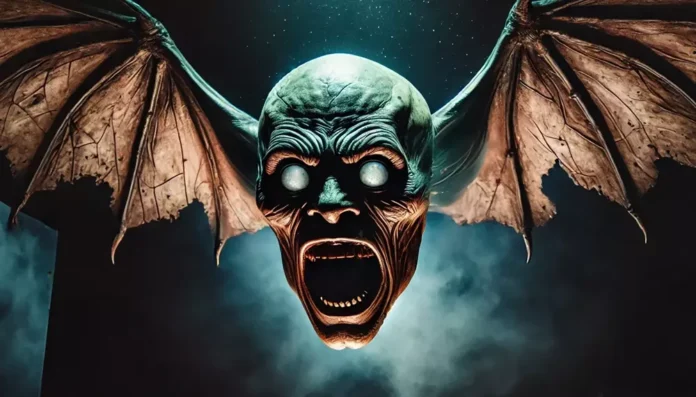
Flying Heads are predominantly described as grotesquely oversized heads, sometimes with exaggerated features. They often have fiery eyes and sharp teeth, which emphasize their menacing presence. In some traditions, appendages such as wings or trailing entrails might accompany the head, further enhancing their otherworldly appearance. The floating nature of these heads underscores their supernatural status.

Ontological Nature

In mythological contexts, Flying Heads are often understood as liminal entities, existing at the boundary between the physical and metaphysical realms. They embody chaos or disorder, transcending natural laws and challenging the established cosmic order. Their presence is frequently associated with supernatural events, acting as a catalyst for transformation or destruction within the mythological narrative.

Mythological Role and Function

Place in Mythological Systems

Flying Heads typically function within mythological systems as antagonistic forces or omens of divine retribution. They interact with gods or humans by instigating fear or disorder, serving as reminders of the precarious balance between order and chaos. Often, their emergence signals a breakdown in the moral or cosmic order, necessitating intervention by a hero or deity to restore balance.

Perception and Meaning

Culturally, Flying Heads are perceived predominantly as threatening and malevolent entities, embodying the fears of the unknown or the uncontrolled. They symbolize impending doom or societal collapse, often acting as omens warning of significant upheaval or disaster. Despite their fearsome reputation, these beings also represent the necessary, albeit destructive, forces of change and renewal within mythological interpretations.

Distinction from Related Beast Types

Conceptual Boundaries

Flying Heads differ from other mythological entities like elemental beings or humanoid monsters due to their unique form and role. Unlike spirits or animal-based creatures, they lack a traditional body, distinguishing them as purely supernatural manifestations. Their primary function revolves around chaos and disruption, unlike elemental beings tied to natural phenomena or spirits that often guide or protect.

Common Sources of Confusion

The beast type Flying Head is sometimes confused with other disembodied entities due to similar characteristics like floating or supernatural abilities. However, scholars differentiate them by their distinct focus on chaos and transformation, unlike other creatures that might serve protective or benign roles. Comparative mythology emphasizes the Flying Head’s unique symbolism and function to clarify these differences.

Canonical Beasts Associated with This Beast Type

Big Head (Irochka)

Originating from Iroquois folklore, this entity embodies the Flying Head archetype through its terrifying appearance and disruptive presence. Known for hovering in the wilderness, it serves as a legendary symbol of chaos and fear.

Rokurokubi

From Japanese folklore, the Rokurokubi embodies Flying Head characteristics, with its ability to elongate its neck or detach the head, underscoring the disruptive and fearsome aspects typically associated with this beast type.

Penanggalan

In Malaysian mythology, the Penanggalan is a vampiric entity, representing the Flying Head type by its ability to detach its head and organs for nocturnal hunts. It bridges supernatural terror with cultural taboos and moral lessons.

Historical Distribution and Cultural Context

The Flying Head appears in diverse mythologies, from Native American to Southeast Asian traditions. Its presence reflects a universal motif, manifesting during periods of uncertainty or social upheaval. These beings often occur in oral traditions, flourishing in cultures where myth serves as a means to explain or control natural and social environments. Over time, the Flying Head has remained a potent symbol of fear and change, adapting to varying cultural and historical contexts.

Scholarly Interpretation and Uncertainty

Variation in Definitions

Interpretations of the Flying Head vary across cultures, with some viewing it as a spirit, others as a cursed being. Academic frameworks differ, focusing on its symbolic meaning rather than literal existence, highlighting cultural perspectives.

Limits of Available Evidence

No verified sources describe every aspect of the Flying Head in every cultural context. Existing evidence is often fragmentary, relying heavily on oral traditions or secondary interpretations, leaving room for scholarly debate and reinterpretation.

Mythological Role Across Cultures

The recurring presence of Flying Heads across mythological traditions addresses shared human concerns about the unknown and societal instability. They symbolize universal themes of chaos, change, and the disruptive forces necessary for renewal, helping societies articulate and confront their fears. Recognizing this role enables a deeper comparative understanding of mythological systems, revealing insights into human psychology and cultural evolution.