Chile – an Overview
Chile is a geographic and historical context for distinct Indigenous and later folkloric traditions, not a single mythology with one shared pantheon, cosmology, or narrative canon.
Its mythological record is associated especially with Mapuche communities in south-central Chile, Rapa Nui society on Easter Island, and regional traditions documented across the country.
These traditions developed across different periods and environments, so national borders provide a modern organizing frame rather than evidence of a unified ancient cultural origin.
The term therefore identifies a source context whose contents require attribution to particular peoples, places, and historical circumstances rather than assumption of national uniformity.
Historical and Environmental Context
Time Frame and Location
Chile extends along the Pacific side of southern South America, encompassing deserts, valleys, mountains, temperate forests, and island environments with distinct histories of human settlement.
Archaeological evidence documents occupation over millennia, but no single date can represent the beginnings of the many traditions later recorded within Chile’s territory.
Mapuche traditions are associated with south-central Chile and adjacent areas of Argentina, while Rapa Nui culture developed on a remote Polynesian island now administered by Chile.
The Atacama region preserves archaeological evidence of ancient communities and exchange, although material remains alone cannot establish the exact content of local myths.
Contact and Cultural Exchange
Mapuche communities encountered Inca expansion in the broader Andean south before Spanish colonization, but the extent and character of Inca control south of central Chile remain debated.
Spanish conquest and colonial rule brought sustained cultural contact, religious conversion, and conflict, shaping the surviving records of Indigenous belief without erasing local traditions.
Rapa Nui’s Polynesian cultural history differs from mainland Chilean histories; its incorporation into Chile occurred in the nineteenth century, long after its settlement and cultural development.
These distinct contact histories caution against treating Indigenous traditions within present-day Chile as products of one shared pattern of exchange or colonial experience.
Mythological Framework
Worldview and Cosmological Concepts
Mapuche religious thought is documented through concepts including ngen, commonly described as spiritual owners or guardians associated with particular natural domains and places.
That terminology does not establish a uniform doctrine across all Mapuche communities; accounts vary by locality, period, informant, and the circumstances of documentation.
Rapa Nui traditions have their own Polynesian historical and religious contexts, so their concepts should not be collapsed into Mapuche cosmology or mainland categories.
For Chile as a whole, no single verified cosmological system encompasses every Indigenous society and regional tradition represented within its borders.
Spiritual or Supernatural Categories
Mapuche accounts describe ngen in relation to elements of landscape and environment, a category that differs from a simple classification of independent creator deities.
Historical descriptions also record pillan, a term associated with powerful spiritual beings; its meanings and interpretation vary across sources and periods.
Such categories belong to particular Mapuche contexts and cannot be treated as universally shared Chilean supernatural classifications without evidence.
Folklore and Narrative Tradition
Recurring Mythological Themes
Mapuche narratives include accounts explaining landscape features and environmental powers, linking place-specific understandings to community knowledge rather than to one national origin story.
Chilote folklore includes supernatural beings and narratives associated with the Chiloé archipelago, where island geography gives regional stories a distinct setting.
These bodies of narrative differ in cultural attribution: Mapuche materials reflect Indigenous traditions, whereas Chilote folklore also developed through colonial-era contact and local historical change.
Transmission and Preservation
Oral transmission has been important in the preservation of Mapuche knowledge, although written records by outsiders have also shaped what researchers can access.
Recorded versions of oral narratives are historically situated documents, not transparent transcripts of timeless or wholly uniform community belief.
Rapa Nui knowledge has been transmitted within its Polynesian community, while colonial disruption and later documentation affect the surviving historical record.
Mythological Beasts and Non-Human Entities
The following beings are associated with specific Chilean regional traditions rather than with a single national mythology; their classification depends on cultural and geographic context.
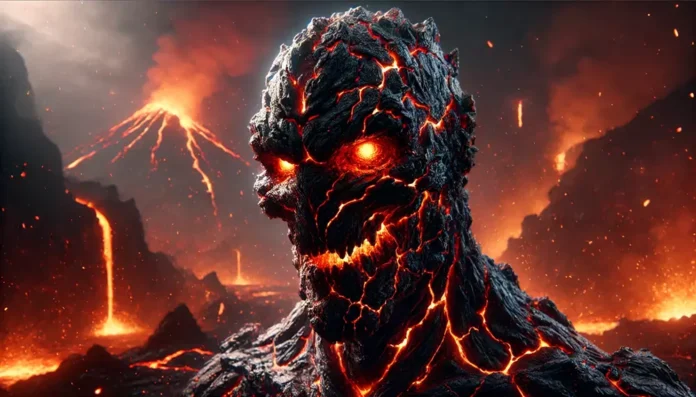
Trentren Vilu
Trentren Vilu belongs to Mapuche narrative tradition, where it appears in accounts involving flood and the shaping of land; without that attribution, it is misclassified as a generic Chilean monster.
Caicai Vilu
Caicai Vilu is paired with Trentren Vilu in Mapuche flood narratives, representing an opposing force in those accounts; Chilean association rests on this specific tradition, not national folklore generally.
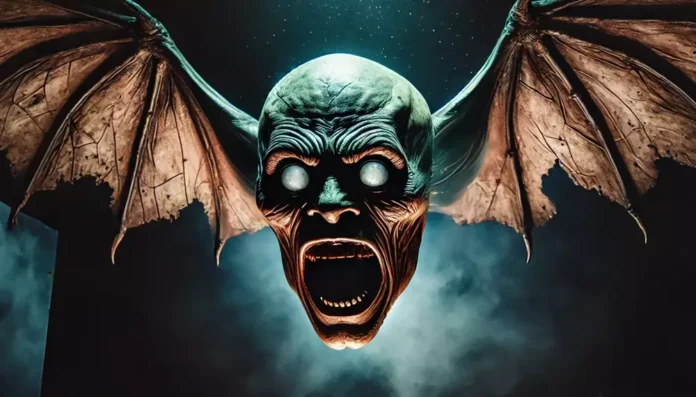
Imbunche
The Imbunche belongs to Chilote folklore of the Chiloé archipelago; removing that regional setting obscures its local narrative identity and wrongly reduces it to a generic supernatural creature.
Symbolic Roles of Creatures and Forces
In Mapuche accounts, the Trentren and Caicai figures organize explanations of flood, land, and environmental transformation; this role is specific to their narrative pairing.
The Imbunche’s place in Chilote folklore associates it with the supernatural geography of the archipelago, rather than establishing a symbol shared across Chilean traditions.
Internal Variation and Temporal Change
Regional difference is essential: Mapuche traditions, Rapa Nui heritage, and Chilote folklore have distinct languages, histories, and narrative settings rather than interchangeable national traits.
Colonial encounters and later documentation altered the circumstances in which traditions were transmitted and recorded, although the scale of change cannot be measured uniformly.
Modern Chilean identity may bring these traditions together in cultural representation, but that modern framing should not be projected backward as ancient unity.
Related Cultural Origins and Myth Sources
Mapuche traditions have historical connections with Indigenous communities across the Andes, including territories now in Argentina; shared regional history does not make their narratives identical.
Rapa Nui traditions belong to wider Polynesian cultural history, distinguishing them from mainland South American Indigenous traditions despite their present political association with Chile.
Chilote folklore reflects a regional history shaped by Indigenous and colonial influences, differing from Mapuche religious traditions in its particular island setting and documented development.
Evidence Limits and Scholarly Uncertainty
Archaeology can establish settlement, exchange, and material practices, but artifacts alone rarely identify a specific myth or confirm the meaning assigned to it.
For many traditions, researchers rely on oral accounts recorded under particular historical conditions; changes in translation and documentation limit straightforward comparison.
Colonial records often describe Indigenous beliefs through external categories, creating uncertainty about original terminology, local variation, and the contexts of reported practices.
No verified sources describe a single, comprehensive mythology shared by all peoples and regions now included within Chile.
Interpretations of particular spiritual terms and narratives can differ among scholars and communities; claims should therefore retain specific attribution and acknowledge evidentiary limits.