
back to top

Guardian Spirit

Guardian Spirit: Mythological beings defined by protective roles and guidance across various cultural narratives and traditions.

Relevant Beasts
Asia
Guardian Spirit
Tengu - Japanese Folklore
Japan

Tengu

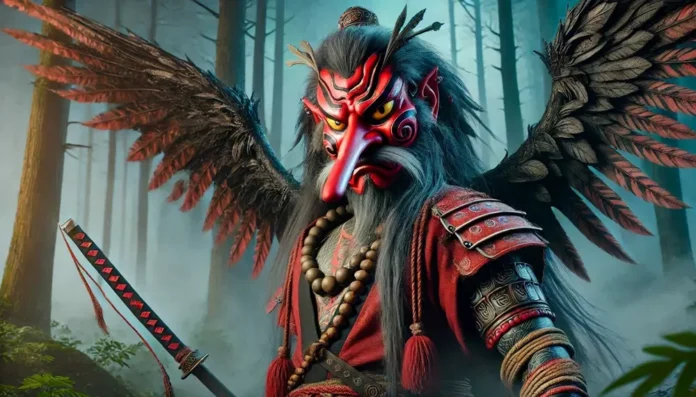
Tengu are supernatural beings from Japanese folklore with human-like features, avian traits, and a reputation as guardians of mountains...

  • Skills
Aura of TerrorEnhanced Agility
  • Weaknesses
Aura CollapseOverconfidence

Guardian Spirit – Overview

Guardian Spirits are mythological entities characterized by their role as protectors or guides in various cultural narratives. They often serve as intermediaries between the divine and the mortal realms. These beings are typically depicted as having a deep connection to specific places, people, or communities, providing protection or guidance. Across cultures, Guardian Spirits manifest in diverse forms, adapting to local beliefs and environmental contexts. Their presence often reflects a culture’s worldview, embodying the values, fears, and aspirations of the society that venerates them.

Defining Characteristics

Physical Form and Morphology

Commonly, Guardian Spirits are depicted with features that blend human and animal traits, symbolizing their connection to both worlds. They may possess wings, horns, or animalistic limbs. Their forms are often ethereal, allowing them to traverse the boundaries between the physical and spiritual realms seamlessly. This form reflects their dual nature, bridging the natural and supernatural.

Ontological Nature

In mythological contexts, Guardian Spirits are often seen as liminal beings. They exist between the material and spiritual worlds, serving as mediators. Their nature is inherently supernatural, yet they maintain a presence in the natural order. This duality allows them to influence both realms, guiding or protecting those they watch over. Their existence underscores the interconnectedness of the earthly and divine.

Mythological Role and Function

Place in Mythological Systems

Guardian Spirits hold crucial roles within mythological systems, often acting as protectors of sacred spaces, people, or communities. They maintain balance between cosmic forces, ensuring harmony is preserved. In some traditions, they serve as guides for souls transitioning between life and death. Their presence reinforces the moral and ethical codes within a culture, embodying ideals such as loyalty, bravery, and wisdom.

Perception and Meaning

Cultures typically perceive Guardian Spirits as benevolent forces, acting as protectors or guides. They often symbolize the virtues a society values most, such as courage or wisdom. However, they can also serve as stern reminders of the spiritual responsibilities individuals must uphold. Their symbolic meaning can vary, expressing a culture’s unique relationship with the supernatural and the natural world.

Distinction from Related Beast Types

Conceptual Boundaries

Guardian Spirits differ from elemental beings or animal spirits by their specific role as protectors or guides. Unlike elemental beings, they are not tied to natural phenomena or forces. Their purpose is not to embody elemental power but to watch over and guide. Additionally, they are distinct from undead entities, as Guardian Spirits usually represent life-preserving forces rather than death or decay.

Common Sources of Confusion

Guardian Spirits are sometimes confused with similar entities like tutelary deities or ancestral spirits. This confusion arises because these entities may share protective attributes. Scholars distinguish Guardian Spirits by their specific role and nature, often focusing on their liminal existence. Unlike deities, they do not wield divine power but serve as intermediaries.

Canonical Beasts Associated with This Beast Type

Kami

Originating from Shinto belief in Japan, kami are spirits associated with natural elements and phenomena. They are revered as protectors of communities, embodying the Guardian Spirit type through their watchful presence.

Totem Spirits

Found in many Indigenous cultures of North America, totem spirits are revered as ancestral protectors. They guide individuals or clans, embodying the Guardian Spirit’s role through their spiritual guidance and protection.

Djinn

In Arabian mythology, Djinn are supernatural beings with free will. Some act as protectors or guides, aligning them with the Guardian Spirit type through their interaction with the human world in helpful roles.

Historical Distribution and Cultural Context

Guardian Spirits appear across various cultures and historical periods, from ancient to modern times. They are particularly prominent in Indigenous cultures, where natural elements and spirits play key roles. Regions such as Asia, Africa, and the Americas showcase a rich tapestry of Guardian Spirit beliefs, each tailored to local customs and environmental contexts. These spirits reflect the cultural landscapes where they arise, embodying shared human concerns and natural elements.

Scholarly Interpretation and Uncertainty

Variation in Definitions

Scholars note significant variation in defining Guardian Spirits, influenced by cultural, historical, and linguistic contexts. Interpretations may differ, with some viewing them as spirits and others as deities. This variation reflects the diversity of belief systems and spiritual practices. Different academic disciplines may emphasize distinct aspects, such as their protective roles or spiritual significance, leading to differing definitions.

Limits of Available Evidence

Evidence for Guardian Spirits is often fragmentary or culturally specific, with limited comprehensive documentation. Much of the understanding comes from oral traditions, which can vary significantly. Scholars rely on cross-cultural studies to identify common traits, but uncertainties remain. The fluid nature of oral traditions means interpretations can shift over generations, complicating efforts to form a definitive understanding.

Mythological Role Across Cultures

Guardian Spirits recur in mythologies worldwide due to their role in addressing universal human concerns like safety and guidance. They symbolize the need to understand and control the unseen forces affecting life. This recurrence highlights shared cultural values and the universal desire for protection and guidance. Recognizing these spirits’ roles helps scholars interpret mythological systems comparatively, offering insights into the diverse ways cultures navigate the spiritual world.