back to top

Mythical Guardian

Mythical Guardian creatures embody protection and defense, serving as symbolic protectors in various mythological narratives.

Relevant Beasts

Europe
Mythical Guardian
Jewish Folklore

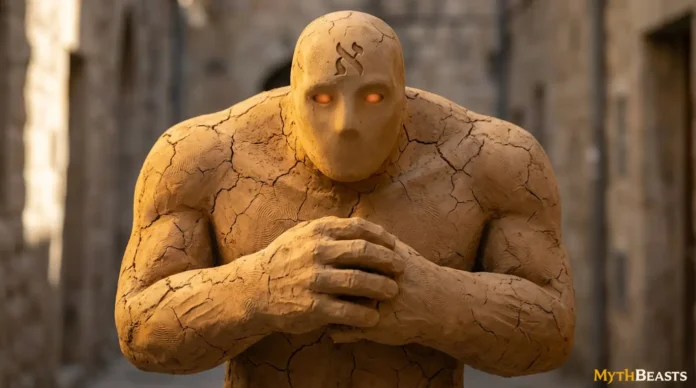
Golem

A manmade creature of clay, animated to protect Jewish communities in Prague during the 16th century.

  • Skills
Physical StrengthStone Skin
  • Weaknesses
BeheadingFragile Skin

Mythical Guardian – Overview

The Mythical Guardian is a conceptual category of mythological beings defined by their protective roles and intermediary functions. These creatures often exhibit shared characteristics across various cultures, serving as custodians of sacred spaces or defenders of cosmic order. They are typically associated with safeguarding treasures, realms, or divine mandates, and their presence is a common motif in mythological narratives worldwide. The Mythical Guardian’s role is deeply embedded in the mythological thought, symbolizing order against chaos and serving as conduits between the divine and the mortal.

Defining Characteristics

Physical Form and Morphology

Mythical Guardians tend to embody composite forms, blending elements of natural and supernatural origins. Common physical traits include wings, multiple heads, or hybrid animal features. These characteristics emphasize their extraordinary nature. Often depicted with imposing stature, they project an aura of power and vigilance. Such morphological features are not merely ornamental but serve to underscore their role as protectors. The visual forms of Mythical Guardians are consistent across many traditions, reinforcing their universal symbolic significance.

Ontological Nature

These beings are often understood as liminal entities, existing at the borders of the natural and supernatural realms. Their ontology is typically one of hybridity, embodying both terrestrial and celestial qualities. This duality allows them to mediate between different worlds, whether as spiritual guardians, cosmic sentinels, or metaphysical enforcers. The Mythical Guardian’s existence is intimately tied to maintaining balance within the mythological cosmos. They often act as agents of divine will, enforcing cosmic laws and protecting sacred thresholds.

Mythological Role and Function

Place in Mythological Systems

Within mythological systems, Mythical Guardians occupy critical positions as boundary keepers and protectors of the sacred. They often serve as intermediaries between gods and humans, embodying divine mandates. These creatures are frequently positioned at gateways, temples, or other significant locations, symbolizing the protection of critical thresholds. Their duty often involves enforcing moral or cosmic law, acting as agents that maintain stability within the mythological cosmos. This role underscores their importance in maintaining the orderly progression of mythological narratives.

Perception and Meaning

Cultures generally perceive Mythical Guardians as powerful protectors or awe-inspiring custodians, embodying strength and vigilance. They are often seen as protective forces, warding off evil or chaos. In some traditions, they are revered as sacred beings whose favor or wrath can significantly impact human lives. The symbolic interpretation of Mythical Guardians emphasizes their role as embodiments of protection, vigilance, and divine authority. While specific narratives may vary, their overarching theme as defenders of the sacred remains consistent across cultures.

Distinction from Related Beast Types

Conceptual Boundaries

The Mythical Guardian differs from elemental beings and spirits through its explicit protective function and hybridity, often involving physical guardianship. Unlike spirits, they possess a more tangible presence. Elemental beings are typically tied to natural elements, whereas Mythical Guardians serve broader protective roles. They also diverge from humanoid monsters, which often carry negative connotations. Animal-based creatures lack the divine or cosmological authority embedded in the Mythical Guardian’s identity. These distinctions help clarify their unique position within mythological taxonomy.

Common Sources of Confusion

Mythical Guardians are sometimes conflated with other supernatural entities due to overlapping functions or iconography. Scholars distinguish them by their explicit protective roles and hybrid forms. Their depiction guarding thresholds can resemble roles of spirits or deities, leading to misclassification. Careful examination of cultural contexts and mythological roles helps clarify these distinctions. Comparative mythology often highlights these differences, emphasizing the Mythical Guardian’s unique combination of physical presence and cosmic significance.

Canonical Beasts Associated with This Beast Type

Griffin

Originating from ancient Mesopotamia, the Griffin is a quintessential Mythical Guardian, depicted with the body of a lion and the head and wings of an eagle. Its hybrid form symbolizes strength and vigilance, guarding treasures and sacred spaces.

Chinese Dragon

In Chinese mythology, the dragon embodies the Mythical Guardian, symbolizing power and protection. Its liminal nature allows it to mediate between heaven and earth, often guarding celestial realms or imperial treasures.

Gargoyle

Gargoyles, originating from European Gothic architecture, serve as protective Mythical Guardians on cathedrals. Their grotesque forms ward off evil spirits, blending functional utility with spiritual symbolism, embodying the dual role of protection and vigilance.

Historical Distribution and Cultural Context

The Mythical Guardian type appears across diverse cultures and historical periods, from ancient Egypt to medieval Europe and beyond. These beings often emerge in contexts where sacred protection or boundary maintenance is culturally significant. Their presence is notably observed in regions where myths intersect with religious practices, emphasizing their protective and liminal roles. By serving as custodians of sacred knowledge or spaces, they reflect the universal human concern for safeguarding divine order against chaos.

Scholarly Interpretation and Uncertainty

Variation in Definitions

Interpretations of the Mythical Guardian vary significantly across cultures and epochs, reflecting different religious or cosmological functions. While some see them as divine protectors, others emphasize their role in maintaining cosmic or moral order. Academic frameworks often debate these boundaries, with no singular definition prevailing universally. This variation highlights cultural perspectives on the balance between chaos and order, offering diverse insights into their mythological significance.

Limits of Available Evidence

Despite their widespread presence, the Mythical Guardian often presents challenges in historical verification due to varying depictions and functions. No verified sources describe a universally consistent form for these entities. Scholarly debates continue about their origins and specific roles, with interpretations frequently relying on reconstructed narratives. Such uncertainties necessitate cautious analysis, preventing speculative assertions from overshadowing established mythological frameworks.

Mythological Role Across Cultures

Mythical Guardians recur across cultures due to their symbolic representation of protection and order against chaos. Their roles address universal concerns about safeguarding the sacred, maintaining cosmic balance, and mediating between worlds. Recognizing this role enriches comparative mythology, revealing how different cultures articulate these universal themes. This insight facilitates a deeper understanding of how mythological systems across the world manage the interplay of chaos and order, underscoring shared human concerns.