Sea Monster - an Overview
Sea Monsters function as a mythological classification encompassing a wide array of giant aquatic creatures. These beings are often depicted as formidable entities whose presence symbolizes chaos or the untamed nature of the ocean. They serve as narrative devices that encapsulate humanity's fear and awe of the sea's mysteries, representing the unknown that lies beneath the waves. Such mythological beings are found in numerous cultures, often portrayed as both natural threats and supernatural entities.Defining Characteristics
Physical Form and Morphology
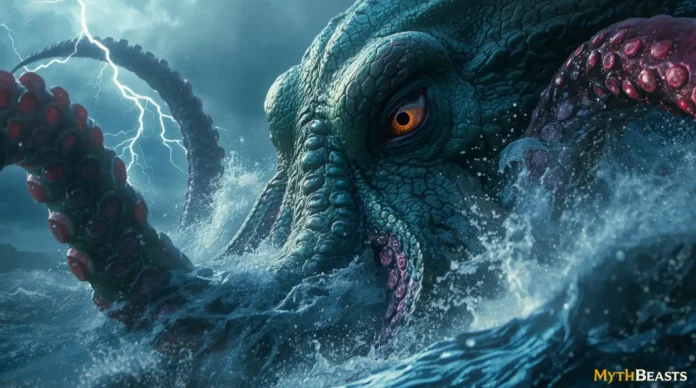
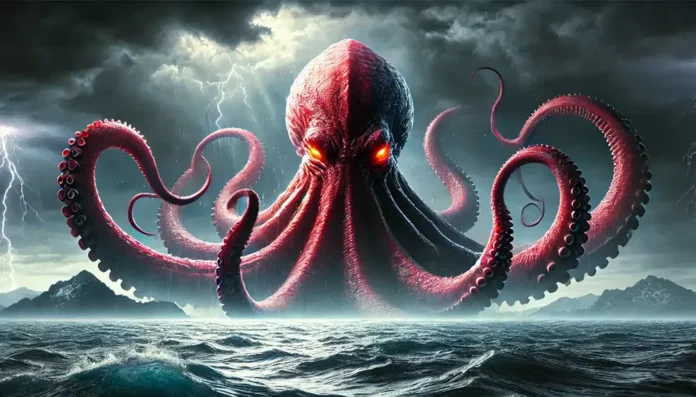
Sea Monsters are typically characterized by immense size, often portrayed as large enough to capsize ships. Commonly exaggerated features include tentacles, multiple heads, or enormous jaws, evoking a sense of the grotesque and the monstrous. These traits symbolize the fearsome power of the sea and its capacity for sudden, violent change, reflecting the unpredictable and vast nature of oceanic environments.Ontological Nature
Sea Monsters are generally considered supernatural or hybrid entities, bridging the natural and the divine. Their nature often blurs the lines between physical reality and mythological imagination. They embody the intersection of the human world with the cosmic and unknown, often serving as embodiments of divine wrath or natural disorder. These creatures inhabit a space that is neither entirely real nor purely mythical, representing the boundaries of human understanding.Mythological Role and Function
Place in Mythological Systems
Within mythological systems, Sea Monsters often occupy pivotal roles as antagonists or tests for heroes. They are frequently depicted as guardians of sacred waters or gateways to other realms, posing challenges that must be overcome. Their presence in myths underscores themes of conquest, exploration, and the human struggle against overwhelming natural forces. These creatures highlight the endless battle between order and chaos, representing the struggle to restore balance to the world.Perception and Meaning
Culturally, Sea Monsters are often perceived as both threats and symbols of deeper truths. They embody the fear of the unknown and the power of nature. In many traditions, their defeat is seen as a triumph of human ingenuity and bravery. However, they can also represent omen of change or disaster, acting as harbingers of significant events. This duality reflects humanity's complex relationship with the sea, acknowledging both its dangers and its bounties.Distinction from Related Beast Types
Classification Boundaries
Sea Monsters differ from elemental beings or spirits through their physical and often grotesque manifestations. Unlike elemental forces, they possess distinct forms, aligning them closer to physical creatures. They are not purely spiritual or ethereal, as their tangible presence affects the world directly. This physicality distinguishes them from other supernatural entities, grounding them in a realm that intersects both myth and nature.Common Sources of Confusion
Confusion often arises when Sea Monsters are conflated with water deities or spirits, due to their shared aquatic domains. However, unlike deities, Sea Monsters lack divine authority and are generally portrayed as chaotic forces rather than benevolent protectors. Scholars distinguish them by focusing on their roles as antagonistic entities, emphasizing their destructive capabilities rather than their spiritual significance. This clarification underscores their nature as manifestations of chaos.Canonical Beasts Associated with This Beast Type
Kraken
Originating from Norse mythology, the Kraken is a legendary sea monster known for its enormous size and tentacled limbs. Its fearsome reputation for attacking ships exemplifies the archetype of the Sea Monster as a maritime menace.Leviathan
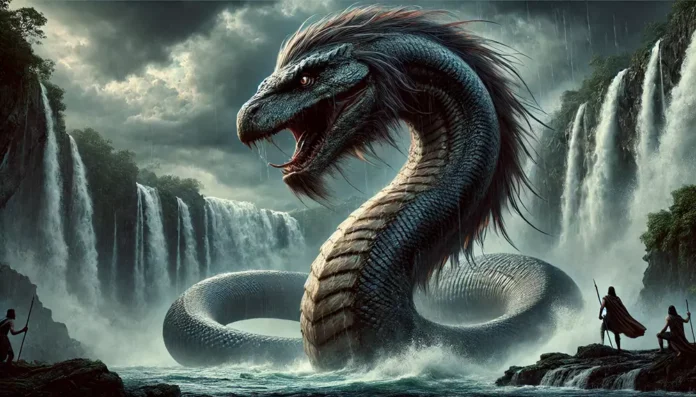
In biblical texts, Leviathan is depicted as a monstrous sea creature symbolizing chaos and divine wrath. Its vast, serpent-like form and association with ultimate destruction firmly place it within the Sea Monster category.Tiamat
From Mesopotamian mythology, Tiamat is a primordial sea goddess often represented as a water dragon. Her role in the creation myth and battle against Marduk highlights her classification as a central Sea Monster figure.Historical Distribution and Cultural Context
Sea Monsters appear in mythologies across the globe, from the Mediterranean to the Pacific. They are prevalent in seafaring cultures, reflecting a shared human experience of the ocean’s unpredictability. Such myths often coincide with periods of exploration or conflict, illustrating humanity's attempts to understand and conquer the unknown. These creatures adapt to the cultural norms and beliefs of their regions, illustrating the universality of fear and fascination with the sea.Scholarly Interpretation and Uncertainty
Variation in Definitions
Definitions of Sea Monsters can vary, with some traditions emphasizing their destructive nature while others highlight their role as symbols of transformation. Scholars often debate the extent to which these creatures should be considered purely mythological or inspired by actual sea life. This variation reflects differing cultural perspectives on the sea and its mysteries, complicating a unified definition.Limits of Available Evidence
Gaps in evidence often result from the oral nature of many mythological traditions, leading to fragmented historical records. Many depictions are speculative reconstructions based on limited archaeological and textual data. These uncertainties emphasize the challenges in fully understanding the role and evolution of Sea Monsters across cultures. Scholars must rely on interdisciplinary approaches to piece together their historical and cultural significance.Taxonomic Relevance
The Sea Monster category serves as a critical classification within mythological taxonomies, organizing entities that embody the chaos and power of the sea. It aids in the analysis of mythological narratives by highlighting common themes of fear, exploration, and transformation. This category provides a framework to explore how cultures interpret natural phenomena through mythology, contributing to a broader understanding of human belief systems across history.