
back to top

Shadow Wraith

Shadow Wraiths are mythological beings defined by their dark, ethereal nature and roles as harbingers of doom in various legends.

Relevant Beasts
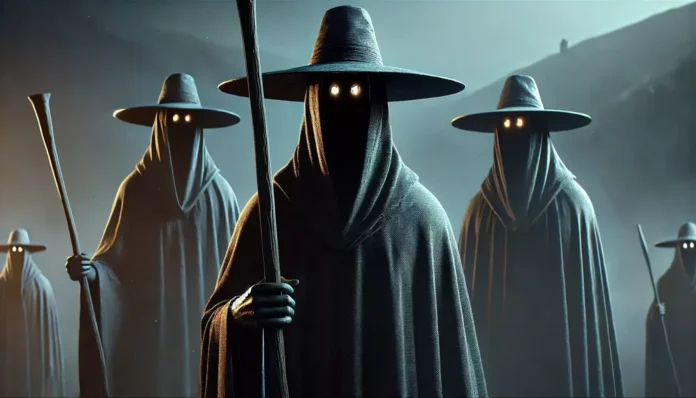
American West
Ethereal Being
Californian Dark watchers
American West

Dark Watchers

The Dark Watchers are mysterious, tall, shadowy figures from California folklore, often seen observing travelers from the Santa Lucia...
  • Skills
Hallucination InducementInvisibility
  • Weaknesses
Fog BlindnessSlow Movement
Hebrews
Demonic Form
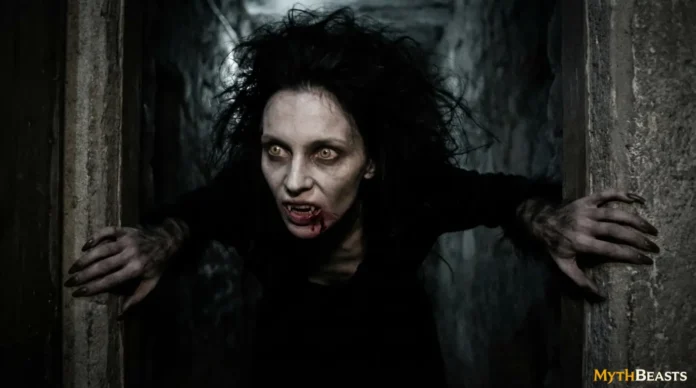
Alukah - Hebrews Mythology
Hebrews

Alukah

A vampiric demoness in ancient Hebrew mythology that drinks blood and preys on humans.

  • Skills
Shapeshifting
  • Weaknesses
Daylight BoundSacred Relic

Shadow Wraith – Overview

The Shadow Wraith is a mythological beast type characterized by its enigmatic presence and connection to darkness. Commonly conceived as entities dwelling between worlds, they often symbolize fear or the unknown. Their form is frequently described as spectral, and they are associated with haunting nocturnal environments. Across cultures, Shadow Wraiths serve as reminders of mortality and impermanence, challenging human comprehension of the afterlife. This entity occupies a unique place in mythological systems, bridging the material and spiritual realms.

Defining Characteristics

Physical Form and Morphology

Shadow Wraiths typically lack a solid form, often appearing as ephemeral silhouettes or wisps of darkness. They are consistently depicted with amorphous bodies, giving the impression of fluidity. Their features are often indistinct, contributing to their mysterious allure. Some traditions portray them as shadowy humanoids with elongated limbs and shrouded faces. This lack of defined anatomy serves to emphasize their ethereal nature. Despite cultural variations, Shadow Wraiths consistently embody an unsettling presence.

Ontological Nature

In mythological contexts, Shadow Wraiths are often understood as liminal entities, existing between the physical and spiritual worlds. They are frequently seen as messengers or harbingers, bridging life and death. Considered supernatural, they challenge the boundaries of existence. Their presence in myths often symbolizes transition, whether of seasons, life stages, or consciousness. In some beliefs, they are seen as guardians of thresholds, protecting sacred or forbidden spaces. Their role underscores the permeability of metaphysical boundaries.

Mythological Role and Function

Place in Mythological Systems

Shadow Wraiths function within mythological systems as mediators between humans and the divine or cosmic forces. They are often linked to deities related to night, death, or the underworld. In some cultures, they are seen as enforcers of cosmic or moral order, embodying consequences for transgressions. Their presence can indicate divine judgment or intervention, marking pivotal moments in mythic narratives. Shadow Wraiths highlight the interplay between visible and invisible realms, contributing to a belief in an interconnected universe.

Perception and Meaning

Cultures generally perceive Shadow Wraiths as ominous entities, often associated with fear or danger. They can symbolize repressed fears or unresolved issues, manifesting as internal or external threats. In some traditions, they are seen as protectors, defending sacred sites or guiding deceased souls. As embodiments of mystery, they challenge human understanding, prompting reflection on mortality or cosmic cycles. Their presence often marks a boundary between known and unknown, reinforcing cultural beliefs about the unseen world.

Distinction from Related Beast Types

Conceptual Boundaries

Shadow Wraiths differ from elemental beings in that they are not restricted to natural phenomena. Unlike spirits, they are more closely tied to darkness and fear. Distinct from undead entities, they are not reanimated corpses but naturally occurring spectral forms. Humanoid monsters often have physical bodies, whereas Shadow Wraiths remain insubstantial. They should not be conflated with animal-based creatures, as they lack bestial characteristics. These distinctions ensure Shadow Wraiths retain their unique mythological identity.

Common Sources of Confusion

Shadow Wraiths are sometimes confused with spirits or ghosts due to their ethereal nature. However, spirits generally have more defined roles, such as guardians or ancestors. Scholars distinguish Shadow Wraiths by emphasizing their connection to darkness and transition. Elemental beings focus on natural forces, whereas Shadow Wraiths embody existential fears. Understanding these distinctions helps clarify their role in myths and avoids conflating them with other spectral entities.

Canonical Beasts Associated with This Beast Type

Banshee

The Banshee originates from Irish folklore and is often recognized as a Shadow Wraith due to its spectral form and association with death. Appearing as a wailing woman, it foretells imminent death.

Yūrei

Yūrei, from Japanese folklore, are often considered Shadow Wraiths because of their ghostly presence and connection to unresolved emotional trauma. They typically manifest in areas linked to their death.

La Llorona

La Llorona is a figure from Latin American folklore, embodying the Shadow Wraith archetype through her spectral nature and role as a mourning spirit. Her eerie cries signal her presence near bodies of water.

Historical Distribution and Cultural Context

Shadow Wraiths appear across diverse cultures, including European, Asian, and Latin American traditions, reflecting a widespread fascination with spectral entities. Their presence is often documented in periods where beliefs in ghosts and spirits were prominent. These entities typically arise in agrarian or rural contexts, where human interaction with the natural world and its mysteries is pronounced. Their adaptability demonstrates the universal human engagement with the concepts of death and the supernatural.

Scholarly Interpretation and Uncertainty

Variation in Definitions

Interpretations of Shadow Wraiths vary widely, influenced by cultural and historical contexts. For example, Western traditions often emphasize their role as harbingers, whereas Eastern traditions may focus on their protective aspects. This diversity underscores the fluidity of mythological categories. Scholars recognize these variations, often focusing studies on specific cultural manifestations. The differences highlight the adaptability and multifaceted nature of Shadow Wraiths across mythological landscapes.

Limits of Available Evidence

No verified sources describe the origin of Shadow Wraiths uniformly across traditions, indicating gaps in evidence. Some interpretations are speculative, based on comparative mythology. Scholars often face challenges in distinguishing between similar spectral entities. Ambiguities persist in defining their exact nature or origins, necessitating cautious interpretations. These gaps reflect the complex interplay of oral traditions and historical documentation, complicating efforts to form a cohesive understanding.

Mythological Role Across Cultures

The recurring presence of Shadow Wraiths across mythological traditions suggests a deep-seated human need to conceptualize the unknown. They address existential concerns, such as the fear of death and the afterlife. By embodying the mysterious and unseen, they provide a framework for negotiating cultural anxieties. Their symbolic role as mediators aids in understanding the human condition, offering a lens through which to examine beliefs about life, death, and the supernatural. This shared role reinforces the universal appeal of mythological beings.