
back to top

Treasure Guardian

Treasure Guardian creatures are mythological beings that protect valuable treasures, embodying themes of protection and wealth in folklore.

Relevant Beasts
Africa
Hybrid Creature
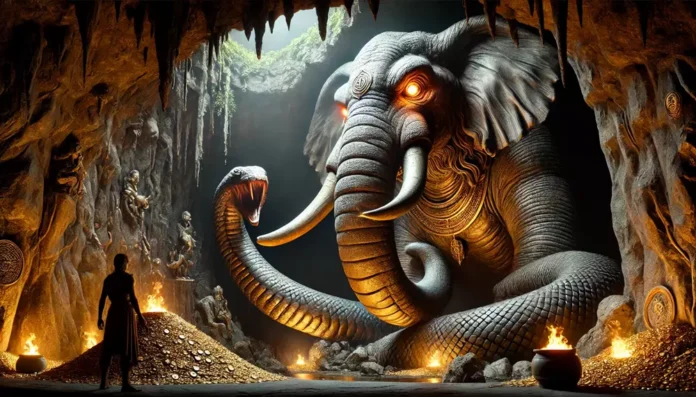
Grootslang - African folklore
South Africa

Grootslang

Grootslang is a primordial serpent-elephant hybrid from South African legend, guarding caves of diamonds and gold.

  • Skills
Physical StrengthStone Skin
  • Weaknesses
BeheadingElement Sensitivities
Asturian
Dragon-Like Being
Cuelebre - Asturian Mythology
Asturian

Cuelebre

Cuelebre, a dragon-like serpent from Asturian folklore, guards treasures in caves.
  • Skills
FlightPhysical Strength
  • Weaknesses
Physical LimitsPiercing Kill
Paraguay
Treasure Guardian
Teju jagua - Guarani mythology
Paraguay

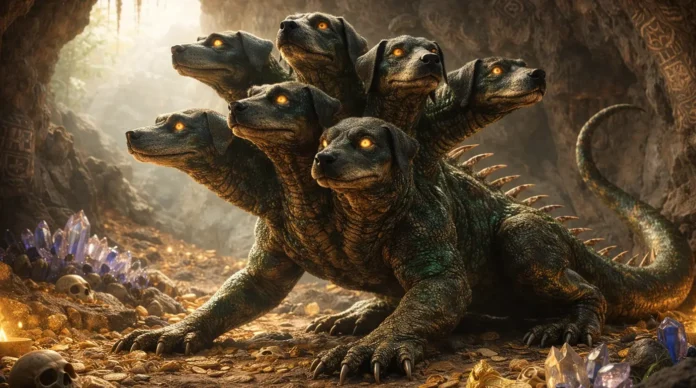
Teju Jagua

A Paraguayan serpent with seven dog-like heads, guarding treasure and emitting poisonous breath.

  • Skills
Poisonous BreathToxin Generation
  • Weaknesses
Fire VulnerableLight

Treasure Guardian – Overview

The Treasure Guardian is a mythological beast type characterized by its role as a protector of valuable objects or sacred sites. These creatures often possess formidable abilities, both physical and supernatural, that enable them to safeguard riches. They are found in numerous cultural mythologies, serving as custodians of wealth and hidden knowledge. The concept of guarding treasure is central to their identity, and their presence is often associated with tests of character or worthiness for those who seek the treasures they protect. Treasure Guardians are often located at the boundaries of the ordinary and the extraordinary, where they embody a liminal status.

Defining Characteristics

Physical Form and Morphology

Treasure Guardians exhibit a wide range of physical forms, often reflecting hybrid characteristics that combine multiple species. Common traits include robust, intimidating bodies, often with reptilian or mammalian features. Wings, horns, and scales are frequently depicted, enhancing their formidable appearance. These physical attributes symbolize their protective function, designed to deter would-be treasure seekers through sheer presence. The visual form of Treasure Guardians often emphasizes their role as both physical and symbolic barriers to hidden wealth. While variation exists, the recurring theme is one of strength and vigilance.

Ontological Nature

In mythological terms, Treasure Guardians are often understood as supernatural entities. They may embody spiritual aspects that transcend the mundane, occupying a space between the natural and the metaphysical. Their existence is frequently tied to cosmic or divine orders, serving as instruments of moral or spiritual tests. This ontological status imbues them with an authority that surpasses mere physical might, making them guardians not only of material treasures but also of sacred or forbidden knowledge. Their presence reflects a cosmological balance, often enforcing moral or ethical codes within the mythological narratives they inhabit.

Mythological Role and Function

Place in Mythological Systems

Treasure Guardians function within broader mythological systems as both protectors and testers. They often serve as intermediaries between gods and humans, or between the sacred and the profane. In many traditions, they act as gatekeepers, challenging characters to prove their worthiness through wit, strength, or virtue. This role is integral to their identity, as Treasure Guardians are not merely obstacles but participants in a larger cosmological or moral drama. Their interactions with gods, humans, and other mythological beings reflect these systemic roles, often reinforcing the values or hierarchies of the cultures from which they originate.

Perception and Meaning

Culturally, Treasure Guardians are perceived as both protectors and threats, representing the dual nature of desire and danger. They are often seen as embodiments of the hidden or the forbidden, symbolizing the risks inherent in seeking wealth or knowledge. Their presence in myth often carries moral implications, where the encounter with a Treasure Guardian tests a character’s ethics or intentions. These creatures serve as metaphors for the trials and tribulations associated with the pursuit of forbidden desires. Thus, they are interpreted as more than mere guardians, becoming symbols of the challenges and consequences of human ambition.

Distinction from Related Beast Types

Conceptual Boundaries

Treasure Guardians differ from related entities such as elemental beings or spirits, which may not have the explicit role of safeguarding treasures. While elemental beings embody natural forces, Treasure Guardians are specifically tied to the protection of material or sacred wealth. They are distinct from undead entities or humanoid monsters in their singular focus and function. Unlike animal-based creatures, whose roles may be more varied or symbolic, Treasure Guardians are consistently linked to the theme of protection and trial. This specificity in function sets them apart within the mythological taxonomies.

Common Sources of Confusion

Confusion often arises when Treasure Guardians are conflated with other mythological figures that possess protective traits. For instance, dragons may be seen as generic guardians without emphasis on treasure. Scholars distinguish Treasure Guardians by their specific association with wealth and their role in moral narratives. Misclassification can occur when superficial traits are prioritized over functional roles. Comparative mythology often clarifies these distinctions by focusing on the unique characteristics that define Treasure Guardians, highlighting their cultural and symbolic specificity.

Canonical Beasts Associated with This Beast Type

Dragon

Dragons are iconic Treasure Guardians in various cultures, notably in European and Asian mythologies. Their formidable presence and association with hoards make them quintessential examples. Known for guarding gold or sacred sites, dragons embody the treasure-protective theme.

Griffin

The griffin, combining lion and eagle traits, is another classic Treasure Guardian. Originating from ancient Middle Eastern and Greek myths, griffins guard treasures and sacred relics. Their hybrid form reinforces their role as protectors of wealth and divine objects.

Naga

In Hindu and Buddhist traditions, nagas are serpent-like beings that guard both earthly and spiritual treasures. They are linked to water and fertility, protecting hidden riches and sacred places. Their role as guardians reflects their spiritual significance and power.

Historical Distribution and Cultural Context

The concept of Treasure Guardians is widespread, appearing in ancient civilizations such as Mesopotamia, Greece, and India. During the Middle Ages, European folklore expanded their presence, merging with local beliefs. In Asia, these creatures are integral to both religious and folk traditions. The idea of guardianship over treasures or sacred sites is a common theme across various historical periods and cultural environments. This persistence highlights their symbolic importance and the universal human concerns they address regarding the protection of valuable resources and knowledge.

Scholarly Interpretation and Uncertainty

Variation in Definitions

Scholars note that the definition of Treasure Guardians can vary, influenced by cultural and historical contexts. Some interpretations emphasize their protective role, while others focus on their moral or spiritual significance. Academic frameworks often reflect these differences, highlighting the complexity of defining such mythological entities. The variability in their depiction across cultures underscores the diverse symbolic functions they fulfill. This variation requires careful analysis to understand the nuances of their mythological roles within different traditions.

Limits of Available Evidence

Despite their widespread presence, evidence on Treasure Guardians can be fragmented or ambiguous. Historical records may lack detailed descriptions, leading to gaps in understanding their full mythological scope. Scholars are cautious in reconstructing these entities, relying on available texts and artifacts. Interpretations often reflect the limitations of sources, acknowledging areas where certainty is elusive. This cautious approach helps separate established knowledge from speculative reconstructions, maintaining the integrity of mythological scholarship.

Mythological Role Across Cultures

Treasure Guardians recur across mythological traditions due to shared human concerns over wealth, ethics, and protection. They serve as metaphors for the balance between desire and discipline, guarding not just treasures but moral boundaries. Their role addresses universal themes of testing and validation, reflecting cultural values and fears. By examining their presence, scholars can interpret broader mythological systems and cultural narratives. This comparative analysis reveals the commonalities and differences in how societies conceptualize protection and worthiness.