back to top

Volcanic Entity

Relevant Beasts

Greece
Primordial Giant
Typhon - Greek Mythology
Greece

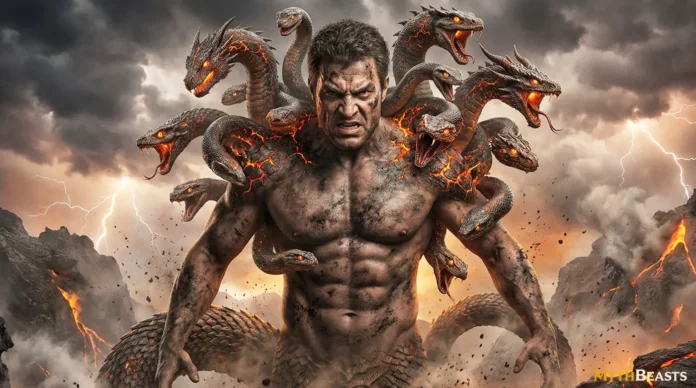
Typhon

Typhon is a formidable figure in Greek mythology, often depicted as the most fearsome of all creatures. Known as...
  • Skills
Fire BreathingPhysical Strength
  • Weaknesses
Divine Smite
Chile
Volcanic Entity
Cherufe
Chile

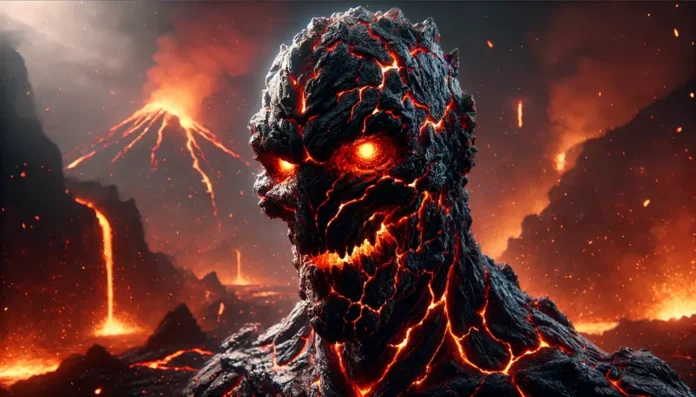
Cherufe

A volcanic creature from Chilean lore that feeds on humans and causes eruptions.

  • Skills
Fire ImmunityLava Manipulation
  • Weaknesses
Cold SensitiveWater Harm

Volcanic Entity - an Overview

Volcanic entities are mythological beings associated with volcanic activity, embodying aspects of nature's explosive and transformative power. They encompass a range of forms, from spirits residing within volcanoes to deities governing them, reflecting diverse cultural interpretations of volcanic phenomena.

Defining Characteristics

Physical Form and Morphology

Volcanic entities often possess forms that symbolize their association with fire and earth. They may appear as colossal humanoids with lava-like skin or as serpentine creatures with fiery scales, emphasizing their connection to volatile natural forces.

Ontological Nature

These beings are predominantly perceived as supernatural or spiritual entities, bridging the natural world and the divine. They exemplify an intersection where terrestrial and celestial realms meet, often depicted as protectors or embodiments of specific volcanic sites.

Mythological Role and Function

Place in Mythological Systems

Volcanic entities typically hold pivotal roles within cosmological narratives, embodying both creation and destruction. They are seen as arbiters of change, reflecting the transformative nature of volcanic eruptions and their impact on landscapes and human societies.

Perception and Meaning

Cultures may view volcanic entities as protectors or harbingers of doom. Their eruptions symbolize both fertility and destruction, resulting in their dual role as creators of new landforms and destroyers of existing ones, serving as powerful cultural symbols.

Distinction from Related Beast Types

Classification Boundaries

Volcanic entities are distinct from elemental spirits by their specific association with volcanic activity. Unlike general fire or earth spirits, they embody the unique dynamism of volcanic forces, often linked to specific geological features rather than abstract elements.

Common Sources of Confusion

Confusion arises when volcanic entities are conflated with other fire-related beings. Scholars distinguish them by emphasizing their unique relationship with volcanic phenomena, rather than broader elemental attributes, focusing on their geographic and geological specificity.

Canonical Beasts Associated with This Beast Type

Pele

Pele is a Hawaiian deity associated with volcanic activity, particularly the Kilauea volcano. Her mythological role as the goddess of fire and volcanoes exemplifies the embodiment of volcanic energy and its cultural significance in Hawaiian traditions.

Hephaestus

Hephaestus, the Greek god of fire and metalworking, is often linked to volcanic regions. His association with volcanic forges highlights the cultural interpretation of volcanic activity as a source of both creation and destruction, illustrating a transformative power.

Fuji no Yama-no-Kami

The Yama-no-Kami of Mount Fuji is a Japanese spirit linked to the mountain's volcanic nature. This deity's connection to the volcano underscores its spiritual significance and the reverence given to volcanic forces within Japanese cultural contexts.

Historical Distribution and Cultural Context

Volcanic entities appear globally, from Pacific islands to the Mediterranean, reflecting humanity's interaction with volcanic landscapes. These entities emerge in mythologies where volcanic activity influences local geography, highlighting the cultural adaptation to and reverence for such powerful phenomena.

Scholarly Interpretation and Uncertainty

Variation in Definitions

Definitions of volcanic entities vary, influenced by cultural perceptions of volcanoes. While some traditions view them as deities, others perceive them as spirits or guardians, leading to diverse interpretations within academic fields, reflecting cultural contexts and geological realities.

Limits of Available Evidence

Limited historical records and varying oral traditions contribute to uncertainty in defining volcanic entities. Few written sources capture their full mythological context, necessitating reliance on interdisciplinary analysis and interpretation, acknowledging the inherent gaps in available evidence.

Taxonomic Relevance

Volcanic entities serve as a crucial taxonomic category by exemplifying unique interactions between human culture and geology. Their classification aids in organizing mythological entities based on environmental phenomena, offering insights into cultural responses to powerful natural forces.