
back to top

Water Dwelling Creature

Water-Dwelling Creature encompasses mythical beings inhabiting aquatic realms, defined by unique traits and symbolic roles in folklore.

Relevant Beasts
Europe
Water Dwelling Creature
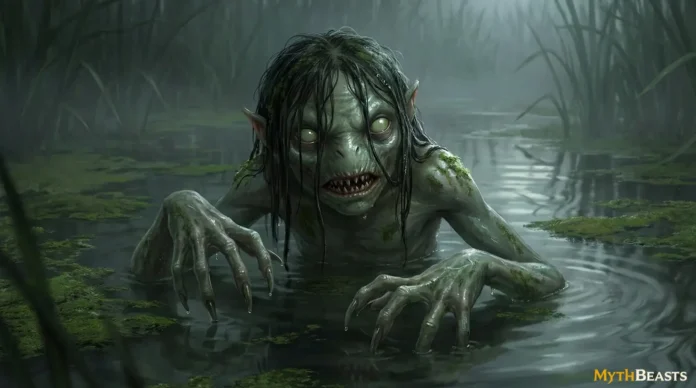
Grindylow - water spirit from 18th-century English folklore
United Kingdom

Grindylow

Grindylow, a sinister water spirit from 18th-century English folklore, haunted marshes and ponds, snatching children who strayed too close...
  • Skills
CamouflageFog Generation
  • Weaknesses
BeheadingFire Vulnerable
Asia
Aquatic Hybrid
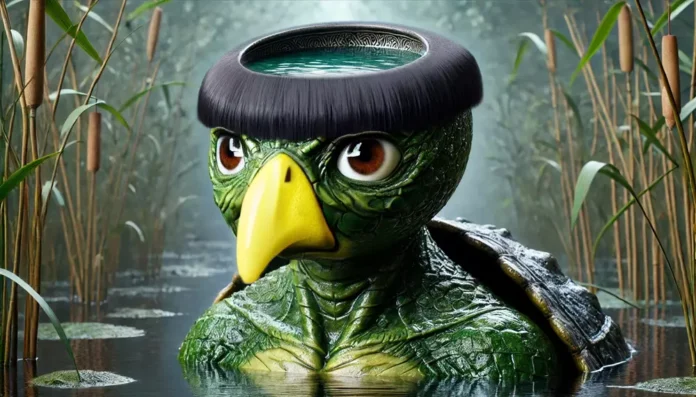
Kappa - Japanese folklore
Japan

Kappa

a Japanese river imp known for its mischief and deadly tricks. Recognizable by its turtle-like shell, webbed limbs, and...
  • Skills
StrengthTrickery
  • Weaknesses
Dry Land HarmHeatwave Harm

Water-Dwelling Creature – Overview

Water-Dwelling Creatures are a mythological beast type defined by their inherent connection to aquatic environments. They typically exhibit traits that align with their watery habitats, embody roles within mythologies that are tied to water. Across cultures, they often personify the mysterious and untamable nature of water, acting as intermediaries between the human world and the depths. Their presence in mythology underlines water’s dual nature as both life-giving and dangerous, embodying themes of transformation, transition, and the unknown depths of human consciousness.

Defining Characteristics

Physical Form and Morphology

Water-Dwelling Creatures often display a blend of human and aquatic features, including scales, fins, and webbed appendages. They may range from the sleek, fish-like forms of mermaids to more monstrous, serpentine figures. Their morphology reflects their ability to navigate both aquatic and terrestrial realms, emphasizing their liminality. This physical duality symbolizes their role as boundary markers between human civilization and the untamed natural world. Despite variations, they consistently exhibit traits that highlight their dominion over or affinity with aquatic environments.

Ontological Nature

These creatures are typically understood as liminal beings, existing between natural and supernatural spheres. They often embody the fluidity and transformative power associated with water. As such, they may be considered as aspects of the divine or as spirits that maintain the balance between elements. Their existence in mythology reflects beliefs about the interconnectedness of water with creation, destruction, and rebirth. They are neither wholly malevolent nor benevolent, representing the ambiguous nature of water itself.

Mythological Role and Function

Place in Mythological Systems

In many mythologies, Water-Dwelling Creatures play crucial roles as guardians of sacred water sites, such as rivers, lakes, and oceans. They may serve as conduits for divine will or act as protectors of hidden treasures and ancient secrets. Their interactions with gods and humans often highlight themes of respect for nature’s power. They enforce boundaries and the consequences of hubris. Such roles emphasize their integral position within mythological systems as embodiments of water’s divine aspect.

Perception and Meaning

Cultures often perceive Water-Dwelling Creatures as enigmatic, powerful forces that embody both creation and destruction. They are feared and revered, symbolizing the delicate balance between humanity and nature. In some cultures, they act as omens or bringers of prosperity. In others, they may punish those who disrespect the water. Their symbolism is rich with dualities, capturing the essential nature of water as life-sustaining yet potentially devastating. They represent the mystery and allure of the unknown depths.

Distinction from Related Beast Types

Conceptual Boundaries

Water-Dwelling Creatures differ from elemental beings, as they specifically embody water-related roles rather than representing a general elemental force. Unlike spirits, they possess distinct physical forms tied to aquatic environments. They are not to be confused with purely animal-based creatures, as their mythological roles extend beyond mere animalistic traits. Unlike humanoid monsters, they emphasize the symbolic and transformative properties of water, maintaining a distinct identity within mythological classifications.

Common Sources of Confusion

Confusion often arises from their shared traits with elemental water spirits and oceanic deities. Scholars distinguish Water-Dwelling Creatures by their defined roles and physical characteristics. Comparative mythology clarifies these distinctions by focusing on the creatures’ functions, symbolisms, and cultural origins. Misunderstandings are common when the creatures’ symbolic significance is overshadowed by superficial similarities to other aquatic entities. Scholars emphasize their unique embodiment of water’s dual nature.

Canonical Beasts Associated with This Beast Type

Mermaid

Originating in European folklore, mermaids are iconic Water-Dwelling Creatures known for their half-human, half-fish form. They symbolize the sea’s allure and danger. They are protectors of the oceanic realm.

Kappa

From Japanese mythology, Kappa are amphibious creatures inhabiting rivers and lakes. Known for their trickster nature, they symbolize water’s capricious and unpredictable qualities. They serve as cautionary figures in folklore.

Jengu

Originating from the Sawa ethnic group of Cameroon, Jengu are water spirits that inhabit rivers and seas. They are seen as benevolent beings, symbolizing healing and protection. They are revered in cultural rituals.

Historical Distribution and Cultural Context

Water-Dwelling Creatures appear across numerous cultures and historical periods. From ancient Greece’s sirens to Africa’s water spirits, they adapt to various cultural contexts. In each, they reflect local beliefs about water’s significance. These creatures often align with societies where water plays a central role in daily life and survival. Their mythologies often develop in regions where geographic features like rivers, seas, and lakes are prominent. This distribution highlights water’s universal and foundational role in human experience.

Scholarly Interpretation and Uncertainty

Variation in Definitions

Different cultures and academic frameworks interpret Water-Dwelling Creatures variably. Some view them as protective deities, while others see them as cautionary tales. Definitions shift with cultural priorities and historical contexts. Scholars note that the creatures’ symbolic roles often reflect societal attitudes towards nature and water. This variation necessitates careful analysis of their mythological context. Understanding these creatures requires acknowledging their diverse interpretations.

Limits of Available Evidence

The mythological and historical record of Water-Dwelling Creatures often contains gaps and ambiguities. Many traditions have oral roots, complicating documentation. While some creatures are well-documented, others remain shrouded in mystery. Scholars rely on available texts, artifacts, and oral histories. However, the absence of consistent evidence requires cautious interpretation. This limitation encourages ongoing research and dialogue among scholars. Recognition of these limits is essential for an accurate understanding.

Mythological Role Across Cultures

The recurring presence of Water-Dwelling Creatures in mythology addresses human concerns about water’s essential yet unpredictable nature. They embody themes of transformation, boundary, and duality. These creatures personify cultural values, fears, and aspirations related to water. They highlight humanity’s relationship with natural forces. By recognizing the universal role of these creatures, scholars gain insights into shared mythological patterns and the symbolic importance of water in human societies.