back to top

Weather Entity

Weather Entity creatures embody climate forces, controlling storms, winds, and rain in mythological narratives across cultures.

Relevant Beasts

Africa
Sea Monster
Inkanyamba - Zulu Mythology
Zulu

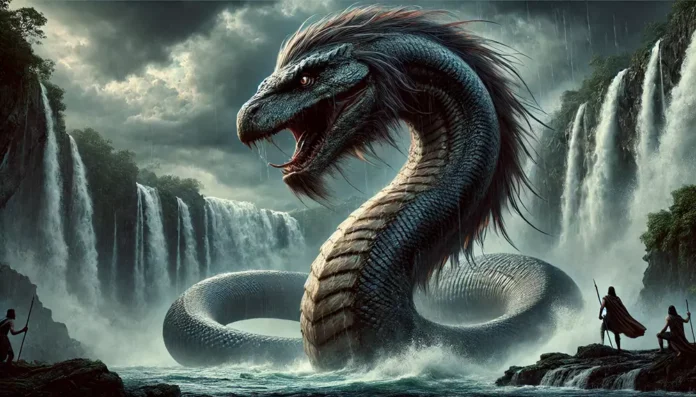
Inkanyamba

Inkanyamba is a massive water serpent from Zulu folklore, known to cause storms and whirlwinds.

  • Skills
Control WeatherStorm Control
  • Weaknesses
Dry Land HarmWeather

Weather Entity – Overview

Weather Entities represent a mythological beast type characterized by their control or embodiment of meteorological phenomena. They often serve as intermediaries between the natural world and the divine. Their presence in folklore underscores humanity’s historical fascination with, and interpretation of, the weather’s capricious and powerful nature. These entities are not uniform across cultures but share common traits such as their association with storms, wind, rain, and other natural elements. Their role often involves influencing or regulating atmospheric conditions, reflecting a society’s attempt to explain and mitigate the unpredictability of weather.

Defining Characteristics

Physical Form and Morphology

Weather Entities typically possess forms that symbolize their connection to atmospheric phenomena. They may appear as hybrid creatures, combining humanoid features with animalistic or elemental characteristics. Commonly, they are depicted with wings, indicative of wind and mobility. Their physical forms may also incorporate elemental aspects like cloud, mist, or lightning, visually signifying their control over respective meteorological forces. While variations exist, these morphological traits emphasize their role as embodiments of weather-related power.

Ontological Nature

In mythological contexts, Weather Entities are often seen as supernatural or cosmic beings. They exist within a liminal space, bridging the human and divine realms. Their ontological nature is frequently linked to the control of natural order, portraying them as essential components of the universe’s balance. These entities may be perceived as guardians or chaos agents, depending on cultural narratives. Their existence underscores the belief in forces beyond human control that can be appeased or respected to maintain harmony.

Mythological Role and Function

Place in Mythological Systems

Weather Entities occupy significant roles within mythological frameworks, often interacting with deities and humans alike. They are frequently seen as emissaries of gods, executing divine will through control of weather. In some traditions, they serve as protectors of natural resources, ensuring balance and fertility. Conversely, they may act as adversarial forces, unleashing storms or droughts as punishments or warnings. Such dual roles highlight their complex integration into cosmological and moral systems, reflecting human attempts to rationalize environmental phenomena.

Perception and Meaning

Culturally, Weather Entities are perceived through diverse lenses, ranging from benevolent protectors to ominous omens. In many traditions, they symbolize the unpredictability and power of nature, serving as reminders of humanity’s vulnerability. They may also embody abstract concepts like change, transition, or the wrath of the gods. In some cases, they are seen as mediators, bridging the gap between human actions and natural consequences. Their symbolic interpretations reveal underlying cultural attitudes towards nature’s forces and their moral implications.

Distinction from Related Beast Types

Conceptual Boundaries

Weather Entities are distinct from other mythological categories such as elemental beings or spirits. Unlike elemental entities, which often represent singular natural forces, Weather Entities encompass complex meteorological phenomena. They differ from spirits in their broader cosmic roles and direct interaction with weather. Additionally, unlike humanoid monsters or animal-based creatures, Weather Entities are defined by their intrinsic connection to atmospheric conditions, marking them as unique within mythological taxonomies.

Common Sources of Confusion

Confusion often arises from the overlapping characteristics of Weather Entities with other mythological types. Their elemental aspects may lead to misclassification as elemental beings, while their supernatural features might align them with spirits. Scholars distinguish Weather Entities through their meteorological focus and narrative roles. Their dynamic relationship with both human and divine elements provides a framework for differentiating them from other entities, emphasizing their integral association with weather phenomena.

Canonical Beasts Associated with This Beast Type

Thunderbirds

Originating from Native American mythology, Thunderbirds are powerful creatures associated with storms and rain. They are considered Weather Entities due to their control of thunder and lightning, symbolizing the potency of natural forces.

Fujin

In Japanese mythology, Fujin is the wind god depicted as a Weather Entity. His control over wind patterns and storms positions him as a crucial figure in regulating Japan’s meteorological conditions, representing the divine manipulation of weather.

Vayu

Vayu, from Hindu mythology, embodies the essence of wind. As an atmospheric deity, his role as a Weather Entity is reflected in his ability to influence weather patterns, acting as an intermediary between the divine and the natural world.

Historical Distribution and Cultural Context

Weather Entities appear in diverse cultures and historical contexts globally. Their presence is prominent in societies where agriculture and climate heavily influenced daily life. In ancient civilizations like those in Mesopotamia, Egypt, and India, they often held significant religious and practical importance. Over time, their narratives evolved, reflecting shifts in environmental understanding and spiritual beliefs. These entities’ enduring presence underscores a universal human desire to comprehend and influence the unpredictable forces of weather.

Scholarly Interpretation and Uncertainty

Variation in Definitions

Interpretations of Weather Entities vary across cultures and historical periods. Scholars debate their precise definitions, influenced by cultural context and mythological frameworks. Some view them strictly as divine agents, while others emphasize their symbolic roles. Differences arise from varying emphases on their cosmic or natural attributes, complicating a singular definition. These variations reflect the multifaceted nature of mythological interpretation, where entities serve overlapping roles and functions.

Limits of Available Evidence

Evidence concerning Weather Entities is often incomplete or ambiguous, complicating scholarly understanding. Documentation varies in richness and detail, with some traditions lacking extensive records. This scarcity necessitates cautious interpretation, avoiding definitive claims without supporting evidence. Scholars rely on comparative mythology to bridge gaps, recognizing the limitations of reconstructed beliefs. These restrictions highlight the challenges of fully understanding mythological constructs, emphasizing the need for careful scholarly examination.

Mythological Role Across Cultures

Weather Entities recur across cultures due to their alignment with shared human experiences and environmental challenges. They address universal concerns like weather unpredictability, agricultural dependency, and divine intervention. By embodying these forces, they facilitate cultural narratives that explain and manage natural phenomena. Their prevalence underscores the human need for mythological frameworks to interpret environmental realities, providing insight into cultural values and fears. Recognizing this type’s role aids comparative mythological analysis, highlighting universal themes amidst diverse traditions.