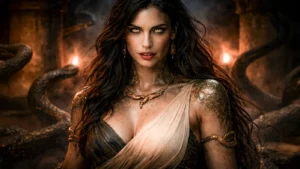
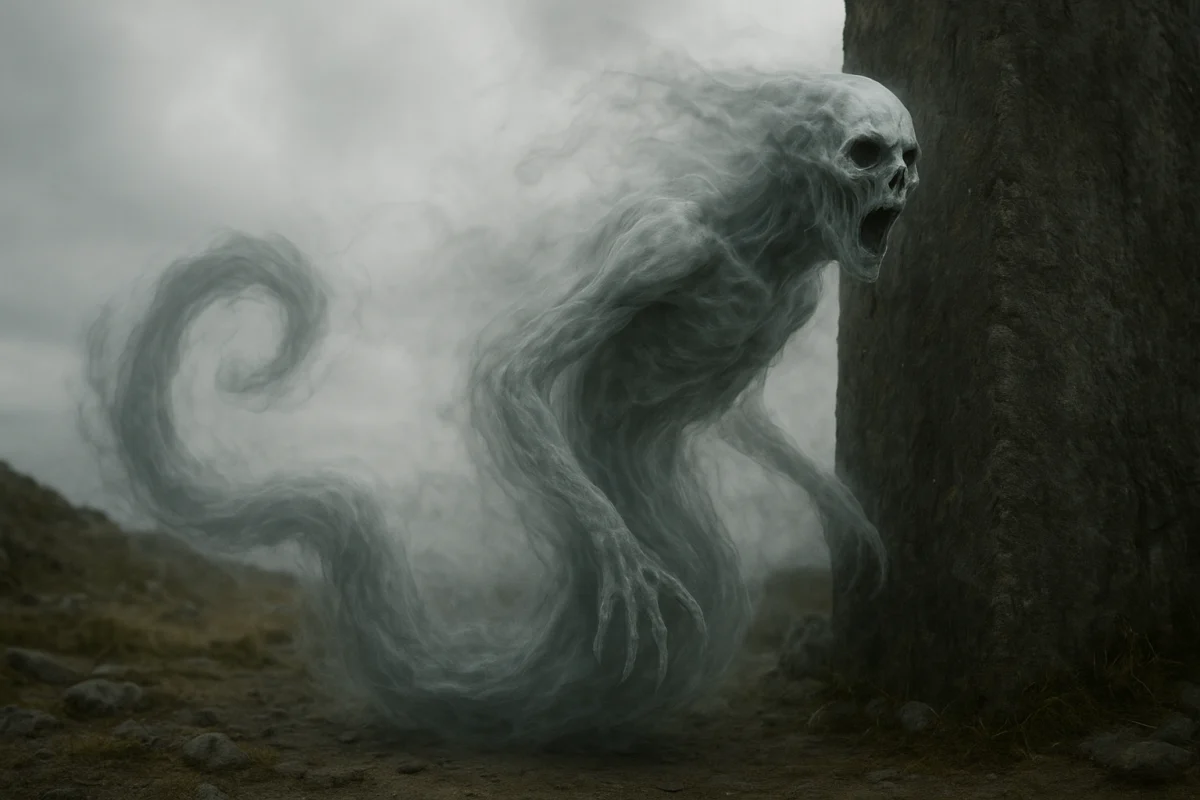
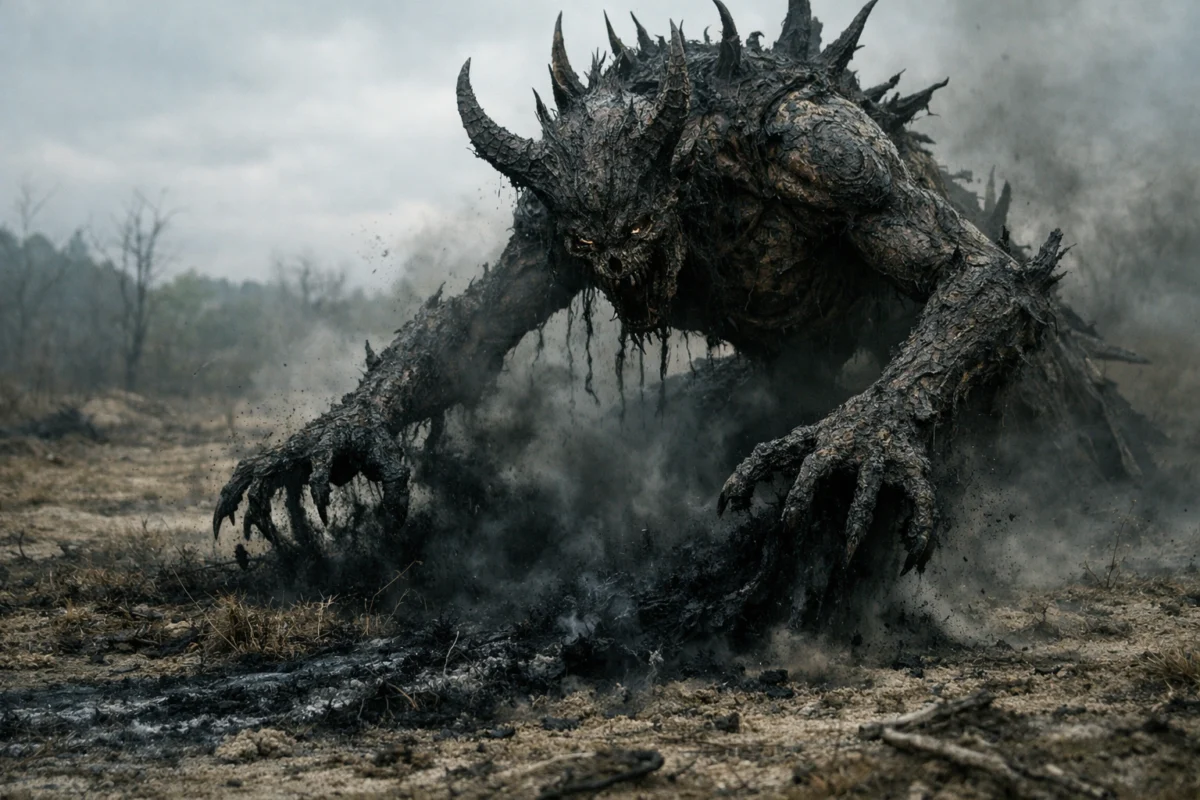
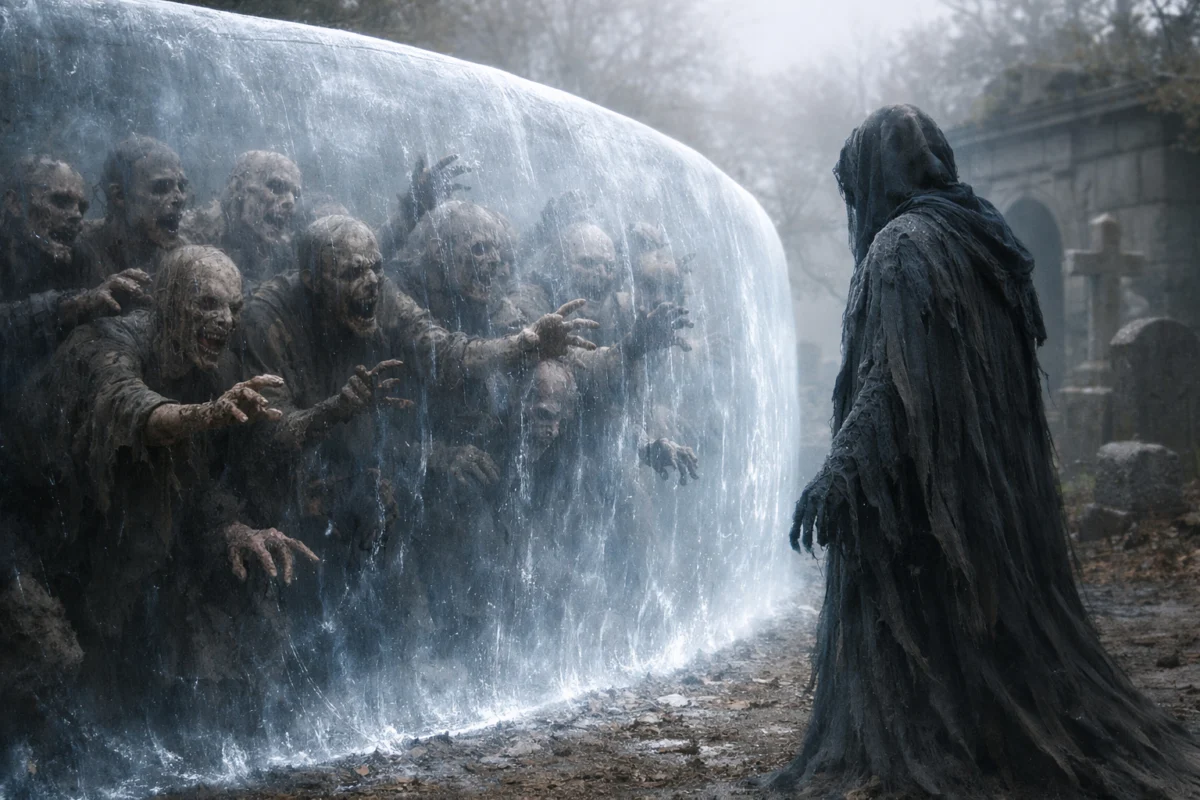
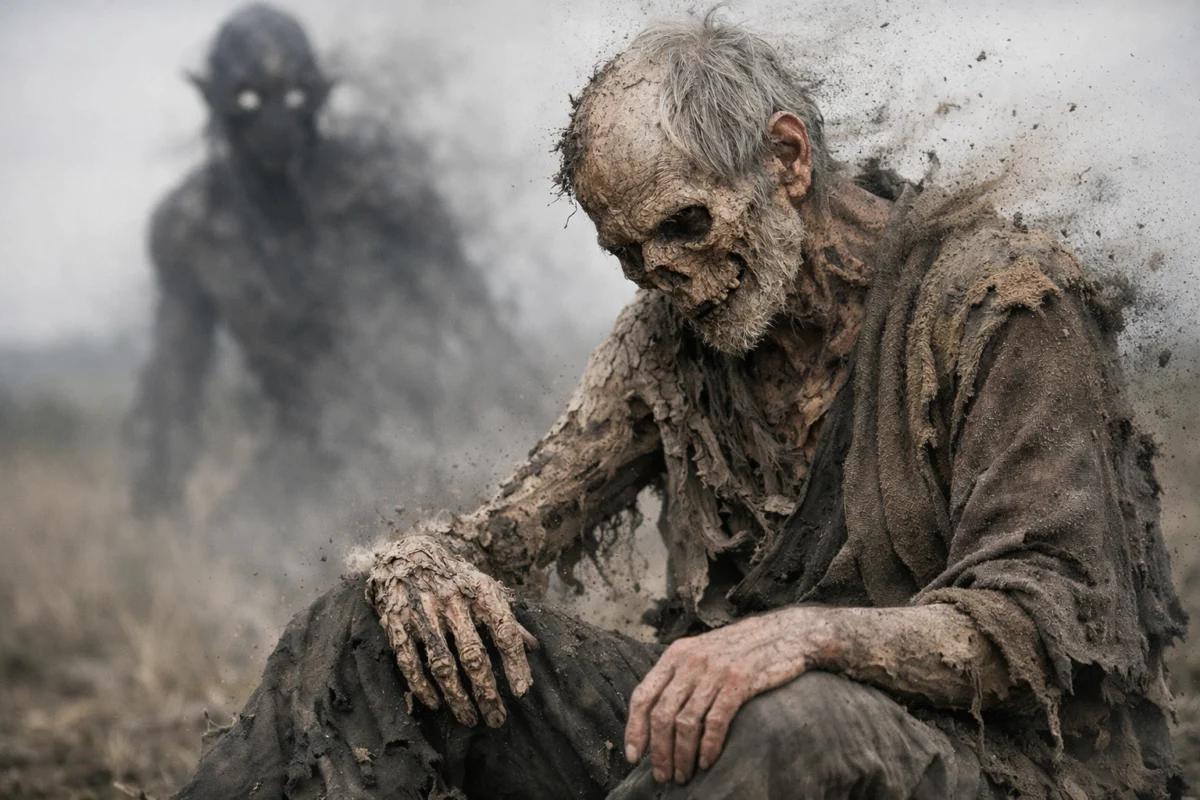
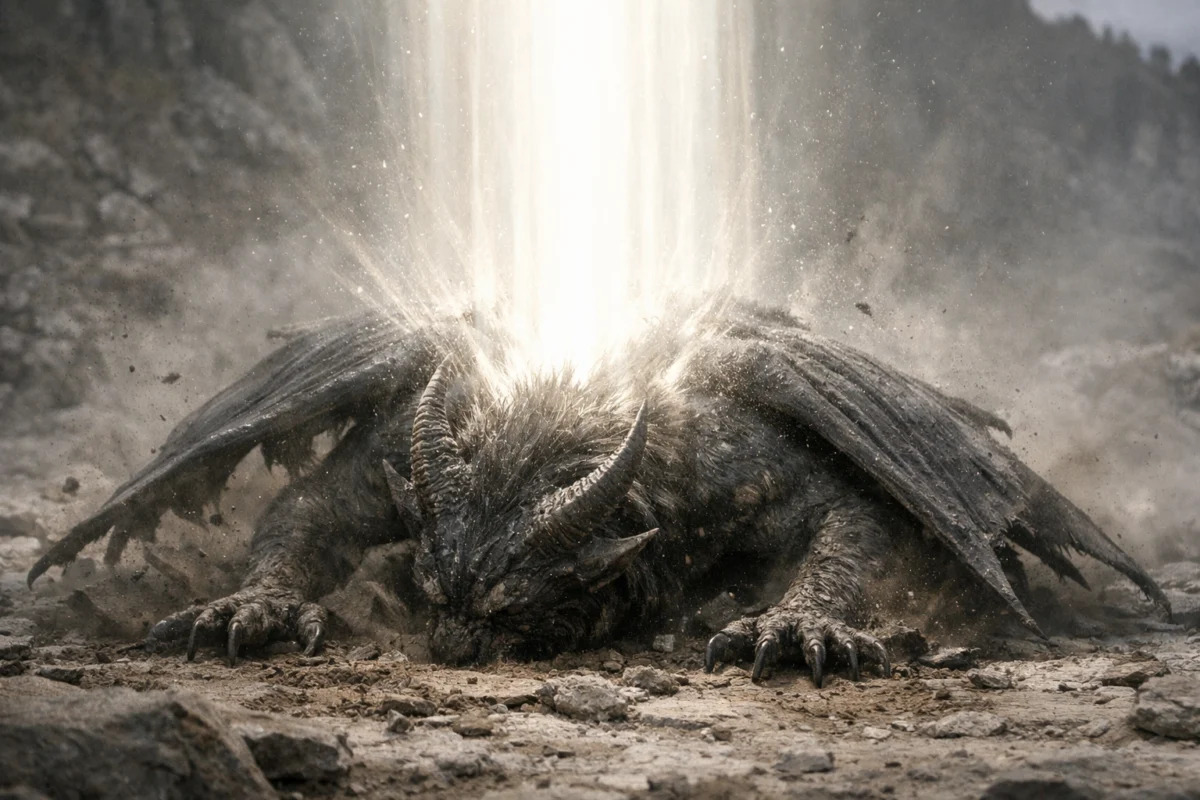
Morrigan is a prominent figure in Irish mythology, often depicted as a complex and multifaceted deity associated with war, fate, and sovereignty. Known as a goddess of battle and death, she is part of the Tuatha Dé Danann, a supernatural race in Irish lore.
The Morrigan is often seen as a singular entity, but she is also described as a trio of sisters, embodying different aspects of her nature. Her presence in mythology is both enigmatic and formidable, symbolizing the chaotic and transformative power of war.
She is frequently portrayed as a harbinger of doom and a prophetess of battle outcomes, appearing to warriors before combat. Her influence extends beyond the battlefield, encompassing themes of life, death, and rebirth.
The Morrigan’s stories are deeply embedded in the Celtic tradition, and her character serves as a reminder of the cyclical nature of life and the inevitability of change. Her role in mythology is not just as a war goddess but also as a figure who represents the sovereignty of the land and its people.
History/Origin
The origins of the Morrigan can be traced back to early Celtic mythology, where she is mentioned in ancient texts such as the “Lebor Gabála Érenn” (The Book of the Taking of Ireland) and the “Cath Maige Tuired” (The Battle of Mag Tuired). These texts describe her interactions with the Tuatha Dé Danann, a race of god-like beings who settled in Ireland.
The Morrigan’s roots are linked to the Proto-Celtic period, suggesting her worship dates back to a time when Celtic tribes roamed across Europe, long before their migration to the British Isles.
Throughout history, the Morrigan has been a symbol of the warrior ethos, embodying the fierce independence and strength of the Celtic people. Her stories have been passed down through oral traditions and later recorded by Christian monks, who preserved much of Ireland’s pre-Christian mythology.
Despite the Christianization of Ireland, the Morrigan’s presence persisted, often syncretized into later folklore and literary traditions. Her enduring legacy is a testament to her significance in the cultural and spiritual life of ancient Ireland.
Name Meaning
The name “Morrigan” is derived from the Old Irish term “Mór-Ríoghain,” which translates to “great queen” or “phantom queen.” This name reflects her dual nature as both a regal figure and a spectral presence.
The etymology of the name highlights her association with sovereignty and the otherworldly aspects of her character. In some interpretations, her name is linked to the word “mara,” meaning “terror” or “nightmare,” emphasizing her fearsome qualities.
The varied interpretations of her name underscore the complexity of her character in mythology. As a “great queen,” she is a powerful sovereign figure, while as a “phantom queen,” she embodies the mysterious and often frightening aspects of the supernatural.
These dual meanings capture the essence of the Morrigan as both a nurturer and a destroyer, a goddess who governs the fate of warriors and the destiny of nations.
Appearance
The Morrigan is often depicted in various forms, reflecting her multifaceted nature. She is commonly portrayed as a beautiful woman, sometimes with long flowing hair, embodying the allure and danger of the battlefield.
In other instances, she appears as a fearsome hag, representing the darker aspects of war and death. These contrasting images highlight her role as a shapeshifter, a common trait among deities in Celtic mythology.

One of her most iconic forms is that of a crow or raven, birds that are traditionally associated with death and the battlefield. In this guise, the Morrigan can be seen circling over warriors, foretelling their doom or victory.
The imagery of the crow links her to the cycle of life and death, as these birds are often seen as messengers between the mortal world and the otherworld. Her ability to change form underscores her connection to transformation and the fluid nature of life and fate.
Background Story
The Morrigan’s most famous stories are set during the epic battles of Irish mythology, particularly the conflicts involving the Tuatha Dé Danann. One such tale is her role in the Second Battle of Mag Tuired, where she aids the Tuatha Dé Danann against the Fomorians, a race of monstrous beings.
In this battle, the Morrigan uses her powers of prophecy and magic to influence the outcome, demonstrating her control over the forces of destiny and war.
Another significant story involves her interactions with the hero Cú Chulainn, one of Ireland’s greatest legendary warriors. The Morrigan appears to him in various forms, testing his strength and resolve.
Despite her attempts to sway him, Cú Chulainn remains steadfast, ultimately leading to a complex relationship between the two. These stories highlight the Morrigan’s role as both an adversary and a guide, challenging heroes to confront their fate and embrace their destiny.
Famous Folklore Stories
The Cattle Raid of Cooley
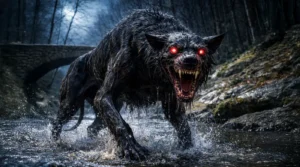
In the epic tale of the “Táin Bó Cúailnge,” Morrigan plays a pivotal role as a shape-shifting goddess. She attempts to thwart the hero Cú Chulainn by transforming into various creatures, including an eel, a wolf, and a heifer.

Each transformation is a strategic move to distract or harm him during battle. This story highlights Morrigan’s complex nature as both a protector and a challenger, showcasing her involvement in the fate of warriors and her influence over the outcomes of conflicts.
The Death of Cú Chulainn
In another significant legend, “The Death of Cú Chulainn,” Morrigan appears as a foreboding figure. Before the hero’s demise, she transforms into a crow and perches on his shoulder, symbolizing his impending death.
This story underscores Morrigan’s role as a harbinger of death and her connection to the battlefield. Her presence signifies the inevitability of fate and the transition from life to the afterlife, emphasizing her role in the cycle of life and death.
The Battle of Mag Tuired
In the mythological account of “The Battle of Mag Tuired,” Morrigan is depicted as a formidable figure who aids the Tuatha Dé Danann in their struggle against the Fomorians. She uses her powers to inspire fear and confusion among the enemy, ensuring victory for her people.
Her involvement in this battle illustrates her protective nature and her ability to influence the tides of war, reinforcing her status as a goddess of both war and sovereignty.
Cultural Impact
Morrigan’s influence extends beyond mythology into various aspects of modern culture. Her image as a powerful, enigmatic figure has inspired numerous works of literature, art, and music.
Writers and artists often depict her as a symbol of female empowerment and mystery, drawing on her rich mythological background.

In contemporary pagan and neo-pagan practices, Morrigan is revered as a goddess who embodies the duality of life and death. Her multifaceted nature makes her a popular deity for those seeking to understand and harness the power of transformation and change in their spiritual journeys.
Additionally, Morrigan’s presence in popular culture can be seen in fantasy literature and video games, where she often appears as a character embodying strength, strategy, and mysticism. This continued fascination with Morrigan highlights her enduring legacy and relevance in modern storytelling.
Similar Beasts
Banshee

The Banshee of Irish folklore manifests as a wailing spirit whose cries foretell death. Her role as a death omen parallels the Morrigan’s battlefield prophecies, connecting both figures to fate, mortality and the transition between life and death.
Valkyrie
Norse Valkyries choose the slain and guide fallen warriors to the afterlife. Their authority over battle outcomes mirrors the Morrigan’s influence on warfare and destiny, making them thematic counterparts across northern European mythologies.
Hecate
Hecate from Greek mythology rules over magic, crossroads and the boundary between worlds. Like the Morrigan, she embodies liminality, transformation and dark supernatural power, functioning as a guide through critical thresholds in life and death.
Badb
Badb, one of the Morrígna in Irish mythology, appears as a crow and brings battle frenzy, destruction and prophecy. Her role as a war omen aligns closely with the Morrigan’s embodiment of conflict and fate.
Nemain
Nemain represents the chaotic terror of battle, often sowing panic among warriors. Her battlefield influence complements the Morrigan’s ability to shape combat outcomes through psychological force, illusion and prophetic insight.
Scáthach
Scáthach is a legendary Scottish warrior woman and martial arts teacher. She shares Morrigan’s connection to battle and the training of heroes, highlighting the warrior aspect of both figures.
Religion/Ritual
In ancient Celtic religion, Morrigan was venerated as a goddess of war and sovereignty. Rituals dedicated to her often involved offerings and invocations to secure her favor in battles.
Her presence was believed to ensure victory and protection for warriors.
Modern pagan practices continue to honor Morrigan through rituals that emphasize transformation, strength, and the acceptance of life’s cycles. Devotees may engage in meditation, offerings, and ceremonies to connect with her energies and seek guidance in times of change.
Seasonal festivals, such as Samhain, are also significant times to honor Morrigan. These rituals often focus on themes of death and rebirth, reflecting her role as a goddess of the transition between life and the afterlife.
Scientific or Rational Explanations
From a psychological perspective, Morrigan can be seen as an embodiment of the human understanding of life and death. Her role in mythology may reflect ancient societies’ attempts to make sense of the chaos and unpredictability of war and mortality.
Anthropologists might interpret Morrigan’s stories as symbolic narratives that convey cultural values and societal norms. Her presence in myths could represent the importance of fate and destiny in Celtic belief systems, serving as cautionary tales or moral lessons.
In terms of historical context, Morrigan’s depiction as a powerful female figure may highlight the roles women played in ancient Celtic societies. Her multifaceted nature could symbolize the diverse responsibilities and influences women held, both in domestic and spiritual spheres.
Modern Cultural References
American Gods, TV series, created by Bryan Fuller and Michael Green, 2017.
Mórrígan-inspired figures appear within the show’s mythic framework, drawing on her shapeshifting and battlefield associations.
These interpretations echo her chaotic influence in ancient war lore.
IMDB
Hellblade: Senua’s Sacrifice, video game, developed by Ninja Theory, 2017.
The game references several Celtic deities and motifs.
Mórrígan’s themes of fate, death, and prophecy contribute to the atmosphere surrounding Senua’s psychological journey and myth-inspired hallucinations.
Official Site
The Wicked + The Divine, comic series, created by Kieron Gillen and Jamie McKelvie, 2014.
A deity echoing Mórrígan appears as part of a reincarnated pantheon, embodying themes of death, charisma, and destructive prophecy.
The character channels modernized aspects of her mythological persona.
Image Comics

The Morrigan, novel, Kim Curran, 2023.
This dark fantasy novel reimagines the Mórrígan as a fierce, complex power whose influence shapes a grim, violent world.
The story blends mythology with modern grit, exploring identity, rebellion, and divine wrath.
Grimdark Magazine
Conclusion
The Morrigan is a multifaceted figure in Celtic mythology, embodying themes of war, fate, and transformation. Her role as a goddess of battle and prophecy has made her a central figure in Irish folklore, where she is often depicted as both a fearsome and protective entity.
Her ability to shape-shift and influence the outcomes of battles highlights her power and complexity.
In modern culture, the Morrigan continues to captivate audiences through various media, from video games to literature. Her enduring presence in popular culture underscores her timeless appeal and the rich tapestry of myths that surround her.
As a symbol of strength and mystery, the Morrigan remains a compelling figure for both scholars and enthusiasts of mythology.
Further Reading
Cath Maige Tuired: The Second Battle of Mag Tuired, translated by Elizabeth A. Gray, 1982, CELT: Corpus of Electronic Texts
Primary saga text where the Morrigan appears as a battle goddess and prophet, influencing conflict, delivering victory speeches, and revealing her deep connection to sovereignty, war, and the fate of Ireland’s warriors.
https://celt.ucc.ie/published/T300010.html
Cath Maige Tuired: The Second Battle of Mag Tuired, translated by Elizabeth A. Gray, Sacred Texts Archive
Online English translation of the same key saga, making the Morrigan’s prophecies, river encounters, and role in the Tuatha Dé Danann’s struggle against the Fomorians easily accessible to readers studying her mythic functions.
https://sacred-texts.com/neu/cmt/cmteng.htm
The Morrígan: Phantom Queen of Celtic Mythology, J. Garcia, 2020, Chapman University Digital Commons
Short academic piece introducing the Morrigan as a “Phantom Queen,” outlining her associations with death, war, fate, and ravens, and summarizing major appearances across Irish mythological sources and later interpretations.
https://digitalcommons.chapman.edu/cusrd_abstracts/401/
From Goddess to Saint: Female Deities in Celtic Folklore, K. Plath, 2024, Ohio State University Knowledge Bank
Scholarly study discussing how figures like the Morrigan evolve across time, examining her triple-goddess aspects, sovereignty functions, and connections with other Celtic female deities within changing religious and cultural landscapes.
https://kb.osu.edu/bitstreams/bd5aa473-02c9-414b-940c-28c253d348e5/download
The Mythology of All Races, Volume 3: Celtic and Slavic, edited by Louis Herbert Gray, 1918, Public Domain PDF
Classic early twentieth-century survey including discussion of the Morrigan as an Irish war-goddess, with references to her giant form, river scenes, and relationship to other deities in the Celtic pantheon.
https://upload.wikimedia.org/wikipedia/commons/9/98/The_Mythology_of_all_races_.._%28IA_mythologyofallra03gray%29.pdf