
back to top

Akkadian Empire

Akkadian Empire reflects a complex pantheon and cosmology shaping its mythological narratives and worldviews.

Relevant Beasts
Akkadian Empire
Hybrid Creature
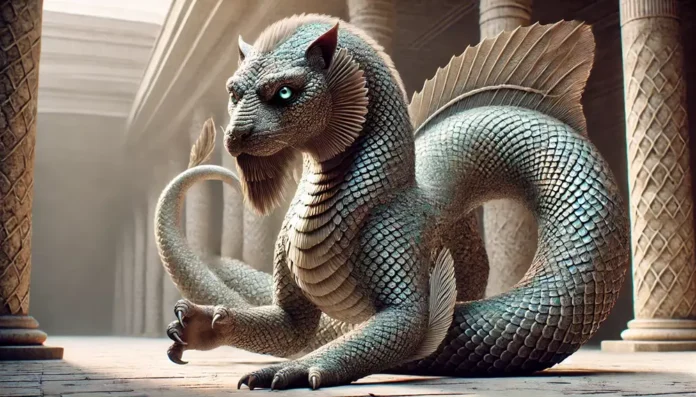
Mushussu
Akkadian Empire

Mushussu

The Mushussu, a guardian beast from ancient Mesopotamian mythology, is known for its lion-dragon-serpent form and its role as...

  • Skills
Element ControlFire Breathing
  • Weaknesses
Divine BarrierMagic Boundaries
Akkadian Empire
Serpentine Beast
Akkadian Empire

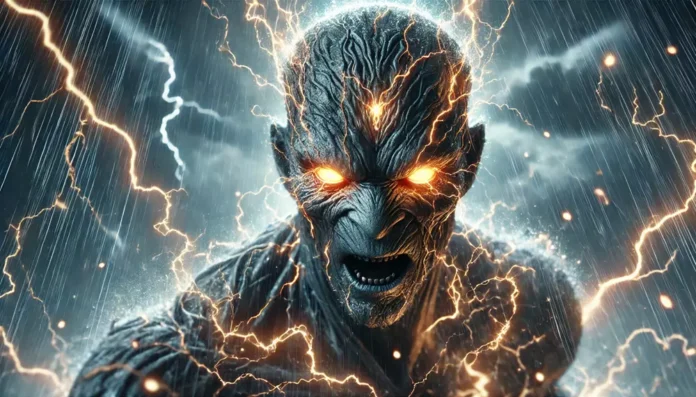
Tiamat

A primordial sea goddess in Mesopotamian mythology, Tiamat embodies chaos and creation. She is often depicted as a massive...
  • Skills
Element ControlShape Shifting
  • Weaknesses
BeheadingPhysical Limits
Akkadian Empire
Storm Entity
Akkadian Empire

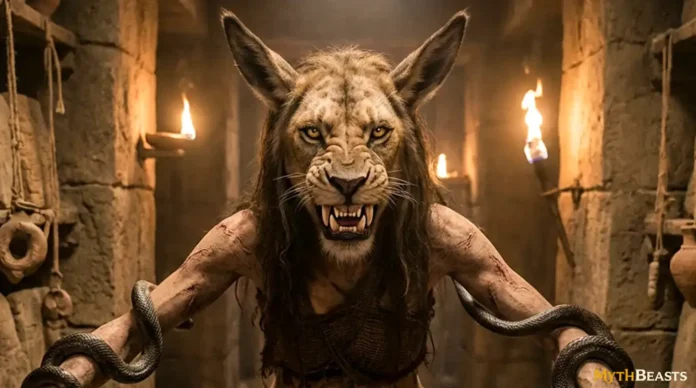
Umu Dabrutu

The Umu Dabrutu are storm entities from Mesopotamian mythology, known for their ability to control the weather and unleash...
  • Skills
FlightNature Manipulation
  • Weaknesses
Fire VulnerableHoly Symbol
Akkadian Empire
Demonic Form
Lamashtu - Mesopotamian Mythology
Akkadian Empire

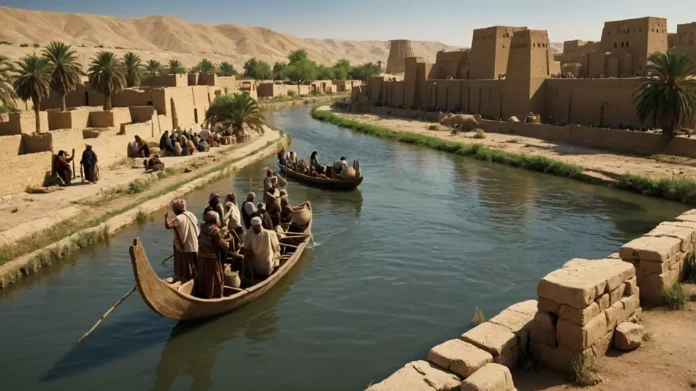
Lamashtu

Lamashtu is a terrifying demoness from Mesopotamian mythology, known for preying on mothers and infants. She has a lioness-like...
  • Skills
Disease ManipulationShape Shifting
  • Weaknesses
Amulet BlockHoly Symbol

Akkadian Empire – an Overview

The Akkadian Empire is recognized as a foundational cultural and mythological source in Mesopotamian history. Established around 2334 BCE, it marked significant cultural consolidation. Its territory lay between the Tigris and Euphrates rivers, covering modern-day Iraq. This empire’s influence extended over much of Mesopotamia, including parts of Syria and Turkey. It set precedents for subsequent empires in administration and cultural exchange, influencing language, art, and myth. However, detailed depictions of gods and mythological creatures are not universally attested, requiring careful scholarly reconstruction.

Historical and Environmental Context

Time Frame and Location

The Akkadian Empire existed from approximately 2334 to 2154 BCE. Its strategic location facilitated control over trade routes, enhancing cultural exchange. Surviving records highlight its influence across Mesopotamia, but precise geographic boundaries remain debated. Despite the absence of complete records, the empire’s dominance in the region is undisputed.

Contact and Cultural Exchange

The Akkadian Empire engaged in significant cultural exchange due to its position as a trade hub. This interaction spread Akkadian language and administrative practices throughout the region. It absorbed and transmitted cultural elements between Sumerian, Elamite, and other neighboring cultures. Documentation of specific exchanges is limited, but the impact on language and governance is clear.

Mythological Framework

Worldview and Cosmological Concepts

Akkadian cosmology incorporated a structured view of the universe, with deities governing natural and cosmic order. The worldview emphasized the hierarchical nature of divine beings, reflecting the empire’s social structure. It is challenging to reconstruct fully, given gaps in textual evidence from the period.

Spiritual or Supernatural Categories

The Akkadian belief system recognized a variety of supernatural entities, including gods, spirits, and demons. Notably, it assimilated Sumerian deities like Enlil and Inanna while promoting Akkadian deities such as Anu. This blend reflects a dynamic synthesis of cultural traditions, though a complete pantheon remains speculative.

Folklore and Narrative Tradition

Recurring Mythological Themes

Akkadian myths emphasized themes of divine authority, human duty, and cosmic order. These narratives often illustrated the power struggles among deities, mirroring geopolitical realities. The Epic of Gilgamesh, though Sumerian in origin, was preserved in Akkadian, signifying its cultural importance.

Transmission and Preservation

Mythological traditions in the Akkadian Empire were preserved through cuneiform tablets. These records, found in libraries such as that of Ashurbanipal, played a critical role in maintaining cultural memory. However, many myths are incomplete or fragmented due to the damage over millennia.

Mythological Beasts and Non-Human Entities

Lamassu

The Lamassu, a protective deity depicted as a hybrid creature, was integral to Akkadian mythology. Its composite form symbolized strength and protection. Misclassification without this context could overlook its significance in Mesopotamian ceremonial and architectural applications.

Symbolic Roles of Creatures and Forces

Mythological creatures like the Lamassu served as symbols of divine protection and sovereignty. They were often placed at city gates or temples, indicating their role in safeguarding spaces. This reflects their broader social function in reinforcing imperial authority and divine order.

Related Cultural Origins and Myth Sources

Relations between Akkadian and Sumerian traditions are evident in shared myths and deities. Akkadian myths often adapted Sumerian narratives, illustrating a fluid cultural interchange. Differences in emphasis and interpretation, however, showcase distinct cultural identities.

Evidence Limits and Scholarly Uncertainty

Gaps in Akkadian mythological records limit comprehensive understanding. Archaeological findings are often fragmented, complicating full reconstructions. Scholarly disagreement exists over interpretations of texts and their cultural significance. No verified sources describe every aspect of Akkadian cosmology or mythology.