China – an Overview
China, as a cultural and mythological source, is deeply intertwined with its historical development and geographic positioning. It encompasses a vast temporal range, from early dynastic periods to contemporary times. The region is notable for its enduring cultural and religious traditions, which have evolved over millennia. Its mythological framework is richly layered with influences from indigenous beliefs, Taoism, Buddhism, and Confucianism, contributing to its unique identity.
Historical and Environmental Context
Time Frame and Location
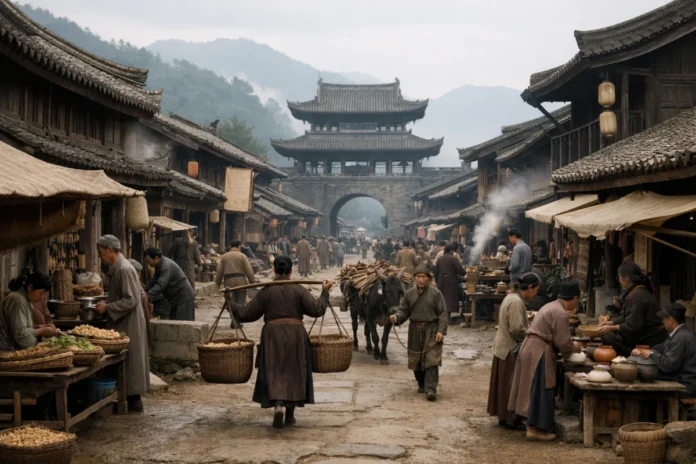
China’s mythological history spans several millennia, dating back to prehistoric times with the Yangshao and Longshan cultures. The geographic landscape includes the fertile Yellow River Valley, considered a cradle of Chinese civilization. It provided essential resources supporting early development, facilitating cultural and technological advancements.
Contact and Cultural Exchange
China’s position along the Silk Road facilitated extensive cultural exchange. This interaction brought influences from Central Asia, India, and beyond, enriching its mythological corpus. These exchanges introduced new deities, motifs, and narratives into the Chinese mythological system, reflecting a dynamic and interconnected tradition.
Mythological Framework
Worldview and Cosmological Concepts
The Chinese cosmological worldview is characterized by an emphasis on harmony and balance. Concepts such as Yin and Yang and the Five Elements (Wuxing) are integral, explaining natural phenomena and human behavior. The universe is seen as a dynamic system where balance sustains order and prosperity.
Spiritual or Supernatural Categories
In Chinese mythology, spirits and deities are categorized into various forms, including nature spirits, household deities, and revered ancestors. These entities influence daily life and are central to religious practices. The veneration of ancestors highlights the importance of family and lineage continuity.
Folklore and Narrative Tradition
Recurring Mythological Themes
Common themes in Chinese mythology include creation myths, heroic tales, and moral lessons. Stories often focus on the quest for immortality, virtuous living, and the establishment of order from chaos. These narratives serve to convey cultural values and historical continuity.
Transmission and Preservation
Chinese myths were traditionally preserved through oral storytelling, art, and literature. Texts such as “The Classic of Mountains and Seas” and historical records by scholars like Sima Qian played crucial roles in maintaining and transmitting these narratives across generations.
Mythological Beasts and Non-Human Entities
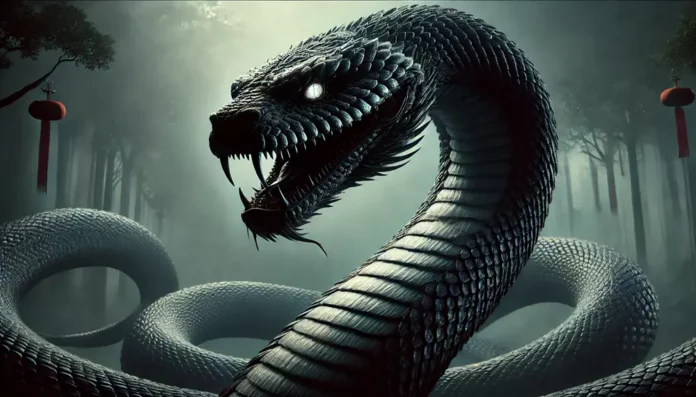
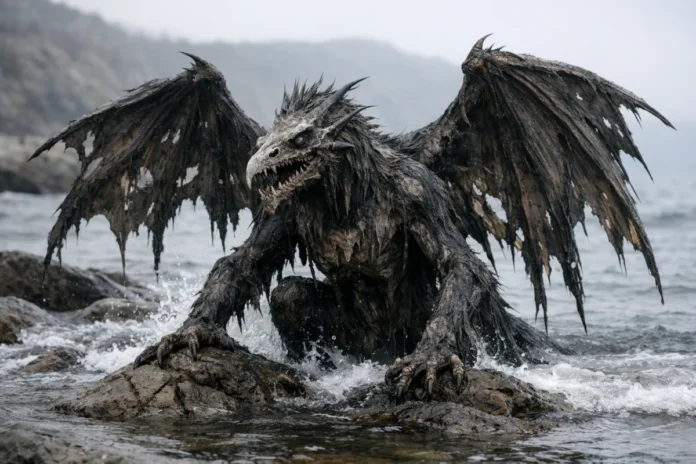
Chinese mythology features diverse mythological creatures, each with unique attributes and cultural significance.
Dragon
The dragon is emblematic of China, symbolizing power, strength, and good fortune. It is revered as a protector and often associated with emperors, embodying imperial authority. The dragon’s presence is deeply embedded in Chinese cultural identity and mythology.
Symbolic Roles of Creatures and Forces
Creatures like the dragon serve as symbols of authority and natural forces. They represent yang energy, associated with the emperor, rain, and fertility. Such symbolic roles influence cultural practices and reflect societal values within the Chinese context.
Internal Variation and Temporal Change
Over time, regional variations in mythology emerged due to geographic and political differences. Southern Chinese myths often incorporate more animistic elements, while northern traditions emphasize historical narratives. These variations highlight the adaptability and diversity within Chinese mythology.
Related Cultural Origins and Myth Sources
Historically, Chinese mythology has influenced and been influenced by neighboring cultures, including Japanese and Korean myths. While sharing some motifs and themes, each tradition retains its unique cultural context and interpretations, underscoring both commonality and divergence.
Evidence Limits and Scholarly Uncertainty
There are significant gaps in the archaeological and textual evidence of early Chinese mythology. Many myths survive in fragmentary forms, with scholarly debates concerning their origins and interpretations. No verified sources describe some aspects of these contexts, emphasizing the need for careful scholarly reconstruction.