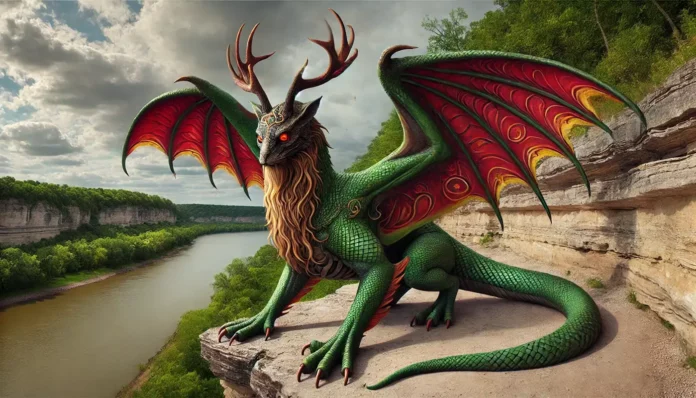
Mississippian – an Overview
The Mississippian culture, emerging around 800 CE, was a complex Native American civilization. It spanned much of the southeastern United States. This culture is known for its mound-building practices and distinct social structures.
The Mississippian period lasted until approximately 1600 CE. During this time, its influence spread across vast areas. Known for centralized chiefdoms, the culture involved trade networks connecting various regional centers. These elements marked its societal complexity.
Historical and Environmental Context
Time Frame and Location
The Mississippian culture thrived geographically from the Midwest to the Southeast United States. It notably included regions like the Mississippi River Valley. Its heartland consisted of areas such as Cahokia, near present-day St. Louis.
This culture’s timeline stretches from the early 9th century until European contact. The end of the Mississippian era is not precisely dated. However, it corresponded with increasing European exploration and colonization efforts.
Contact and Cultural Exchange
The Mississippian society engaged in extensive trade with neighboring groups. This interaction facilitated the exchange of goods, ideas, and cultural practices. It involved long-distance trade routes, including the exchange of exotic materials.
Despite these interactions, some regions of the Mississippian culture developed in relative isolation. The environmental and geographic barriers occasionally limited exchanges. Thus, regional variations within the culture emerged over time.
Mythological Framework
Worldview and Cosmological Concepts
In Mississippian cosmology, the universe was structured into three realms: the Upper World, Middle World, and Underworld. This tripartite division influenced their spiritual and ceremonial practices.
Evidence suggests these realms were associated with specific beings and forces. The Upper World was linked to celestial bodies and deities, while the Underworld was home to more chthonic forces. The Middle World represented the world of humans.
Spiritual or Supernatural Categories
Mississippian belief systems recognized various supernatural categories, including spirits and revered ancestors. These entities played an essential role in their religious practices, influencing daily life and spiritual ceremonies.
Deities were often associated with natural elements like the sun, rain, and fertility. It is important to note that a comprehensive pantheon is not entirely documented. However, these associations reflect the interconnectedness of the natural world and spirituality.
Folklore and Narrative Tradition
Recurring Mythological Themes
Symbolic themes in Mississippian myths often centered on fertility, warfare, and cosmological balance. These stories emphasized the importance of harmony between humans and the supernatural world. They were integral to maintaining social order.
Another recurring theme was the journey or quest motif, which often involved a hero or protagonist seeking wisdom or divine favor. These narratives reinforced cultural values, teaching lessons about leadership and moral conduct.
Transmission and Preservation
Mississippian myths and stories were primarily passed down through oral tradition. This mode of transmission ensured cultural continuity despite the absence of a writing system. Artifacts and symbols also played a role in preserving these narratives.
Material culture, such as pottery and engravings, often depicted mythological scenes. These served as visual representations of stories and beliefs, facilitating intergenerational transmission. Such artifacts remain crucial for understanding Mississippian mythology today.
Mythological Beasts and Non-Human Entities
Horned Serpent
The Horned Serpent is a significant entity within Mississippian mythology. Its representation often included a snake-like body with horns, embodying water and fertility forces. This creature is inseparable from Mississippian cosmology due to its symbolic importance.
Depictions of the Horned Serpent have been found in various archaeological sites. These images reinforce its central role in rituals and myths. Without this cultural context, the Horned Serpent’s significance might be misunderstood.
Thunderbird
The Thunderbird is another critical mythological figure, representing the sky and storms. This entity is often depicted as a powerful bird capable of creating thunder and rain. Its symbolism is deeply embedded in Mississippian spiritual concepts.
The Thunderbird’s presence across different sites highlights regional variations. However, its central role in Mississippian cosmology remains consistent. Misclassifying it outside this context would overlook its unique cultural significance.
Symbolic Roles of Creatures and Forces
Animals in Mississippian mythology often symbolized natural forces and social roles. For instance, the Deer symbolized fertility and abundance. It was associated with hunting success and agricultural prosperity, reflecting the culture’s dependence on these resources.
Birds, particularly in the form of the Falcon, were seen as messengers between realms. They were linked to warfare and protection. This association underscored the importance of martial prowess in Mississippian society and its spiritual dimensions.
Internal Variation and Temporal Change
Throughout the Mississippian period, regional variations became evident. Different areas developed unique styles and practices, influenced by local resources and external contacts. These variations indicate the complexity and adaptability of Mississippian culture.
Over time, some regions showed shifts in religious practices, possibly due to environmental changes or evolving social structures. However, the core elements of Mississippian cosmology remained intact, suggesting continuity amidst change.
Related Cultural Origins and Myth Sources
The Mississippian culture shares some similarities with the preceding Woodland period. Both engaged in mound-building and developed complex societies. However, Mississippian societies were more socially stratified, with a distinct ruling class.
Comparatively, Mississippian mythology shows connections to later Southeastern indigenous cultures. These links are evident in shared symbols and motifs. Nonetheless, regional adaptations highlight unique cultural evolutions within the Mississippian context.
Evidence Limits and Scholarly Uncertainty
Mississippian archaeological evidence is sometimes incomplete, creating gaps in understanding. The absence of written records complicates reconstructing their mythology. Scholars rely on artifacts and oral traditions to fill these voids.
Debates exist regarding certain elements of Mississippian society and cosmology. Interpretations of symbols and stories can vary among scholars. Therefore, caution is necessary when asserting definitive conclusions about this culture.
No verified sources describe the detailed pantheon for this context. Consequently, assumptions about a complete deity hierarchy are speculative. Scholars continue to piece together this mosaic from available evidence.