back to top

Roman Empire

Roman Empire embodies a structured pantheon and civic religion shaping societal values and divine authority as interconnected aspects of life.

Relevant Beasts
Europe
Crawling Reptile
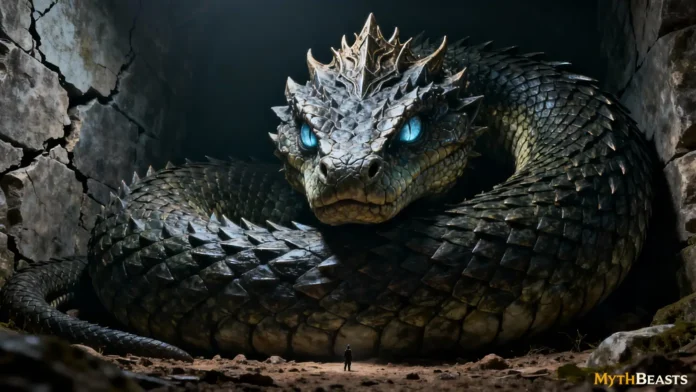
Basilisk - Greco-Roman serpent with lethal gaze
Greece

Basilisk

Basilisk, ancient Greco-Roman and medieval European serpent, crowned and colossal, whose lethal gaze embodies death, corruption, and sovereign terror...

  • Skills
Gaze of DeathPetrification
  • Weaknesses
Magic Reflection

Roman Empire – an Overview

The Roman Empire stands as a profound cultural and mythological origin. Extending from 27 BCE to 476 CE, it encompassed vast territories across Europe, North Africa, and parts of Asia. This geographical span facilitated the integration of various cultures, enhancing the empire’s mythological richness. Romans synthesized local traditions into a cohesive imperial narrative, leaving a lasting legacy.

Historical and Environmental Context

Time Frame and Location

The Roman Empire’s peak spanned from the early 1st century BCE to the 5th century CE. Its dominion stretched from Britain to Egypt, influencing a wide array of ecological zones and cultural landscapes.

Contact and Cultural Exchange

Rome’s expansive reach enabled significant cultural exchanges, assimilating Greek, Etruscan, and Egyptian elements. Trade, conquest, and colonization facilitated these interactions, enriching Rome’s cultural and mythological tapestry. This synthesis is evident in religious and artistic motifs.

Mythological Framework

Worldview and Cosmological Concepts

The Romans adopted and adapted Greek cosmological ideas, positioning gods like Jupiter at the universe’s apex. Divine hierarchy mirrored Rome’s social order, reflecting a universe governed by power and structure. However, no comprehensive Roman cosmology is widely verified.

Spiritual or Supernatural Categories

The Roman pantheon included gods, demi-gods, spirits, and ancestral deities. While major deities like Mars and Venus held prominent roles, household spirits, or Lares, played crucial parts in daily life. This structure reflects Roman emphasis on both public and private religiosity.

Folklore and Narrative Tradition

Recurring Mythological Themes

Recurring themes include the founding myths of Rome, such as Romulus and Remus. Their narrative, involving divine descent and fratricide, underscores themes of power and legitimacy. Stories often reinforced Rome’s divine favor and destined supremacy.

Transmission and Preservation

Roman myths were preserved through literature, architecture, and art. Poets like Virgil and Ovid immortalized tales in epic poetry. Statues, temples, and frescoes further disseminated mythological stories, ensuring their survival through Roman and subsequent European periods.

Mythological Beasts and Non-Human Entities

No verified sources describe distinct mythological beasts unique to the Roman Empire. Their mythology often borrowed creatures from Greek traditions, such as the hydra and centaur, integrating them into their own stories.

Symbolic Roles of Creatures and Forces

Mythological creatures symbolized divine power and natural forces. For example, eagles were associated with Jupiter, representing strength and divine authority. Such symbols reinforced Rome’s imperial ideology, linking the emperor’s rule with divine sanction.

Internal Variation and Temporal Change

Regional variations existed within the Roman Empire, particularly in religious practice and local deities. For instance, the gods worshipped in Egypt during Roman control differed from those in Gaul. However, the overarching structure remained largely consistent.

Related Cultural Origins and Myth Sources

Greek mythology significantly influenced Roman mythological structures, with many Roman deities derived from Greek counterparts. Despite similarities, Romans emphasized martial attributes and state religion more than personal piety, highlighting cultural distinctions.

Evidence Limits and Scholarly Uncertainty

Significant gaps exist in our understanding of Roman mythology, primarily due to reliance on later literary sources. Archaeological evidence is limited and often fragmented. No verified sources describe comprehensive Roman religious texts, resulting in scholarly debate and reconstruction efforts.