
back to top

Ancient China

Relevant Beasts

Asia
Dragon
Dragon - Chinese folklore
China

Lóng (Dragon)

The Dragon is a celestial creature in Chinese mythology, controlling water, storms, and fortune. Revered as a symbol of...

  • Skills
Control WeatherFire Breathing
  • Weaknesses
None
Asia
Guardian Animal
Qilin - Chinese Folklore
China

Qilin

The Qilin, a revered creature in East Asian mythology, symbolizes prosperity and serenity. Often depicted with a dragon-like head,...

  • Skills
Aura of ProtectionHealing & Life
  • Weaknesses
Curse BoundEasily Deceived
Asia
Celestial Being
Fenghuang - Chinese folklore
China

Fenghuang

The Fenghuang, or Chinese Phoenix, embodies harmony and virtue, often associated with the Empress and cosmic balance.

  • Skills
Divine LightFire Absorption
  • Weaknesses
Anti-MagicCurse Bound
Asia
Human-Animal Shifter
Huli Jing - Chinese folklore
China

Huli Jing

The Huli Jing is a shapeshifting fox spirit from ancient Chinese mythology, known for its illusion powers, beauty,...

  • Skills
Mental PowersMind Control
  • Weaknesses
Divine RestrictionsExorcism
Asia
Cursed Being
Taotie - Chinese Folklore
China

Taotie

The Taotie is a monstrous entity known for its insatiable hunger, symbolizing greed and excess in Chinese culture.
  • Skills
Energy AbsorptionFear Inducement
  • Weaknesses
Hunger WeakIron Cut
Asia
Serpentine Beast
Bashe - Chinese Mythology
China

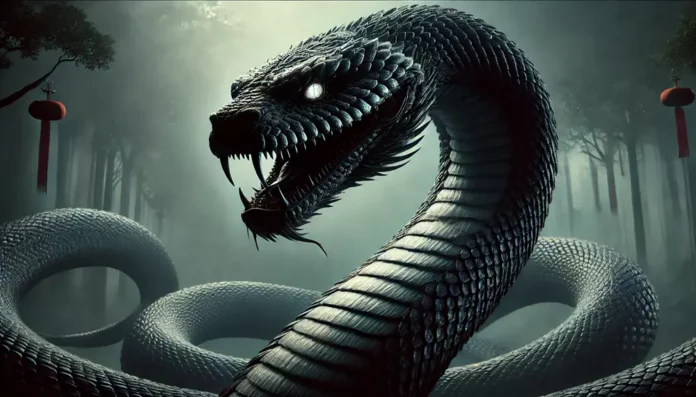
Bashe

Bashe is a snake-like dragon from Chinese legend that swallows elephants whole and hides in the bamboo forests.

  • Skills
Earth ManipulationStrength
  • Weaknesses
Fire VulnerableLoud Noise

Overview of the Ancient China Period

The time known as Ancient China spans several millennia, marked by dynastic changes, cultural evolution, and technological advancements. Major civilizations include the Shang, Zhou, and early Han dynasties. These eras saw profound developments in governance, philosophy, and culture that influenced mythology and folklore. Understanding the mythological foundations of Ancient China requires exploring how these civilizations structured society and belief systems. The reverence for ancestors and nature played a critical role in shaping myths and legends. This period laid the groundwork for a complex tapestry of supernatural beliefs and cultural narratives.During this era, myth, folklore, and belief systems served as essential tools for understanding the world. They provided frameworks for interpreting natural phenomena, social order, and moral guidance. Myths often conveyed the divine authority of rulers or reinforced communal values. Their narratives were integral to societal cohesion and spiritual understanding. Through mythological storytelling, communities communicated shared histories and ethical paradigms. This cultural reliance on mythology and folklore underscored the spiritual and existential inquiries of the time, reflecting a deeply interconnected worldview.

Cultural and Religious Worldviews

Dominant Belief Systems

Religious and cosmological views in Ancient China were characterized by their syncretic nature, blending indigenous beliefs with imported philosophies. Confucianism, Daoism, and later Buddhism provided diverse spiritual frameworks. They offered explanations for the natural and supernatural worlds, influencing mythology. Confucian ideals emphasized order and hierarchy, while Daoist teachings focused on harmony with nature and the cosmos. These frameworks informed the interpretation of mythological beasts and spiritual entities. Each belief system contributed uniquely to the understanding of the unseen and the divine.

Role of Myth in Daily Life

Myths in Ancient China were not mere stories; they were integral to social and moral structures. They influenced everyday life by shaping rituals, reinforcing ethical codes, and supporting governance. Myths validated social norms and justified power hierarchies. They played a crucial role in religious ceremonies and agricultural rites. Through mythology, communities upheld traditions and conveyed cultural values across generations. This cultural transmission through myth supported societal cohesion and provided a shared identity. The role of myth in daily life was thus multifaceted and deeply embedded.

Mythological Beasts and Supernatural Entities

Common Types of Mythical Creatures

Mythological beasts in Ancient China included a variety of supernatural beings, many of which embodied natural elements and moral allegories. Dragons were prominent, symbolizing power, prosperity, and control over water. Other creatures, like the Qilin, represented purity and good omens. These beings were part of a broader cosmological hierarchy, interacting with humans in ways that reflected moral and ethical dimensions. Spirits and ancestors also played significant roles, often acting as protectors or guides. The categorization of these entities helped structure the mythological landscape of Ancient China.

Symbolism and Meaning

The symbolism of mythological creatures in Ancient China was deeply intertwined with cultural, psychological, and spiritual meanings. Dragons, for instance, were seen as benevolent and auspicious, embodying imperial authority and cosmic order. The phoenix symbolized renewal and virtue, signifying peace and prosperity. Each creature’s symbolic meaning reflected societal values and existential beliefs, serving as allegories for human virtues and natural forces. By embodying these concepts, mythological beings became integral to cultural narratives and spiritual life. This symbolism reinforced their significance in Ancient Chinese society.

Folklore Traditions and Storytelling

Oral and Written Transmission

Myths and legends in Ancient China were preserved through both oral and written traditions. Storytelling was a communal activity, with tales passed down through generations by word of mouth. Written records, such as inscriptions and later manuscripts, also played a crucial role. These texts helped codify and disseminate myths, ensuring their survival and adaptation. Scribes and scholars often documented legends, thereby preserving cultural heritage. The dual modes of transmission allowed myths to evolve while maintaining core narratives. This preservation was vital for cultural continuity and identity.

Regional Variations

Folklore and mythical beings in Ancient China exhibited regional variations, reflecting diverse cultural and geographical influences. In the south, water-associated deities like dragons were more prominent, mirroring local environmental characteristics. Northern regions, meanwhile, emphasized sky and celestial myths. These differences highlighted the adaptability of myths to specific cultural contexts and physical landscapes. Regional diversity enriched the tapestry of Chinese mythology, allowing for a nuanced understanding of its traditions. This regional adaptation facilitated the resilience and evolution of mythological narratives.

Relationship Between Humans and the Mythical World

Fear, Protection, and Reverence

Mythical creatures in Ancient China were perceived in complex ways, often embodying fear, protection, and reverence. Dragons were both feared for their power and revered for their protective qualities. Spirits of ancestors were venerated as guides and moral enforcers. Such entities served as intermediaries between the human and divine realms, influencing social and spiritual conduct. People’s interactions with these beings reflected broader cultural and existential concerns. This complex relationship underscored the profound impact of mythology on human experience and behavior in Ancient China.

Influence on Art and Material Culture

Mythical themes prominently influenced Ancient Chinese art and material culture. Dragons and phoenixes adorned architecture, textiles, and ceremonial objects, reflecting their cultural significance. Artistic representations of mythological themes appeared in sculptures, paintings, and carvings, embodying spiritual and aesthetic values. These artistic expressions reinforced the symbolic meanings and societal roles of mythological creatures. Through art, the mythological world was visually and materially integrated into everyday life. This integration enriched cultural practices and contributed to the enduring legacy of Ancient Chinese mythology.

Transition and Legacy of the Ancient China Period

The mythological concepts of Ancient China evolved and transformed in later eras, influencing subsequent folklore and religious traditions. Many creatures and myths integrated into Buddhist and Daoist iconography, adapting to new spiritual contexts. This evolution reflected broader cultural and philosophical shifts. While some myths declined, others persisted, informing cultural storytelling and artistic expression. The legacy of Ancient China’s mythological heritage remains evident in modern cultural narratives and identity. This enduring influence highlights the historical continuity and adaptation of mythological traditions throughout Chinese history.

Historical Reliability and Interpretation

Interpreting mythological material from Ancient China presents challenges due to the limitations of historical sources and symbolic interpretations. Scholars rely on archaeological findings, ancient texts, and comparative analysis to reconstruct these traditions. However, distinguishing between belief and historical fact remains complex. The symbolic nature of myths often complicates their historical interpretation. Despite these challenges, scholars continue to explore these narratives, acknowledging both their cultural significance and interpretative limitations. This critical approach enriches our understanding of Ancient China’s mythological heritage and its broader historical context.